
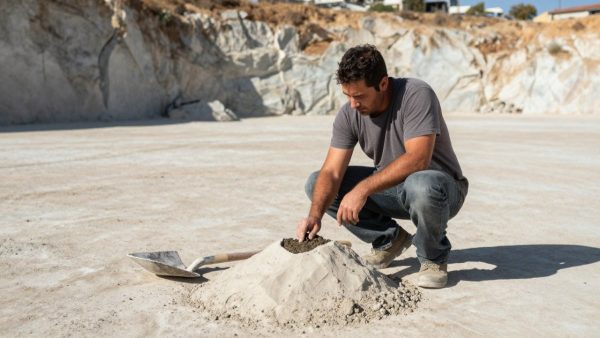
Silt vs Clay in Sand: Key Differences Explained
Silt vs clay in sand decides drainage, compaction and stability. Compare particle size, plasticity and field tests to judge your aggregate before pouring.
Last Updated: October 24, 2026
Quick Summary
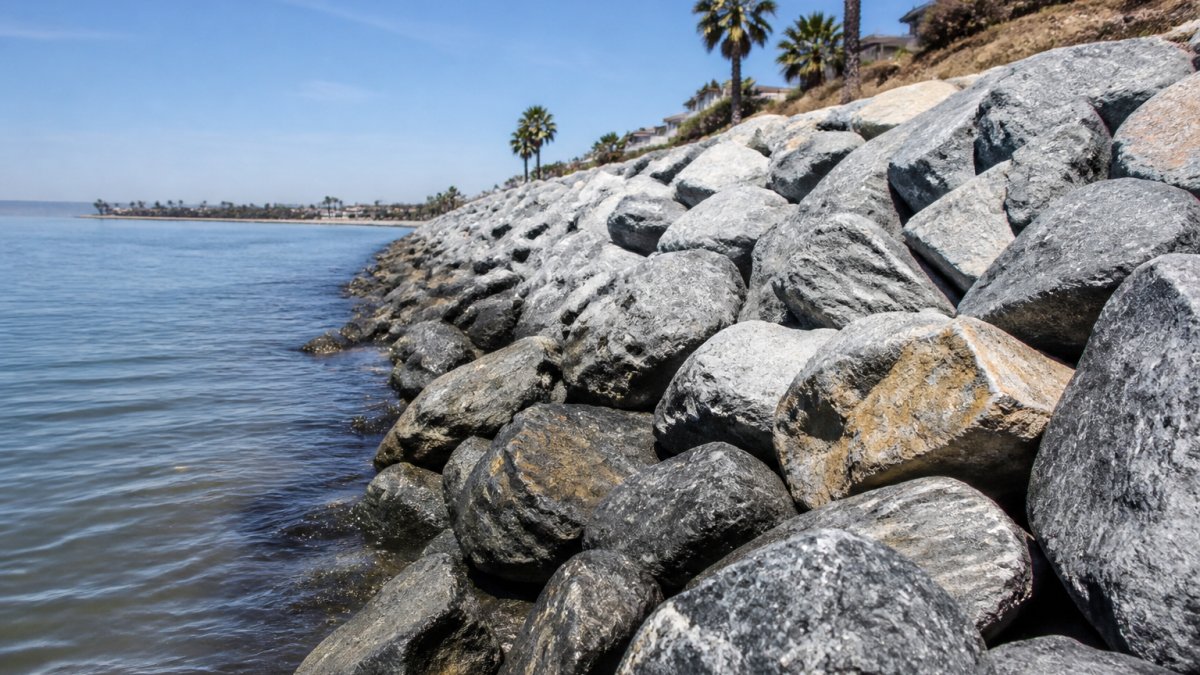
Riprap shoreline protection absorbs wave energy and stops soil from washing away by spreading force across many stone faces instead of one flat wall. The rough, angular rock trips the water, kills its speed, and lets water drain through the gaps. A riprap shoreline also flexes with the ground, settling and shifting without cracking the way a rigid wall can.
Riprap shoreline protection is the practice of placing a layer of durable, angular rock along a bank to absorb wave energy and stop soil from washing away. At FST Sand, we’ve supplied riprap for waterfront and drainage projects since 1964. The rock works by spreading force across many stone faces instead of one flat wall.
Erosion happens when three forces combine:
Riprap counters all three. The rough, angular surface trips the water and kills its speed. The gaps between stones let water drain instead of pooling. And the weight of the rock holds the slope in place. A riprap shoreline also flexes with the ground.
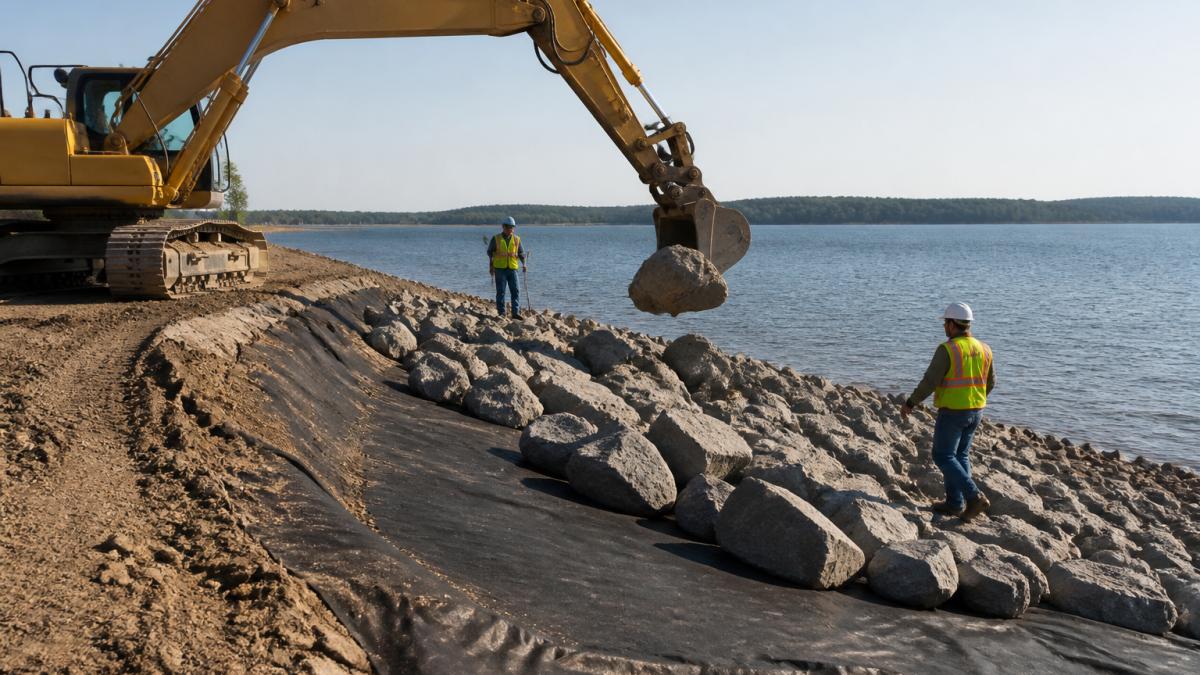
Most riprap failures come from bad prep, not bad rock. The standard method follows a clear sequence, and skipping steps is the fastest way to watch your stone slide into the water.
Watch out: dropping rock straight onto bare soil without fabric is the most common mistake. Water finds the soil, scours it away, and the whole layer collapses. If you want the full walkthrough, read our guide on how to install riprap for drainage step by step.
Rock size is the decision that makes or breaks a shoreline. Too small, and waves toss it away. Too big, and you overspend for no gain. The right riprap rock size for shoreline work depends on how hard the water hits, and on four site variables that most guides gloss over: wave exposure, water velocity, bank slope, and soil condition.
Most practitioners size the primary armor layer so the stone is heavy enough to resist the design wave or flow, then set layer thickness at roughly twice the nominal stone diameter (a common rule of thumb is 1.5 to 2 times the D50). A typical pattern is a primary layer of angular rock over a smaller bedding layer over filter fabric. When in doubt, size up rather than down, undersized rock is the failure mode you cannot repair cheaply.
Match the grade to the condition:
Angular rock locks together better than round stone, which rolls. Durable rock resists freeze-thaw and wetting cycles; soft or layered stone breaks down and loses its interlock. Ask for a gradation that matches your design and inspect for fines and flat, slabby pieces before placement. For a deeper look at gradation and rock type, see our article on choosing the right riprap for your project.
Geotextile fabric is the layer that keeps the whole system from sinking. It sits between the soil and the rock and does two jobs: it lets water drain out, and it stops fine soil from washing away. Without it, water pressure builds under the stone and pushes the layer apart. Proper installation of this filter layer also stabilizes the shoreline against the seasonal expansion of frozen water, which is a critical step in preventing pond ice damage.
Fabric also spreads the load. Heavy rock presses down, and the fabric keeps that weight from punching into soft soil. A common mistake is using the wrong fabric weight or tearing it during placement. Once it’s ripped, the protection is gone. Lay it smooth, overlap the seams, and keep machines off it until the rock covers it.
Riprap and seawalls solve the same problem in different ways. A seawall is a hard vertical barrier. Riprap is a sloped, flexible rock layer. The right pick depends on your site, your budget, and how the water behaves.
| Feature | Riprap | Seawall |
|---|---|---|
| Cost | Lower upfront | Higher upfront |
| Lifespan | Long, with upkeep | Long, needs repair |
| Flexibility | Settles and shifts | Can crack and fail |
| Habitat | Creates cover for fish | Little habitat value |
| Best for | Sloped banks, lakes, rivers | Tight lots, deep water |
In practice, riprap wins on sloped banks and tight budgets. A seawall makes sense where you have no room to slope the bank. For most shoreline sites, the flexible rock layer lasts longer with less fuss. That’s the honest trade-off: seawalls fail suddenly, while riprap fails slowly and gives you time to repair it.
Riprap is not free of problems, and any honest look at the benefits of using riprap for shoreline protection has to name them. The main drawbacks:
Work in or near waterways is regulated at several levels, and the rules vary by state and local jurisdiction. Before you order rock, confirm:
Rock armor changes the shoreline. It can bury beach and shallow-water habitat, alter water temperature at the edge, and limit access for people and wildlife. You can reduce the impact:
Water quality and habitat both benefit when the design leaves room for nature.
Riprap fails slowly, which is its advantage, but only if you watch for the warning signs. Inspect after major storms and at least once a year:
Refill gaps promptly and re-key the toe if it has pulled out. Small repairs done early are far cheaper than rebuilding a collapsed layer.
Ordering the right amount saves money and avoids a stalled job. Measure the area, decide the rock size, and add a little extra for settling. Pricing depends on quantity, rock grade, and delivery, so request a quote for current figures. At FST Sand, we process our riprap to consistent size so your layer performs as designed.
Ready to compare options? View our products to pick the grade that fits your shoreline. Our family-owned team has supplied Southern California projects for over six decades, and we’re glad to help you size the order.
Riprap is a layer of durable, angular rock placed on a shoreline bank or slope. It absorbs wave energy and slows flowing water before that force reaches the soil, which reduces soil loss and bank undercutting. The open rock layer also lets water drain out of the bank instead of trapping it. In practice, a properly sized riprap shoreline protects the slope, limits sediment runoff and keeps the bank stable during storms and high boat traffic.
Rock size depends on the water velocity and wave height your shoreline faces, not on the length of the bank. Calm lake shores with light wave action can use smaller stone, while exposed banks with boat wakes or fast current need larger, heavier rock. A common rule is to match the rock to the energy the site receives and to check that the stone is angular and durable. Local codes and a site assessment should confirm the final size before you order.
Yes, a geotextile fabric under riprap is standard practice. The fabric separates the rock layer from the underlying soil, so fine particles do not wash out through the gaps and the bank does not settle or fail. It also spreads load and helps drainage. Skipping the fabric often leads to soil loss, sinking rock and a shorter service life, which costs more to repair than the fabric would have cost to install.
Riprap is not a natural beach and it changes the look and habitat of a shoreline. It can be difficult to walk on, it may need periodic inspection and repair after severe storms, and some areas restrict or permit its use near wetlands. Cost depends on rock size, quantity and delivery, so pricing varies by project. Weigh these limits against the erosion risk, and confirm local permit requirements before construction.
Your shoreline won’t fix itself, and waiting only lets erosion take more ground. FST Sand delivers durable, precision-processed riprap backed by more than 60 years of experience, competitive pricing, and reliable supply for jobs of any size. Get started with FST Sand and protect your waterfront with rock built to last. Request a quote today.
Silt vs clay in sand decides drainage, compaction and stability. Compare particle size, plasticity and field tests to judge your aggregate before pouring.
Learn how to fix sinking patio pavers step by step, from diagnosing the low spot to resetting stones and refilling joints with polymeric sand.
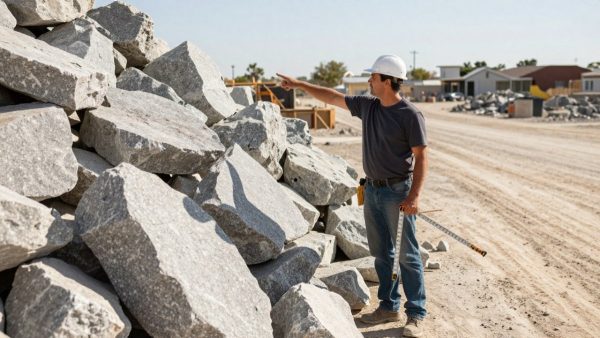
Calculate riprap material quantity with a step-by-step workflow from cubic yards to tons, then order the right amount with confidence.