
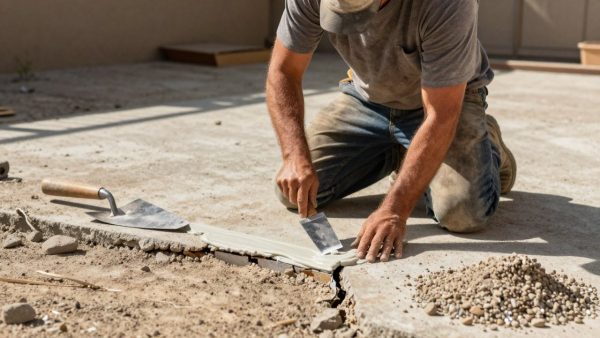
How to Fix Sinking Patio Pavers and Keep Them Level
Learn how to fix sinking patio pavers step by step, from diagnosing the low spot to resetting stones and refilling joints with polymeric sand.
Last Updated: November 27, 2026
Quick Summary
When comparing silt vs clay, silt particles are larger, feel smooth and slightly gritty, and drain slowly, while clay particles are smaller, sticky, and plastic when wet. That size gap explains why clay holds water tightly and binds sand grains, while silt mainly slows drainage.
When comparing silt vs clay, both are fine particles that can sit inside a sand sample, but they behave differently: silt particles are larger and feel smooth and slightly gritty, while clay particles are smaller, sticky, and plastic when wet. That single size gap explains why the two fines change sand drainage, compaction, and concrete strength in different ways.
The keyword here is ambiguous, and that trips up a lot of readers. “Difference between silt and clay in sand” can mean two things, so this guide answers both.
Reading one compares silt and clay as separate soil fractions and asks how each behaves. Reading two asks how silt and clay, mixed into a sandy soil, change that sand’s behavior. Most pages only answer the first and ignore the second. We cover both, because the second is where construction problems actually start.
The practical stakes are real. Fines change how water moves and how a mix holds together. A sand that drains well on paper can turn sluggish once fines climb.
Particle size is the cleanest way to separate the three fractions. The table below uses the boundaries most soil and aggregate references rely on.
| Fraction | Particle diameter | Feel when dry | Behavior when wet |
|---|---|---|---|
| Sand | 0.05 mm to 2 mm | Gritty, individual grains visible | Falls apart, drains fast |
| Silt | 0.002 mm to 0.05 mm | Smooth, slightly floury | Holds shape weakly, drains slowly |
| Clay | Below 0.002 mm (under two microns) | Smooth, powdery when dry | Sticky, plastic, holds shape |
These are working thresholds, not universal law. Silt runs roughly from 0.05 mm down to 0.002 mm, and clay sits below two microns.
The boundaries trace to soil classification systems used in engineering and agronomy, including the USDA soil texture classification framework. Different standards nudge the exact edges, so treat the numbers as a shared convention rather than a fixed rule. The order never changes: sand is coarsest, silt sits between, clay is finest.
The fastest way to separate silt from clay is to feel them and watch how they behave dry and wet, but the behaviors trace back to two mechanisms: particle size and mineral surface activity. Silt particles are tiny rock fragments with relatively low surface area and little chemical attraction to water. Clay particles are smaller still, and many clay minerals carry charged surfaces that pull water molecules and other ions toward them. That difference in surface activity, not size alone, is why clay is plastic and silt is not. Here is the direct comparison for fines sitting in a sandy soil.
| Property | Silt in sand | Clay in sand |
|---|---|---|
| Particle diameter | 0.002 mm to 0.05 mm | Below 0.002 mm |
| Feel when dry | Smooth, slightly floury, faint grit | Smooth, powdery, slightly waxy |
| Feel when moist | Slick but not sticky | Sticky, smears and stains the palm |
| Cohesion | Weak; crumbles under light pressure | Strong; binds grains together |
| Plasticity | Non-plastic; cracks when rolled | Plastic; rolls into a flexible ribbon |
| Dry strength | Low; a dried cast crumbles easily | High; a dried cast is hard and resists breaking |
| Water retention | Moderate; drains slowly | High; holds water tightly and drains poorly |
| Effect on sand drainage | Reduces permeability moderately | Can nearly seal a sandy layer |
| Effect on compaction | Can cause pumping and instability when wet | Can make a sandy base sticky and hard to compact uniformly |
That waxy, sticky quality is the giveaway for clay. If a moist sample smears and stains your palm, you are likely handling clay. Silt will feel smooth but rinse off more readily and will not hold a ribbon.
Watch out: a sand that contains both silt and clay can feel like clay because the clay coats the silt and sand grains. Hand texturing alone can misclassify a mixed sample, so confirm borderline results with a settling or wash test.
Silt’s low surface activity means water moves through and around the particles with little chemical attraction. Clay’s charged surfaces and enormous specific surface area mean water is drawn in and held, which is why clay swells, sticks, and resists drainage. In a sandy soil, a small clay fraction can change workability out of proportion to its percentage, while an equal silt fraction mostly slows drainage without adding plasticity. That is the practical reason specifiers treat clay content more strictly than silt content in concrete and base-course sand. Because these differences affect how sand packs and bears load, density testing for sands helps connect particle behavior with the performance of a compacted base.
You can estimate fines on site with simple field checks, then confirm the numbers with a lab. Field tests narrow the guess; they do not replace a sieve, wash, or hydrometer analysis. The key is knowing what each method actually measures and where it breaks down.
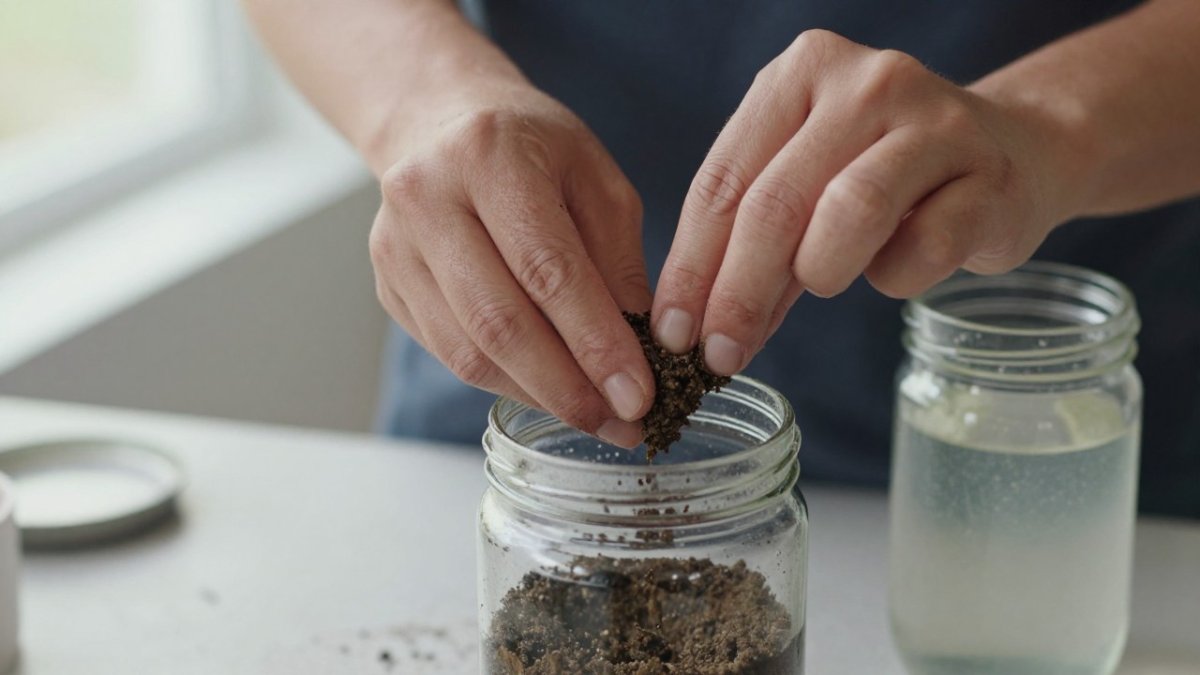
Watch out: field tests are indicative, not quantitative. A sample that feels silty can carry enough clay to fail a wash test, and a sample that feels sticky can be dominated by organic matter rather than clay minerals.
For a deeper walkthrough of the silt content test and what the results mean for strength, see our guide on how to test silt content and its effect on mortar strength. And if you are about to run field checks, read how to take a truly representative aggregate sample first so your results hold up.
In construction sand, small amounts of fines are normal, but too much silt or clay weakens concrete and destabilizes base layers. Fines coat the coarse grains and block the bond between aggregate and cement paste. That is why specifiers typically cap the fines allowed in concrete sand and reject material that fails the wash test.
A common mistake is judging sand by color alone. Darker sand is not automatically dirty, and pale sand is not automatically clean. The only reliable measure is a wash or sieve test that reports the actual fines percentage.
For the full picture of what else can weaken a mix, see our breakdown of seven sand impurities that weaken concrete strength. If fines are your concern before you buy, compare washed versus unwashed sand gradation so you know what the washing step actually removes.
Fines slow drainage, and clay slows it far more than silt. Water moves through the open voids between sand grains. When fine particles fill those voids, the pathways narrow and permeability drops. Silt reduces flow moderately; clay can nearly seal a layer.
The practical fallout shows up fast:
For drainage-critical work like pipe bedding or backfill, keep fines low and confirm them with a test. A well-graded, washed sand drains predictably; a dirty one does not.
The real risk with fines is inconsistency: one load meets spec and the next does not, and you find out after the pour. FST Sand has supplied construction aggregates since 1964. Our concrete sand, crushed stone, gravel, and riprap are precision-processed for consistent quality, backed by a family-owned team. If you need clean, consistently graded gas sand for utility or pipeline work, visit our gas sand product page to see what we stock.
Inconsistent grading is the quiet killer of concrete schedules, and it is avoidable. FST Sand offers precision processing, reliable supply for projects of any size, and competitive pricing so you can plan around material you can trust. Get started with FST Sand and build on sand that meets spec the first time.
Moisten a pinch of the fines and rub them between your fingers. Silt feels smooth and silky, almost like flour, and a damp cast holds together only briefly before crumbling. Clay feels slick and waxy, takes longer to dry on your skin, and a moist ribbon pressed between thumb and forefinger can be bent into a ring without cracking. The hand-texturing test is a field guide, not a lab result, so confirm anything that matters with a settling or sieve test.
No. Sand grains are visible or nearly visible and behave like tiny rocks: they drain fast and do not stick together. Clay particles are roughly 0.002 mm and smaller, and their flat shape and surface chemistry give them cohesion and plasticity that sand never has. That is why a small clay fraction changes how a sand mix holds water, compacts, and dries, while extra fine sand mostly just fills voids.
Fine particles fill the voids between sand grains and block the paths water uses to move. Drainage and permeability drop, so water sits longer and compaction under load becomes harder to predict. In concrete sand, too much fines raises water demand and weakens the mix. In backfill and base course, it can slow settling and leave soft spots, which is why silt and clay content in construction sand is specified and tested before a bulk order is accepted.
Only with caution. Adding sand to heavy clay can create a concrete-like blend if the clay dominates and the sand is too fine to open the structure. Adding a small amount of clay to sandy soil, by contrast, can improve water retention and cohesion for planting. For construction use, the safer route is to buy sand graded to a known fines content and test it, rather than blending on site and hoping the proportions work.
Learn how to fix sinking patio pavers step by step, from diagnosing the low spot to resetting stones and refilling joints with polymeric sand.
Calculate riprap material quantity with a step-by-step workflow from cubic yards to tons, then order the right amount with confidence.
Foundation repair starts with the right material for your crack and water problem. See which material fits your crack type and water problem.