
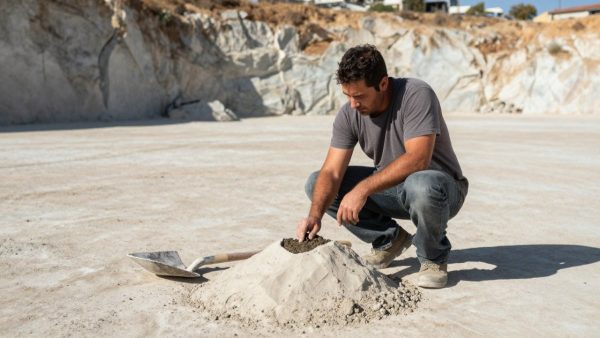
Silt vs Clay in Sand: Key Differences Explained
Silt vs clay in sand decides drainage, compaction and stability. Compare particle size, plasticity and field tests to judge your aggregate before pouring.
Last Updated: October 23, 2026
Quick Summary
Selecting the right sand for mortar applications means matching a clean, well-graded fine-to-medium masonry sand to your mortar type and project. Masonry sand suits mortar joints, while coarser concrete sand is for concrete pours. Sand typically makes up three to four parts per one part cement.
Selecting the right sand for mortar applications is the single most overlooked decision on most masonry jobs.
Here is the core tension: cement and lime get all the attention, but they are the minority ingredient. Sand is the skeleton. Get it wrong and no amount of careful mixing will save the wall.
Below, we break down exactly how to match sand to mortar type, how to spot contamination, and how to mix a batch that bonds properly. First, though, here is what most guides get wrong: they treat all sand as interchangeable.
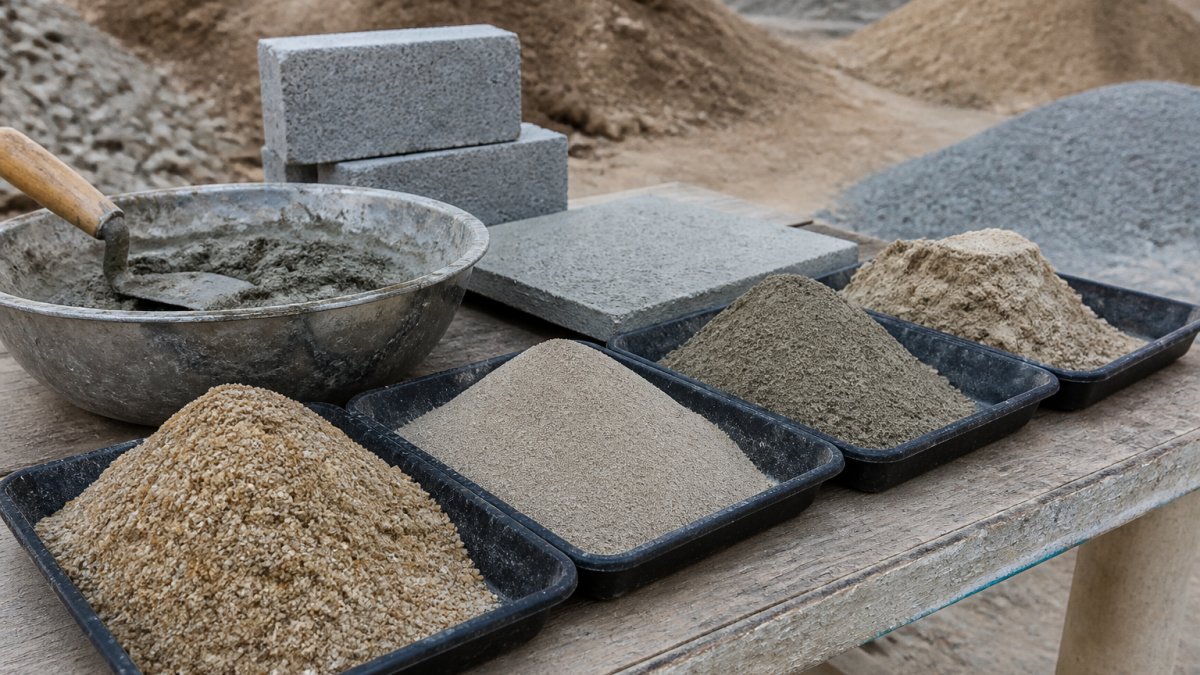
Masonry sand is a fine, well-graded sand used for mortar and joint work, while concrete sand is coarser and used in concrete mixes. The difference comes down to grain size and how the particles pack together.
Masonry sand, sometimes called builders’ sand or soft sand, has smaller, more uniform grains. That lets it slide into thin joints and produce a smooth, workable mortar.
Using the wrong one causes problems fast:
For most brickwork and block laying, masonry sand is the correct choice. For slabs, footings, and structural pours, reach for concrete sand.
Mortar sand grain size typically falls in a fine-to-medium range, with particles small enough to pass common masonry screens but coarse enough to give the mix body. Grain size and particle shape together control how the mortar feels and performs.
Particle shape matters as much as size. Rounded grains slide past each other and make a smooth, easy-to-trowel mix. Angular grains grip and add strength but can make the mortar harsh. The best mortar sand balances both.
Gradation is the distribution of particle sizes in a batch of sand. Well-graded sand has a mix of sizes that fill the gaps between larger grains, which reduces voids and cuts the amount of cement paste needed to coat every particle.
Fines are the smallest particles, and they are a double-edged sword. Readers comparing fine-graded aggregates can also browse our crusher fines product page. Readers who want the bigger picture on how aggregate choices shape a project can explore how soil and sand materials influence project success.
Most mortar sand is specified by the fraction that passes a No. 4 sieve (about 4.75 mm) and is retained on a No. 100 sieve (about 0.15 mm). A sand that is mostly one size, say, everything passing a No. 8 and held on a No. 16, packs with high void content and demands more cement paste. A sand spread across several sieves fills those voids and produces a leaner, more workable mix.
You do not need a full sieve analysis to judge this. A simple field check: fill a clear jar one-third full of sand, add water to two-thirds, shake hard for a minute, and let it settle overnight. The sand separates into visible layers by size, and the cloudy band above the sand is the silt and clay fraction.
Angular, rough-textured sand increases the surface area the cement paste must coat, raising water demand and making the mortar stiffer at the same batch ratio. Rounded, smooth grains lower water demand and improve troweling but can reduce green strength and increase segregation in the tub. A practical compromise for general brickwork is a sub-angular to angular sand with a balanced gradation, enough grip for bond, enough fines for workability, and not so much of either that the mix turns harsh or sticky.
The right sand for mortar depends on the mortar type and where it will be used. Mortar types are graded by compressive strength, and each one suits different loads and exposures.
Choosing the correct mortar type is the first step. Sand selection then follows the application. Thin joints on brickwork want a finer, smoother sand. Bedding for pavers and slabs needs a sand that compacts well and drains.
Mortar types run from strongest to weakest. Here is how they compare:
| Mortar Type | Strength | Best For |
|---|---|---|
| Type M | Highest | Heavy loads, foundations, below grade |
| Type S | High | Masonry at grade, moderate exposure |
| Type N | Medium | General above-grade brickwork |
| Type O | Low | Interior, non-load-bearing walls |
| Type K | Lowest | Historic or light restoration work |
A common mistake is always reaching for the strongest mortar. Stronger is not always better. Mortar should be slightly weaker than the masonry units it holds, so it flexes instead of cracking the brick. Matching mortar to the unit protects the wall.
The mortar type sets the binder ratio; the application sets the sand. Use this matrix to match sand characteristics to the job:
Sand choice also has to respect the substrate. Soft, porous historic brick and stone need a softer, more permeable mortar so moisture can escape through the joint rather than spall the face (Mortar, Unsung Hero of History (U.S. National Park Service)). A hard Type M patch against soft old brick will trap moisture and crack the unit. On restoration work, match the new mortar to the existing mix, both binder and sand gradation, so the repair moves with the wall instead of fighting it.
A standard mortar mix uses roughly three to four parts sand to one part cement, adjusted with lime for workability. The exact ratio shifts with the mortar type and the sand’s gradation.
The sand-to-cement ratio is where a lot of DIY batches go wrong. Too much sand makes a weak, crumbly mix. Too little makes a dense, brittle mortar that cracks.
A practical starting point for general brickwork:
When you are ready to source sand for mixing, you can view our SE30 fill sand product page to check the spec against your project.
Mixing mortar correctly means combining dry ingredients first, then adding water gradually until the mix reaches a smooth, spreadable consistency. Small errors in order and water control cause most batch failures.
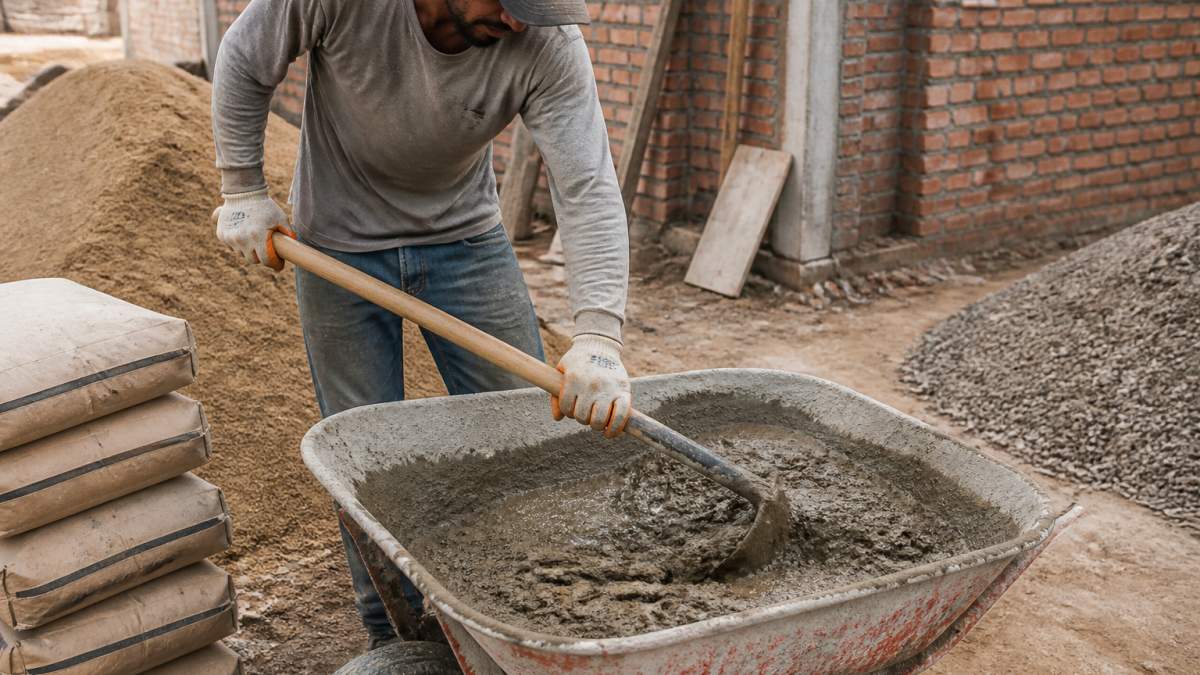
Follow these steps for a reliable batch:
The mix should be smooth, not soupy. If it slides off the trowel, it is too wet. If it crumbles, add water a splash at a time.
Clean sand with controlled moisture is essential for mortar that bonds and cures predictably. Contaminants and inconsistent moisture are two of the most common causes of failed batches.
Watch for these problems:
A simple field test: put sand in a clear jar, add water, shake, and let it settle.
Moisture swings from rain or storage conditions change how much water you add. If you are concerned about sourcing clean, suitable material, you can contact our team to talk through your spec.
Selecting the right sand for mortar applications comes down to matching grain size, cleanliness, and gradation to your mortar type and project.
FST Sand has supplied precision-processed aggregates to contractors, developers, and homeowners since 1964. Our family-owned team delivers consistent quality, competitive pricing, and reliable supply for projects of every size.
Request a quote from FST Sand and build with confidence, knowing your mortar rests on the right sand.
Masonry sand, also called builders’ or soft sand, is the standard choice for mortar. It has finer, more rounded grains and a broader gradation than concrete sand, which makes the mix easier to trowel and helps it bond to brick and block. Look for washed masonry sand with low clay and silt content. For repointing or fine joint work, a finer grade helps; for general block laying, a medium grade balances workability and strength. Avoid very coarse or dirty sand, which produces a gritty mix that is hard to spread and weakens the bond.
You can, but it is not ideal. Concrete sand is coarser and more uniformly graded, so mortar made with it feels harsh, dries faster, and is harder to trowel. It can still work for rough block work where workability matters less, but for brickwork, joints, and finish work, masonry sand gives better results. If concrete sand is the only option, add a little lime or a mortar plasticizer to improve workability, and expect a stiffer mix that needs more effort to bed units properly.
Grain size controls workability, water demand, and final strength. A well-graded sand with a mix of particle sizes fills voids efficiently, so the mortar needs less cement paste and shrinks less. Fine sand increases water demand and can make mortar sticky, while very coarse sand makes it gritty and hard to compact. For most mortar, sand passing a No. 4 sieve with a good spread of finer particles works best. Consistent gradation from a reputable supplier matters as much as the average grain size.
A common starting point for general mortar is one part cement to three parts sand by volume, often with lime added for workability. Type N is typically 1:1:6 cement-lime-sand, and Type S is around 1:0.5:4.5. The right ratio depends on the mortar type and the masonry unit. Too much sand weakens the bond; too much cement makes the mortar brittle and prone to cracking. Follow the project specification or a preblended mortar bag for exact proportions, and measure consistently by volume.
Silt vs clay in sand decides drainage, compaction and stability. Compare particle size, plasticity and field tests to judge your aggregate before pouring.
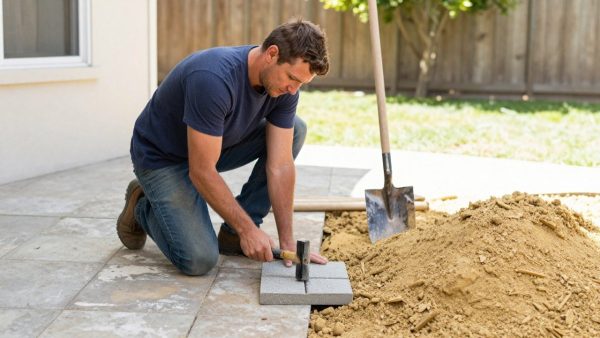
Learn how to fix sinking patio pavers step by step, from diagnosing the low spot to resetting stones and refilling joints with polymeric sand.
Calculate riprap material quantity with a step-by-step workflow from cubic yards to tons, then order the right amount with confidence.