Silt vs Clay in Sand: Key Differences Explained
Silt vs clay in sand decides drainage, compaction and stability. Compare particle size, plasticity and field tests to judge your aggregate before pouring.
Last Updated: September 5, 2026
Consistent sand grading is the single most influential factor in producing concrete that meets its designed compressive strength. Well-graded sand lets smaller particles fill voids between larger ones, reducing the void ratio and requiring less cement paste. Inconsistent grading forces mix designers to either overcompensate with more cement, raising costs, or accept weaker concrete that risks structural integrity.
Poor grading has immediate consequences: excess fines soak up water, throwing off the water-cement ratio and lowering strength, while too many coarse particles leave voids that trap air and cause honeycombing. At FST Sand, we have spent over six decades addressing these problems for projects across Southern California.
ASTM C33 is the standard specification used in the United States to verify that fine aggregates are suitable for concrete. It defines acceptable limits for sand gradation by requiring a sample to pass through a series of sieves with specific cumulative percentages retained on each. Compliance is often a contractual obligation on public works projects.
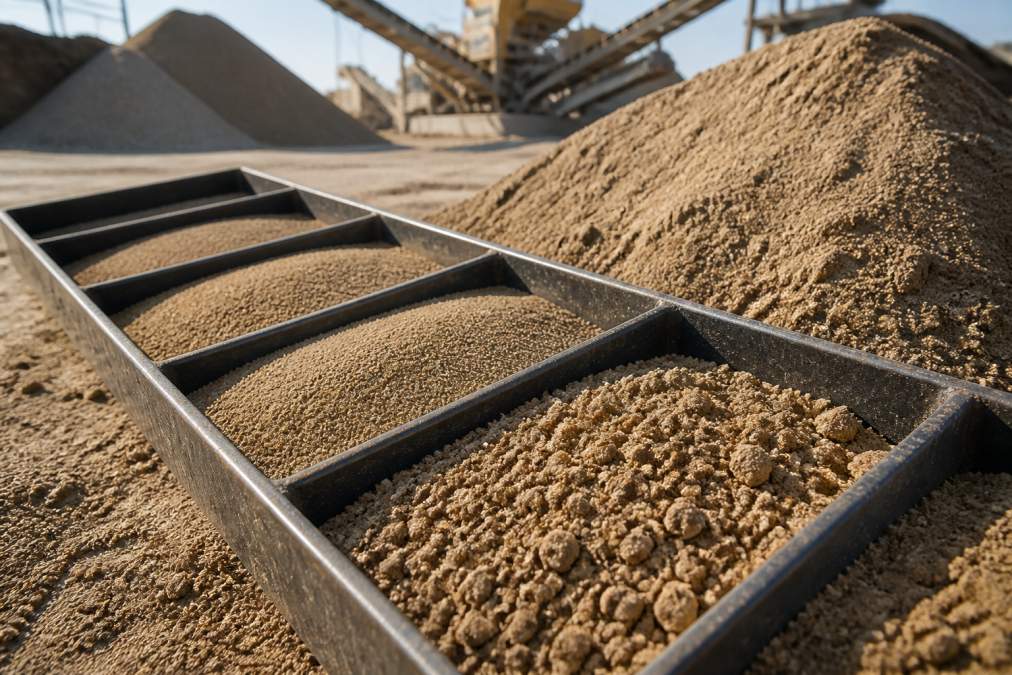
The test itself is straightforward. A dried sample is shaken through stacked sieves, typically ranging from the No. 4 sieve down to the No. 200, and the mass retained on each sieve is weighed to plot the distribution. The standard also caps the amount of material passing the No. 200 sieve, which is the fine dust and silt fraction, because excessive fines increase the water demand of the mix and weaken the bond between the paste and the aggregate. The ASTM C33 standard for concrete aggregates is the definitive reference for these limits, and any supplier claiming specification compliance should be able to produce test results on request.
Fineness modulus is a single-number index summarizing the coarseness of a sand sample and the fastest way to flag a grading problem before it reaches the mixer. It is calculated by adding cumulative percentages retained on sieves from No. 100 up to No. 4 and dividing by 100. Concrete sand typically yields a value between 2.3 and 3.1.
This metric gives an immediate check on consistency between deliveries. If your mix design calls for sand with a fineness modulus of 2.8 and a load arrives at 2.5, the sand is finer and will demand more water, even within ASTM C33 limits. Tracking fineness modulus across deliveries is the cheapest quality control protocol.
| Metric | Typical Range for Concrete Sand | What a Shift Indicates |
|---|---|---|
| Fineness Modulus | 2.3 to 3.1 | Lower value means more fines; higher means coarser particles |
| Material Passing No. 200 Sieve | 0% to 3% (per ASTM C33) | Excess indicates silt or dust contamination |
| Cumulative Retained on No. 4 Sieve | 0% to 5% | High retention signals excessive coarse particles |
Sand grading affects concrete workability immediately, because aggregate surface area dictates how much paste is required to coat every particle. Well-graded sand minimizes surface area, keeping the mix fluid without extra water. Poorly graded sand either segregates during placement or requires more paste.
Structural performance follows the same logic. Concrete with consistent sand grading achieves a denser matrix with fewer capillary voids, which improves its resistance to water penetration and chemical attack. Thermal resistance and structural integrity both benefit from a uniform aggregate skeleton, since large voids act as stress concentrators that initiate micro-cracks under load. For projects with strict durability requirements, such as bridge decks or marine structures, the Portland Cement Association guidance on aggregates emphasizes that aggregate quality is inseparable from concrete performance.
Precision processing is the set of mechanical and hydraulic techniques that transform raw, variable pit-run material into a consistent, specification-compliant product. The goal is to control particle shape, particle size distribution, and micro-fines simultaneously. The method chosen also carries environmental and economic consequences increasingly part of specification decisions.
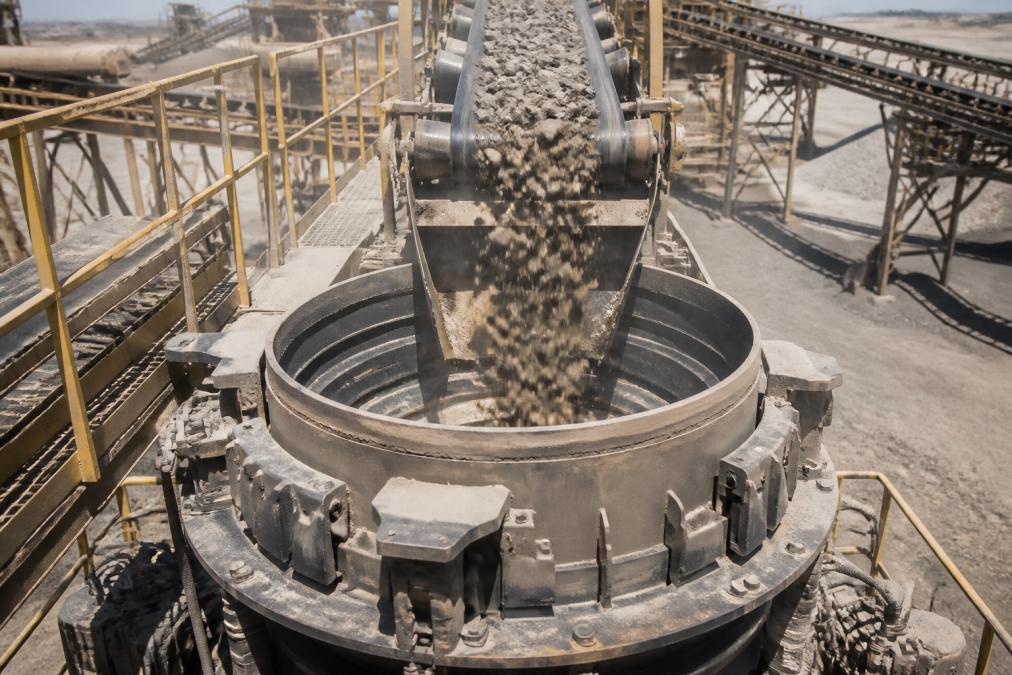
Vertical shaft impact crushers are the workhorse of modern sand production because they reshape rock, not just reduce it. A VSI throws aggregate against a stone-lined anvil, fracturing it along natural planes to produce cubical particles with lower angularity than jaw or cone crushers. This shape improves particle packing and reduces paste demand. VSI circuits consume more power per ton but can eliminate additional shaping passes downstream.
After crushing, material passes through a washing and classification circuit to remove silt, clay, and other deleterious materials. Sand classifiers use sedimentation, where coarser particles settle faster than fines, to split the feed into distinct size fractions. Hydrocyclones and dewatering screens further refine the product, letting the operator blend fractions to hit a specific gradation curve.
The trade-off is water. A conventional wet-washing circuit can consume 1,000 to 3,000 gallons of water per ton of finished sand. In drought-prone western states, that demand is a permitting issue. Producers increasingly install closed-loop systems that recycle more than 90 percent of process water. When comparing suppliers, ask whether their washing circuit is closed-loop and their recycled water percentage.
Dry classification systems, using air screens instead of water, eliminate water demand and produce no slurry. However, they are less effective at removing clay coatings and silt, so they work best on relatively clean feeds. For manufactured sand from hard rock quarries, dry processing can produce a consistent product with a lower carbon footprint.
The environmental angle is contractual. Federal and state infrastructure projects increasingly require environmental product declarations quantifying embodied impacts. A supplier with a closed-loop water system and energy-efficient VSI crushers can provide that documentation; an older, water-intensive producer cannot.
Precision processing is only as good as the control loop around it. A modern plant uses belt scales, moisture sensors, and automated sampling to adjust crusher settings in real time, but the human element still matters. The best plants have a dedicated quality control technician who reviews gradation curves every shift and can stop the line when product drifts.
When a pour fails its compression test, fine aggregate gradation is often the culprit. Failure modes follow recognizable patterns that point to specific causes in the processing or handling chain.
If your sieve analysis shows more than 5 percent retained on the No. 4 sieve, or a fineness modulus above 3.1, the sand is too coarse. Symptoms include segregation, bleeding water, and a harsh mix requiring excessive vibration. The cause is likely a crusher setting producing too much coarse material or a classifier not removing oversize effectively.
The fix: Blend the coarse sand with a finer stockpile at a ratio determined by trial sieve analysis. If no finer stockpile is on site, reject the load. Do not adjust the mix design to accommodate coarse sand; the extra cement paste required will raise costs and heat of hydration.
When more than 3 percent passes the No. 200 sieve, or the fineness modulus drops below 2.3, the sand is too fine. The mix becomes sticky, requires more water for the same slump, and produces lower strength with higher drying shrinkage. The cause is often over-crushing in the VSI generating micro-fines, inadequate washing, or contamination from the stockpile pad.
The fix: For washed material, check the classifier settings and whether the hydrocyclone removes ultra-fines. For dry-processed material, blend with a coarser product or reject the load. Adding more cement masks the problem while increasing thermal cracking risk in thick sections.
Gap-graded sand shows a normal distribution on the coarse and fine ends but a deficit in the middle range, typically on the No. 30 or No. 50 sieves. This pattern is less common but more insidious, because the fineness modulus can fall within range while the concrete still performs poorly.
The fix: Gap grading is almost always a processing issue, often from a classifier splitting feed into two fractions blended back incorrectly. Review classifier settings and blending ratios. If the supplier cannot correct it, the material is not suitable for structural concrete.
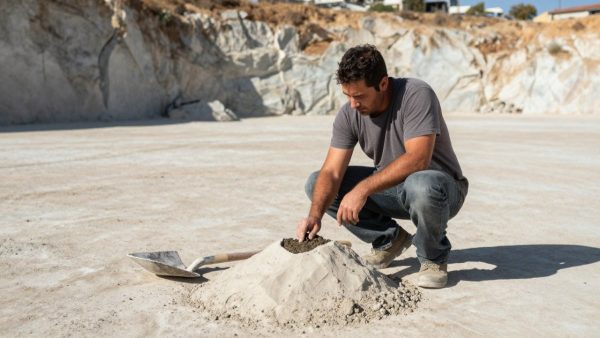
Before acting on any pattern, verify your sample is representative. Stockpiles segregate naturally, with coarse particles rolling to the base and fines accumulating at the peak. Take multiple samples from different depths and locations, combine them, and run the sieve analysis on the composite.
Whether to reject or blend depends on the deviation’s magnitude and each option’s cost. If the fineness modulus is within 0.2 of target, blending with an opposite-gradation stockpile is often most economical. If the deviation is larger or the No. 200 limit is exceeded, rejection is safer.
The choice between automated monitoring and manual testing comes down to how much risk you will absorb from a single bad load. Manual testing is inexpensive to start but only catches problems after material is produced. Automated systems use cameras and sensors on the conveyor to measure particle size in real time, letting the operator adjust settings instantly.
The cost-benefit analysis of automated versus manual grading depends heavily on production volume. For a plant producing a few hundred tons a day, manual testing with a disciplined sampling schedule is often adequate. For high-throughput operations feeding multiple ready-mix plants or large infrastructure pours, the cost of a single rejected load, including hauling, disposal, and the delay to the concrete schedule, can exceed the annual cost of an automated monitoring system. The National Ready Mixed Concrete Association aggregate guidance provides practical benchmarks for quality control frequency that many producers use as a starting point.
Achieving consistent sand grading is a systems-level commitment spanning crushing, washing, classifying, and verifying every load. Treat aggregate as an engineered component of the mix, not a commodity, and demand documented test results from any supplier.
At FST Sand, our precision processing methods, including VSI crushing and multi-stage classification, are designed to deliver the batch uniformity your mix design assumes. Since 1964, we have supplied concrete sand and aggregates that meet ASTM standards for projects across Southern California, with the documentation to prove it. Request a quote from FST Sand to secure a consistent aggregate supply for your next project.
For concrete sand, a fineness modulus between 2.3 and 3.1 is generally accepted. A value below 2.3 produces concrete that is sticky and difficult to finish, while a value above 3.1 leads to harsh, unworkable mixes that are prone to segregation. The specific target depends on your mix design and project specifications. Most ready-mix producers aim for a consistent FM around 2.6 to 2.9, which balances workability with compressive strength. Precision processing helps suppliers maintain this range across every delivery.
Precision processing controls the particle size distribution at each stage of crushing, washing, and classification. Modern systems use screens, hydrocyclones, and sand classifiers to remove oversize particles and excess fines. This tightens the gradation curve, which keeps the fineness modulus stable from one batch to the next. When the FM stays consistent, you avoid the need to constantly adjust your mix design or water-cement ratio. The result is predictable concrete strength, uniform workability, and fewer rejected loads on site.
The most common test is sieve analysis (ASTM C136), which determines the particle size distribution and gradation. You also run specific gravity and absorption tests (ASTM C128) to understand how the sand affects mix water demand. The fineness modulus is calculated from the sieve analysis results. For fines content, you use ASTM C117, which measures material finer than a No. 200 sieve. Reputable suppliers provide these test results, often certified by a third-party lab, so you can verify the material meets your project specifications before it arrives.
Silt vs clay in sand decides drainage, compaction and stability. Compare particle size, plasticity and field tests to judge your aggregate before pouring.

Learn how to fix sinking patio pavers step by step, from diagnosing the low spot to resetting stones and refilling joints with polymeric sand.
Calculate riprap material quantity with a step-by-step workflow from cubic yards to tons, then order the right amount with confidence.