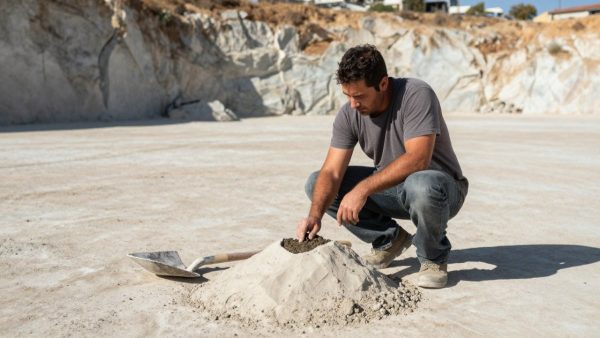
Silt vs Clay in Sand: Key Differences Explained
Silt vs clay in sand decides drainage, compaction and stability. Compare particle size, plasticity and field tests to judge your aggregate before pouring.
Last Updated: September 3, 2026
Riprap stone pricing depends on material type, project scale, and local market conditions. You’re not just paying for rock, you’re paying for durability, proper sizing, and reliable delivery. Angular rock interlocks more effectively than rounded stone, affecting both price and long-term stability of your shoreline or slope protection.
Most projects require the stone itself, accurate tonnage calculation, delivery logistics, and often professional installation. Getting accurate riprap stone pricing means understanding each moving part independently before combining them into a total project cost.
Riprap stone pricing fluctuates based on material sourcing, stone classification, and delivery distance. Local supply availability plays a major role, areas with active quarries nearby enjoy lower material costs, while regions dependent on long-haul trucking see significantly higher per-ton expenses.
Stone density matters more than many contractors realize. Denser materials like granite cost more upfront but require less tonnage to achieve the same protective effect compared to lighter limestone. A cheaper per-ton price doesn’t always mean a cheaper overall project if you need more material to do the job properly.
Seasonal demand also moves pricing. Spring and summer construction seasons push riprap stone pricing higher due to increased demand for landscaping materials and erosion control work. Winter months often see softer pricing, though delivery becomes less reliable in some regions.
The nominal size classification you select directly impacts cost. Larger boulders cost more per ton but cover more area and provide superior durability for high-energy water conditions. Smaller angular rock costs less but may need replacement sooner in aggressive applications.
Riprap stone comes in distinct material types, each with different cost structures and performance characteristics.
Granite riprap is the premium option for erosion control. It’s extremely durable, resists weathering, and maintains structural integrity for decades. Granite’s high density means you need less tonnage to protect a given area, but the per-ton cost is higher than alternatives. Projects requiring maximum longevity, such as permanent shoreline stabilization or critical infrastructure protection, justify granite’s premium pricing.
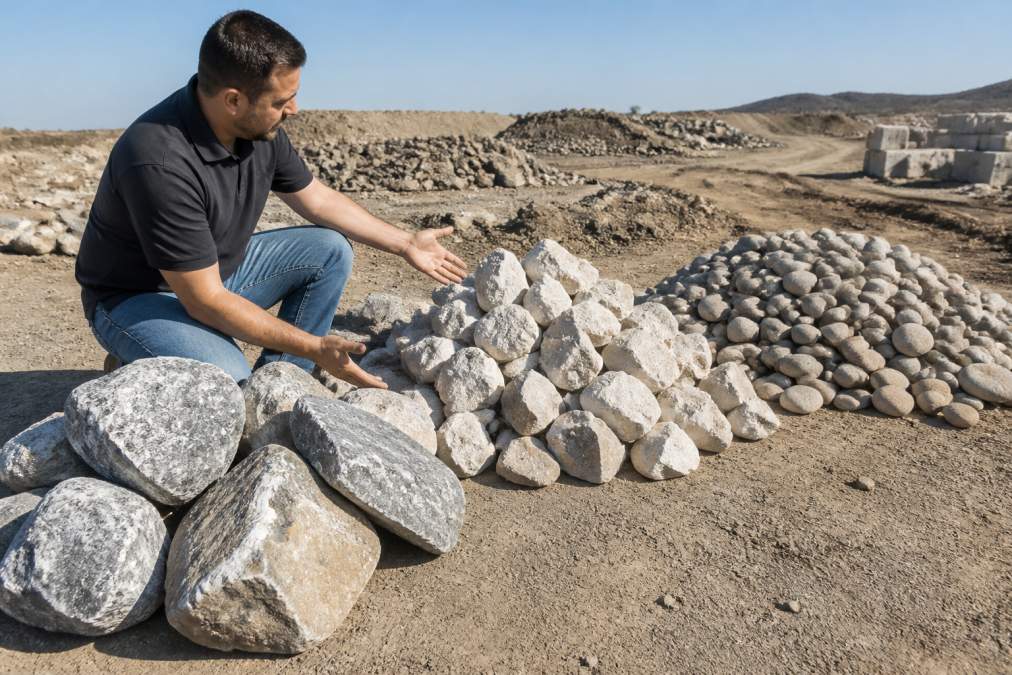
Limestone riprap offers a middle ground between cost and performance. It’s more affordable than granite while still providing solid erosion control for moderate-energy applications. Limestone does weather over time, especially in acidic environments, but for many residential and commercial landscaping projects, this trade-off makes economic sense.
Riverbed stone (river rock) is the most economical riprap option. Naturally rounded by water flow, it’s less effective at interlocking than angular rock, limiting its use to lower-energy applications. Many landscapers use riverbed stone for decorative riprap along calm waterways or drainage swales where the primary goal is preventing erosion rather than withstanding extreme hydraulic forces.
Crushed stone and angular rock are engineered for maximum interlock and stability. Unlike rounded materials, angular stone locks together under load, creating a more cohesive protective layer. This engineering advantage costs more per ton but delivers superior performance in high-energy conditions.
Calculating tonnage requirements is critical, underestimating leads to inadequate coverage; overestimating wastes budget. The calculation depends on stone size, slope angle, and application type. Before finalizing tonnage, you must understand permitting requirements, especially for waterway projects, because regulatory constraints often dictate stone size and placement, which directly affect your tonnage calculation.
Permitting and Environmental Regulations
Riprap projects near waterways, wetlands, or jurisdictional streams typically require permits from federal, state, and local agencies. This directly affects your project timeline, cost, and stone specifications.
The U.S. Army Corps of Engineers regulates riprap placement in navigable waters and wetlands under Section 404 of the Clean Water Act (usace.army.mil). If your project involves waterway stabilization, shoreline protection, or slope work within 100 feet of a water body, you likely need a Section 404 permit. Processing time ranges from 30 days (for simple projects) to 6+ months (for complex applications) (usace.army.mil). Permit fees typically run $100-$500, but the real cost is timeline delay, you cannot purchase or install riprap until the permit is approved.
State environmental agencies add another layer. Most states require riprap projects in or near waterways to comply with state water quality standards and erosion control regulations. Some states mandate specific stone size ranges, geotextile fabric specifications, and installation methods.
Local jurisdictions often impose additional requirements. County or municipal stormwater departments may require erosion control plans, sediment barriers, or post-installation monitoring. Checking with your local planning or public works department before finalizing your design prevents costly redesigns.
Wetland delineation is critical if your project site contains or borders wetlands. A wetland delineation survey (typically $1,500-$5,000) is often required before permit applications are accepted. If wetlands are present, you may need to use alternative erosion control methods or redesign the project to avoid wetland impacts.
Permit applications require detailed site plans, erosion control specifications, and sometimes environmental impact assessments. Hiring a civil engineer or environmental consultant ($1,000-$3,000) to prepare permit applications is standard practice for complex projects.
Calculating Tonnage Requirements
Start with the surface area you need to protect. Measure the length and width of the slope or shoreline, then calculate total square footage. Next, determine the stone size classification required for your application. A coastal slope facing high-energy waves needs larger nominal sizes than a residential drainage swale. Permitting requirements often dictate minimum stone size, so confirm regulatory specifications before finalizing your tonnage calculation.
Stone density varies by material type. Granite typically weighs around 2,600-2,700 pounds per cubic yard. Limestone runs 2,400-2,500 pounds per cubic yard. Riverbed stone is lighter, around 2,200-2,300 pounds per cubic yard.
The depth of riprap coverage matters tremendously. Effective erosion control typically requires a layer at least two stone diameters thick. For a 12-inch nominal stone size, this means roughly 24 inches of coverage. Permitting agencies often specify minimum depth requirements, which override generic industry standards.
A practical formula: multiply your surface area (in square feet) by the desired depth (in feet), then divide by 27 to convert to cubic yards. Then multiply cubic yards by the stone density (in tons per cubic yard) to get your tonnage requirement. Most suppliers can help refine this calculation based on your specific stone type and application.
Delivery represents a significant portion of your total riprap stone pricing, often equaling or exceeding the material cost itself. Understanding delivery logistics helps you negotiate effectively and avoid surprise charges. Geotextile fabric underlayment is equally critical and frequently overlooked in budget planning.
Geotextile Fabric: The Hidden Cost
Riprap is rarely installed directly on soil or existing surfaces. Geotextile fabric (also called filter fabric or erosion control fabric) must be placed underneath to prevent soil migration, maintain slope integrity, and extend riprap service life. This is a structural requirement for any professional riprap installation.
Geotextile fabric typically costs $0.30-$0.80 per square yard, depending on weight rating and permeability class. For a 1,000-square-foot slope (111 square yards), fabric alone runs $33-$89. A 5,000-square-foot shoreline stabilization project requires roughly 555 square yards of fabric, bringing fabric cost to $165-$445, a material expense many planners forget entirely.
Fabric weight and permeability rating depend on soil type and water conditions. Sandy soils with high water flow require heavier, more permeable fabric (typically 4-6 ounces per square yard). Clay soils with slower drainage can use lighter fabric (3-4 ounces per square yard). Installation labor for geotextile adds another $0.15-$0.40 per square yard if professionals handle it.
Bulk Delivery via Dump Truck
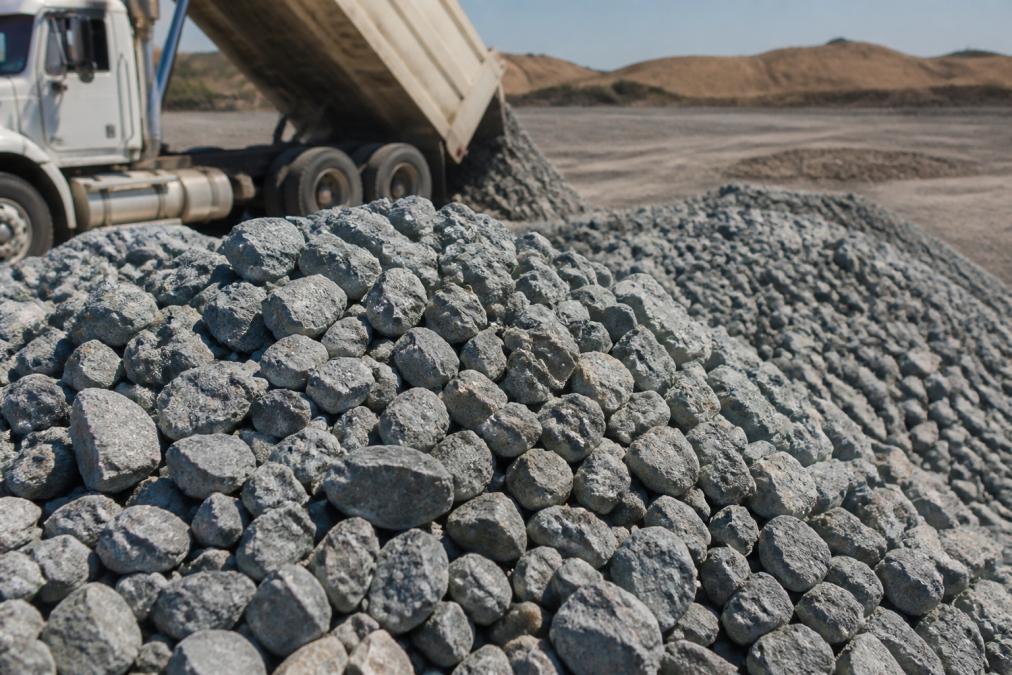
A typical dump truck carries 10-15 tons, depending on the stone size and truck capacity. For larger projects requiring 50+ tons, multiple truck trips become necessary, and per-ton delivery costs can improve with volume due to economies of scale.
Distance from the quarry or supply yard directly impacts delivery cost. Projects within 20 miles of a supplier enjoy the lowest freight rates, typically $3-$8 per ton (dot.gov). Beyond 50 miles, delivery costs rise significantly, $15-$30 per ton is common for 75+ mile hauls.
Site access affects deliverability and cost. Suppliers need clear access for dump trucks, adequate road width (minimum 12 feet for standard dump trucks), low overhead clearance, and stable ground to support heavy vehicles. Difficult site access means longer delivery times and sometimes surcharges of $100-$500 per load.
Timing and scheduling influence delivery cost. Suppliers often offer better rates for flexible scheduling that allows them to consolidate shipments. Scheduling delivery during slower periods (September-April) can reduce costs substantially compared to peak season (May-August).
The decision between DIY and professional installation significantly impacts your total riprap stone pricing and project success. This isn’t just about labor cost, it’s about whether the work gets done correctly.
DIY riprap installation saves on labor but requires equipment rental, site preparation, and significant physical effort. Equipment rental alone can run several hundred dollars for a weekend. If you underestimate the physical demands, you’ll end up hiring help anyway, negating cost savings.
Professional installation ensures proper slope preparation, correct stone sizing placement, and appropriate geotextile underlayment installation. Contractors have the equipment, experience, and understanding of local conditions to get the job right the first time.
The true cost comparison emerges when you factor in longevity. Poorly installed riprap fails faster, requiring expensive repairs or complete replacement. A professional installation that costs 30% more upfront might deliver 50% longer service life, making it the better financial decision over a 10-20 year horizon.
For small residential projects under 20 tons, DIY installation makes sense if you have equipment access and physical capability. For commercial projects, municipal work, or anything requiring engineered specifications, professional installation is the practical choice.
Requesting accurate quotes requires you to provide specific information that suppliers need to calculate riprap stone pricing properly. Vague requests lead to vague estimates that don’t reflect your actual costs.
Start by communicating your application type clearly. Are you stabilizing a shoreline, protecting a slope, creating a drainage swale, or completing a landscaping project? Each application has different stone size requirements and performance expectations.
Provide detailed measurements: surface area in square feet, slope angle, water conditions (if applicable), and desired coverage depth. Photos help tremendously, suppliers can often assess site conditions and provide better recommendations from images than from descriptions alone.
Specify your stone type preference or ask for recommendations. If you’re flexible on material, request quotes for multiple options so you can compare riprap stone pricing across material types.
Ask for itemized quotes that break out material cost per ton, delivery charges, and any site-specific fees separately. This transparency helps you understand where your budget goes and identify potential savings.
Confirm delivery timing and any seasonal surcharges upfront. Ask whether the quote includes unloading at your site or if you’re responsible for positioning material.
Request references from recent projects similar to yours. Real project experience tells you more than any pitch.
Riprap stone pricing reflects material quality, proper sizing, and reliable delivery, three elements that determine whether your erosion control project succeeds or fails. The cheapest option rarely delivers the best long-term value, especially when undersized stone fails prematurely and forces costly repairs.
At FST Sand, we’ve supplied riprap and construction aggregates to Southern California projects since 1964. Our meticulously processed materials exceed industry standards, and our team helps you calculate accurate tonnage, select the right stone type, and schedule reliable delivery. Whether you’re a contractor managing large infrastructure projects, a developer overseeing site stabilization, or a homeowner protecting a slope, we deliver the quality and consistency your project demands. Request a quote today and let our experience guide your riprap stone pricing decision.
Riprap stone pricing depends on material type, size classification, quantity ordered, and delivery distance. Granite, limestone, and river rock each have different cost structures. For current riprap stone pricing and per-ton rates, contact FST Sand for a quote tailored to your project specifications and location.
Material type (granite costs more than limestone), stone size classification (larger boulders cost more per ton), bulk quantity (larger orders reduce per-unit cost), delivery distance and site access, and seasonal demand all affect riprap pricing. Geotextile underlayment requirements and installation complexity also impact total project costs.
Measure the area to be protected in square feet, determine desired riprap depth (typically 1-2 feet for slope protection), and account for stone density. Most suppliers provide tonnage calculators, or you can contact FST Sand with your project dimensions for a precise tonnage estimate and delivery recommendation.
Delivery is typically quoted separately from material cost and depends on order size, delivery distance, and site access conditions. Bulk delivery via dump truck is more economical for large projects, while smaller orders may incur higher per-ton freight logistics costs. Request a complete quote including delivery to understand your total riprap stone cost.
Silt vs clay in sand decides drainage, compaction and stability. Compare particle size, plasticity and field tests to judge your aggregate before pouring.
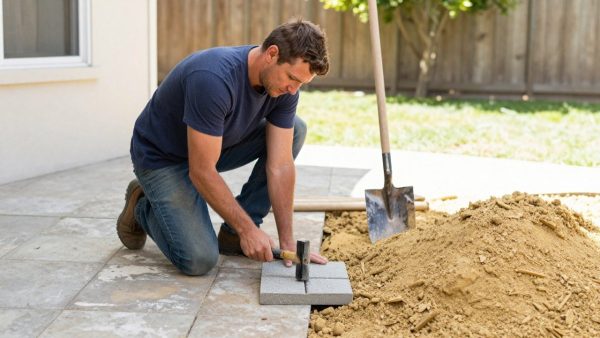
Learn how to fix sinking patio pavers step by step, from diagnosing the low spot to resetting stones and refilling joints with polymeric sand.
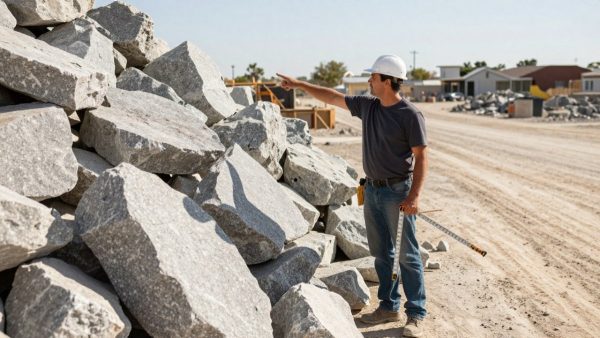
Calculate riprap material quantity with a step-by-step workflow from cubic yards to tons, then order the right amount with confidence.