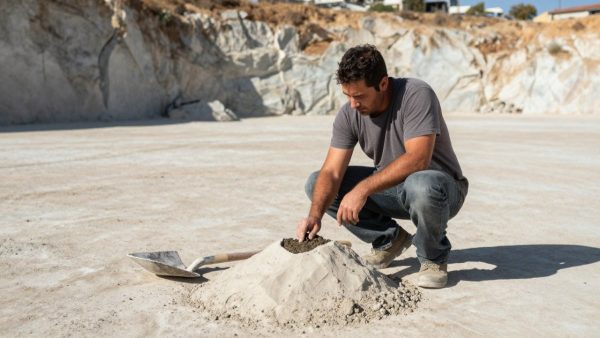
Silt vs Clay in Sand: Key Differences Explained
Silt vs clay in sand decides drainage, compaction and stability. Compare particle size, plasticity and field tests to judge your aggregate before pouring.
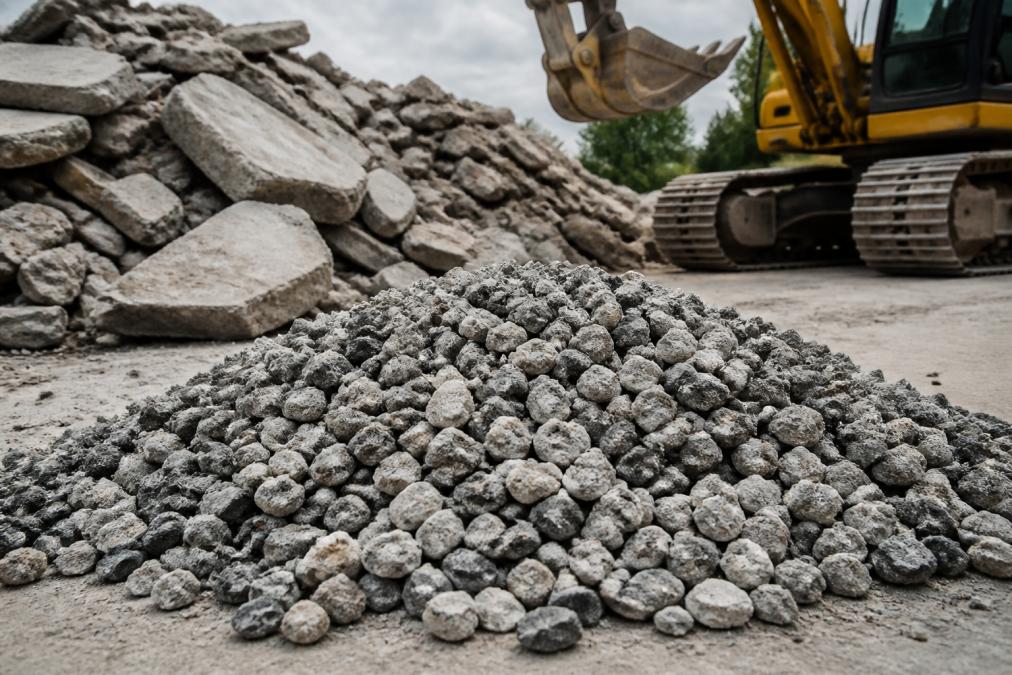
Recycled concrete aggregate is crushed concrete reclaimed from demolition sites, road tear-outs, and construction debris that has been processed, screened, and graded for reuse in new construction. Instead of sending old concrete to a landfill, contractors crush it into clean, uniform aggregate that performs many of the same functions as quarried stone. Recycled concrete aggregate is one of the most practical answers available today for contractors and developers who want to lower costs and meet sustainability targets.
Processing removes steel rebar, dirt, and other contaminants, then sorts the material by size using the same grading standards applied to natural aggregates. What emerges is a dense, angular product suitable for road base, structural fill, drainage layers, and non-structural concrete applications.
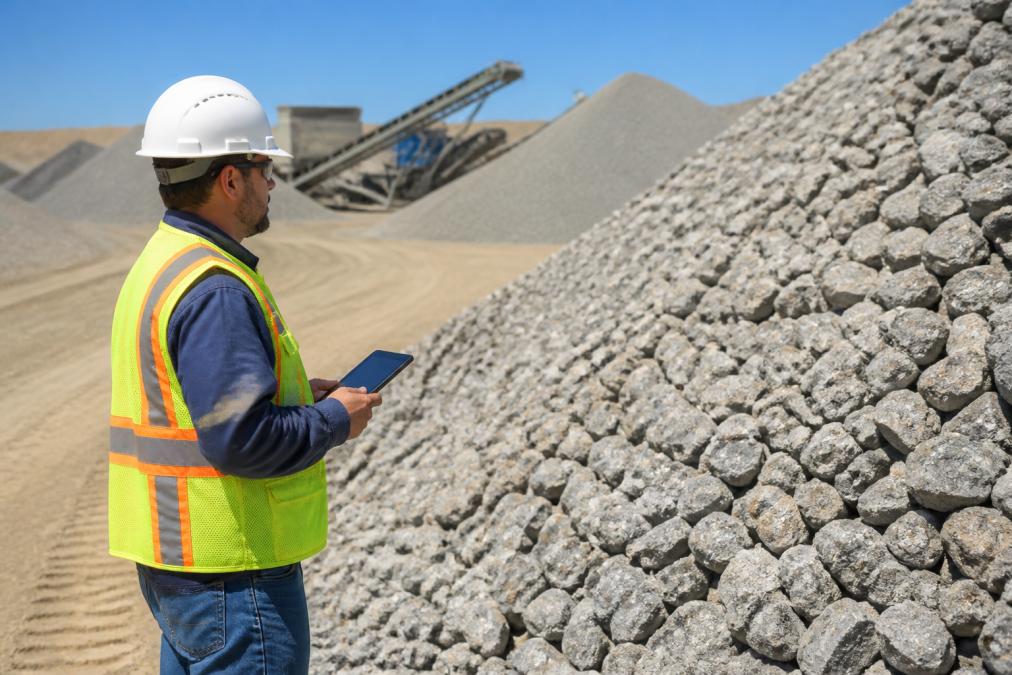
Construction and demolition debris is one of the largest waste streams in the United States. When concrete is crushed and reused, it stays out of landfills and re-enters the supply chain as a valuable material, aligning directly with circular economy principles.
A single road reconstruction project can generate thousands of tons of concrete that would otherwise occupy landfill space (the EPA). Recycling that material on-site or locally turns a disposal cost into a usable resource, helping municipalities move the needle on waste diversion goals.
The carbon footprint of aggregate comes largely from extraction and transportation. Virgin aggregates require quarrying, drilling, blasting, and hauling, all of which consume significant energy. Recycled concrete aggregate skips the quarrying stage entirely and is often processed near the demolition site, shortening haul distances considerably.
For project teams tracking embodied carbon, the savings are meaningful. Using recycled material reduces demand for newly quarried stone and cuts fuel burned in long-haul trucking, which is why many public agencies now give preference to bids that specify recycled content.
Material cost savings are often the deciding factor for project managers. Recycled concrete aggregate typically costs less than virgin crushed stone because the raw input, demolition concrete, is abundant and inexpensive to acquire. On-site crushing multiplies the savings by eliminating both purchase price and trucking costs.
Transportation is frequently the largest single line item in aggregate pricing. Local recycling reduces the distance between source and job site, lowering fuel costs and truck trips. For large infrastructure projects, these savings can reach six figures.
Recycled concrete aggregate delivers dependable load-bearing performance in many applications. Its angular, rough-textured particles interlock well when compacted, creating a stable base comparable to virgin aggregate in road base and structural fill roles.
The most common uses are granular base under pavements, backfill behind retaining walls, and pipe bedding, where recycled aggregate meets the same compaction and gradation specifications as quarried stone. The key is proper processing, which is why sourcing from a reputable supplier matters.
Every ton of recycled aggregate used means one less ton of stone extracted from a quarry. Quarrying consumes non-renewable energy, alters landscapes, and requires ongoing site remediation. Substituting recycled material directly reduces pressure on natural resources and extends the life of existing quarry operations.
This benefit compounds across a regional economy. When multiple projects in a metro area specify recycled aggregate, the cumulative reduction in quarrying activity is substantial, making it an easy substitution for those seeking to reduce their environmental footprint.
The physical properties of recycled concrete aggregate suit it well for drainage and compaction. It compacts firmly into a dense layer that supports heavy loads, while its permeability reduces hydrostatic pressure behind walls and under pavements.
Proper compaction is essential. Recycled aggregate should be placed in lifts and compacted with appropriate equipment to achieve specified density, providing a stable, free-draining base that performs reliably for decades.
Construction projects pursuing LEED or other green building certifications earn credits for using materials with recycled content. Specifying recycled concrete aggregate is a direct, verifiable way to accumulate those credits while addressing waste management and sustainable sourcing requirements.
For public works projects, many agencies now require documentation of sustainable sourcing practices. Recycled aggregate provides a clear paper trail: the material is certified as recycled, its source is documented, and its use is measurable, making it easier for contractors to meet compliance requirements.
| Benefit | Primary Impact | Best Application |
|---|---|---|
| Cuts landfill waste | Waste diversion | Demolition-heavy projects |
| Lowers carbon footprint | Reduced emissions | Urban job sites |
| Reduces material costs | Budget savings | Large infrastructure |
| Reliable strength | Structural stability | Road base, structural fill |
| Conserves natural resources | Reduced quarrying | Regional supply chains |
| Good drainage and compaction | Performance | Drainage layers, backfill |
| Green building credits | Certification | LEED-track projects |
The practical differences between recycled concrete and virgin aggregate come down to sourcing, cost, and application range. Virgin aggregate is quarried from natural stone deposits; recycled concrete aggregate is manufactured from crushed demolition material and processed to meet similar specifications.
Virgin aggregate offers the broadest range of applications, including structural concrete where the highest strength and consistency are required. Recycled concrete aggregate performs well in base layers, fill, and drainage, but most engineers do not specify it for high-strength structural concrete due to source variability and residual mortar that can affect the aggregate-cement bond.
The replacement ratio matters in design. In non-structural applications, recycled aggregate can often substitute at a one-to-one ratio. Where higher load-bearing capacity is required, engineers may specify a blend or limit recycled content to a percentage of the total.
Recycled concrete aggregate serves a broad range of construction purposes, but the key to successful specification is matching the material’s physical properties to the application’s performance requirements. Understanding where RCA excels, and where it should be avoided, requires a closer look at the technical standards that govern its use.
Road base is the single largest application for RCA. The material must meet the same gradation and compaction specifications as virgin aggregate. AASHTO provides guidance through its M 147 standard, and many state DOTs have adopted specific specifications for recycled content. For example, Caltrans allows RCA in aggregate base provided the material meets gradation requirements and has a sand equivalent value of at least 30 (dot.ca.gov). The angular particles of RCA interlock well when compacted, creating a stable base comparable to virgin aggregate.
For structural fill behind retaining walls, abutments, and foundations, RCA provides dependable load-bearing performance. When placed in lifts of 8 to 12 inches and compacted to 95 percent of maximum dry density per ASTM D698, it achieves the required stability (astm.org). However, residual cement paste can increase the material’s pH. In drainage applications where water flows into sensitive environments or contacts galvanized steel, this alkalinity must be evaluated. A simple pH test on the leachate, typically between 8 and 10 for well-processed RCA, is usually sufficient.
Drainage applications take advantage of the material’s permeability. French drains, pipe bedding, and sub-base drainage layers all benefit from the free-draining characteristics of crushed recycled concrete. The key specification is gradation. Open-graded RCA, typically in the 1-inch to 3/4-inch range, allows water to pass through freely while still providing structural support. For pipe bedding, the material must pass ASTM C33 requirements for organic impurities and clay lumps. Properly processed RCA that meets these standards performs reliably for decades.
A critical part of specifying RCA is understanding its limitations. Most engineers do not specify RCA for high-strength structural concrete (above 4,000 psi) due to source variability and residual mortar. ACI 318 does not explicitly prohibit RCA, but it requires all aggregates to meet specific acceptance criteria, which many RCA sources struggle to meet. Additionally, RCA should not be used in constant contact with moisture and sulfate-rich soils, as residual cement paste can react and cause expansion. The most common practice is to limit RCA to base, fill, and drainage applications, or to blend it with virgin aggregate at a ratio of 20 to 30 percent when higher performance is required.
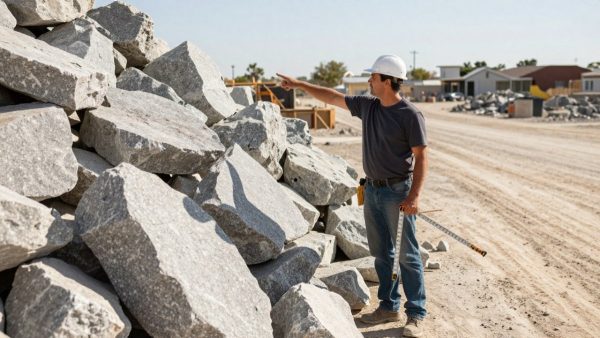
Landscaping professionals use recycled aggregate for pathways, utility trenches, and as a cost-effective bulk material where appearance is secondary to performance. For erosion control, larger fractions function similarly to riprap at a lower cost than quarried stone. The key is to specify the correct fraction size for the expected water flow, typically 6 to 12 inches for moderate slope protection. When sourced from a reputable supplier, RCA can deliver comparable performance to virgin material.
Pricing for recycled concrete aggregate varies with market conditions, processing costs, and delivery distance. Because the raw material is demolition waste rather than quarried stone, the base price per ton is typically lower than virgin aggregate. Transportation remains the largest variable, so sourcing locally delivers the greatest savings.
The cost per ton also depends on the grade and size required. Well-graded, clean aggregate processed to specification commands a higher price than unscreened fill. For current pricing, check supplier websites or request a quote, since rates change with fuel costs and material availability.
Sourcing quality recycled concrete aggregate is a multi-step process that goes beyond a simple phone call. Project managers who follow a structured approach avoid the two most common failure points: receiving contaminated material that fails compaction tests, and dealing with suppliers who cannot deliver on schedule. Here is a step-by-step guide to sourcing RCA that meets specification.
Start by confirming that the supplier operates a dedicated crushing and screening plant, not just a demolition yard that sells unprocessed rubble. Ask whether the material is processed through a jaw crusher or impact crusher, followed by a screening plant. A reputable supplier will have a processing line that removes steel rebar via magnetic separation, screens out dirt and fines, and produces a clean, well-graded product. If the supplier cannot describe its processing line in specific terms, that is a red flag.
Before committing to a purchase, request the gradation test results for the specific product you intend to buy. These results, generated per ASTM C136, show the particle size distribution and confirm the material meets the specification for your application. For road base, the material should fall within the AASHTO M 147 gradation bands. For drainage, you want an open-graded product with minimal fines. A supplier that cannot provide current gradation test results is not processing to specification.
Contamination is the single biggest quality risk with RCA. The most common contaminants are wood, gypsum wallboard, asphalt, and clay. Wood and gypsum create voids that lead to settlement, asphalt softens under heat, and clay causes the material to hold water and fail compaction. Ask the supplier what their maximum allowable contaminant level is. Most reputable suppliers target less than 1 percent by weight, per many state DOT specifications. If the supplier cannot state a contaminant limit, look elsewhere.
A project delayed by a supplier that cannot keep up with the schedule costs far more than any savings on material. Confirm the supplier’s delivery capacity before committing to a large order. Ask how many trucks they can dispatch per day, whether they have stockpiles ready for immediate loading, and what their lead time is. For projects requiring 5,000 tons or more, confirm that the supplier can maintain a steady delivery schedule over the life of the project.
If your project is pursuing LEED certification, you need documentation that verifies the recycled content of the material. Under LEED v4.1, the Materials and Resources credit for Construction and Demolition Waste Management requires documentation of waste diversion rates, and the Building Product Disclosure and Optimization credit requires a declaration of recycled content. A supplier that can provide a letter certifying the percentage of recycled content in their RCA, typically 95 to 100 percent, makes it straightforward to earn these credits. Ask for this documentation upfront.
For large projects, the most reliable way to verify material quality is to request a sample and run a test pad. Place a small quantity of the RCA, compact it with the same equipment you will use on the project, and test the density per ASTM D698. This takes a few hours but eliminates the risk of discovering a compaction problem after the material is in place. Most suppliers will provide a sample at no cost.
FST Sand has supplied construction aggregates across Southern California since 1964, and our team understands the grading specifications and delivery schedules that keep projects moving. We process materials to meet industry standards and provide the documentation that municipal and commercial projects require. Request a quote through our website to get current pricing and delivery options.
RCA typically has higher water absorption and lower density than virgin aggregate. Its surface may include residual mortar, which can affect the bond with cement in new concrete. For high-strength structural concrete, you may need to blend RCA with virgin material or use it only for non-structural applications like road base or fill. Grading consistency can also vary, so it is important to source from a supplier that provides certified, processed material.
Both materials work well for drainage and as a base layer. The main difference is that RCA is often more angular, which helps it lock together better for compaction and stability. Natural gravel is typically rounder and may shift under load. RCA also offers environmental benefits by reducing landfill waste and the need for quarrying. For many applications like road base, RCA can perform comparably to natural gravel.
Yes, but with limits. Many state DOTs allow RCA in structural fill and low-traffic road bases. For structural concrete, standards like ASTM C33 permit up to a certain replacement ratio of virgin coarse aggregate with recycled material. The suitability depends on the source material quality and the processing method. For critical structural elements, you will need to test the specific batch for strength and durability and follow the relevant local codes.
On a per-ton basis, recycled concrete aggregate can be more cost-effective than virgin crushed stone. The exact recycled concrete aggregate cost per ton depends on your location, delivery distance, and the local availability of virgin materials. In areas with high tipping fees for construction debris, RCA can become even more economical. Contact us for current pricing and delivery options to your site.
Silt vs clay in sand decides drainage, compaction and stability. Compare particle size, plasticity and field tests to judge your aggregate before pouring.
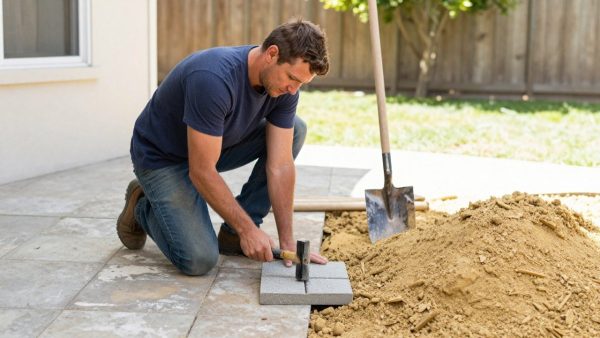
Learn how to fix sinking patio pavers step by step, from diagnosing the low spot to resetting stones and refilling joints with polymeric sand.
Calculate riprap material quantity with a step-by-step workflow from cubic yards to tons, then order the right amount with confidence.