
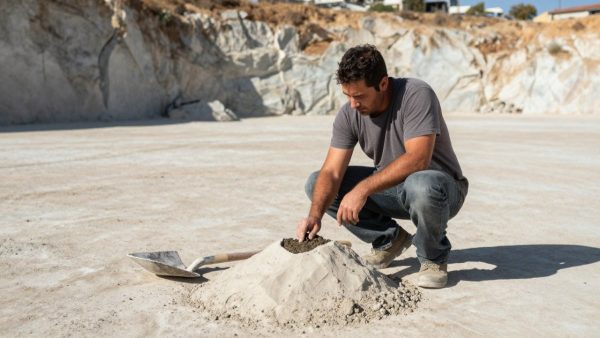
Silt vs Clay in Sand: Key Differences Explained
Silt vs clay in sand decides drainage, compaction and stability. Compare particle size, plasticity and field tests to judge your aggregate before pouring.
Last Updated: October 28, 2026
Quick Summary
Sand impurities weaken concrete by blocking cement paste from bonding aggregate and by raising water demand, which lifts the water-cement ratio and lowers compressive strength. Clay films also turn the paste-aggregate interface into a plane of weakness, so flexural and split-tensile strength drop before compressive strength does.
Sand impurities are any unwanted material in fine aggregate that interferes with cement hydration, water demand, or the bond between paste and stone. They matter because concrete strength depends on a clean, predictable mix. At FST Sand, we have supplied concrete sand since 1964.
The core problem is simple. Cement paste is the glue. Aggregate is the body. Anything sitting between them, whether clay film, silt, organic matter, or excess fines, blocks that glue from doing its job.
Clay and silt are the most common contaminants in natural sand, and they damage concrete through three distinct mechanisms that are often lumped together. Separating them matters because the fix differs: silt is mostly a surface-area and water-demand problem, clay adds a swelling and bond-film problem, and both interact with admixtures in ways that pure fines do not.
Silt particles are fine but relatively inert. Their harm is geometric: the finer the particle, the more surface area per pound, and every square foot of wetted surface pulls mixing water away from cement hydration. A sand that passes the same sieve grading but carries extra material finer than the No. 200 (75 µm) sieve will demand more water at the same slump. If the batch plant holds slump by adding water, the water-cement ratio rises and compressive strength falls, the classic Abrams relationship. If the plant holds water and adds cement instead, yield and cost rise.
Clay is not just finer silt. Many clay minerals, montmorillonite, illite, and kaolinite in particular, carry charged surfaces and absorb water into interlayer spaces, so they swell. That swelling does two things. First, it makes water demand unpredictable: a sand that tested fine dry can stiffen a mix after batching. Second, clay platelets migrate to the aggregate surface and form a film between the paste and the stone. The interfacial transition zone (ITZ) is the weakest link in normal-strength concrete, and a clay film turns it into a plane of weakness.
Clay surfaces adsorb water reducers and superplasticizers. A sand with high clay content can consume a significant fraction of the admixture dose, forcing higher dosages to hit slump, and higher dosages can bring segregation, retardation, or both. This is why a mix that performed well with one sand source can behave differently with a new delivery even when the sieve analysis looks acceptable.
A common pattern in field and lab data: as the clay-plus-silt fraction passing the No. 200 sieve rises, compressive strength at 7 and 28 days falls, and the gap between compressive and flexural strength widens. The loss is not confined to early age, it persists at later curing periods because the ITZ weakness does not heal. The practical takeaway is that a sand failing the wash test is not a cosmetic issue to be watered through; it is a mix-design variable that shows up in cylinder breaks.
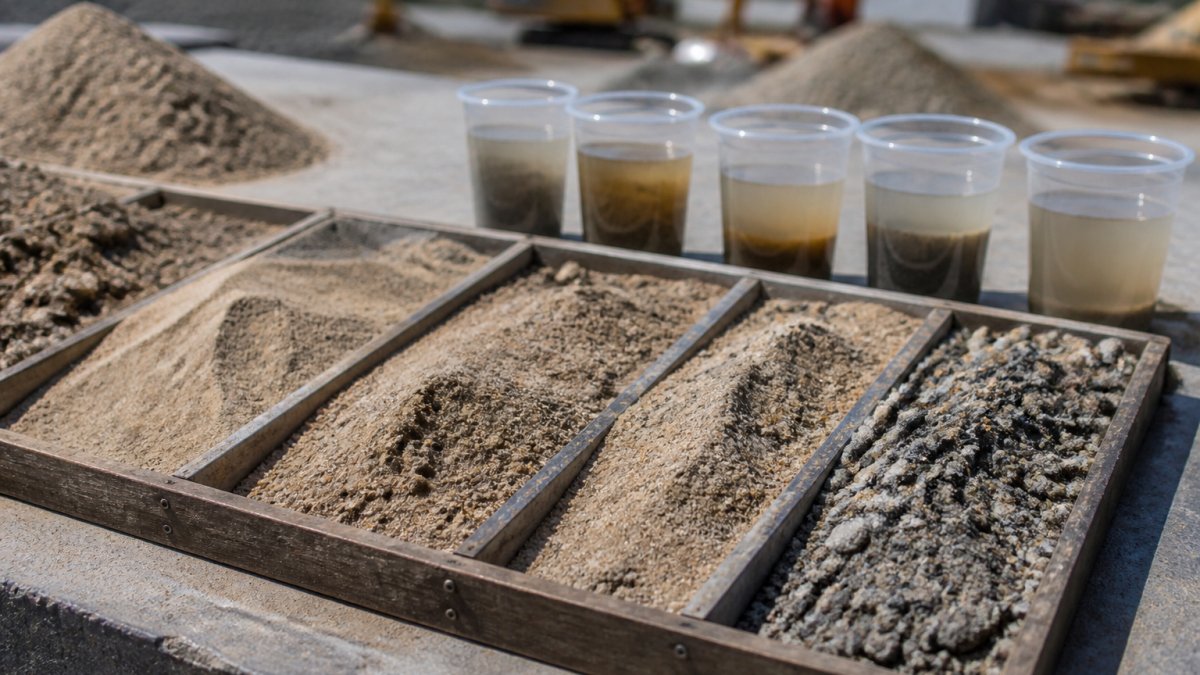
A jar test separates the layers, but the field decision is simpler: silt-dominated contamination responds well to washing and blending; clay-dominated contamination is harder to wash out because the platelets cling to aggregate surfaces and may require attrition scrubbing, not just rinsing. If a source is clay-heavy, blending with a clean coarse sand is often more reliable than trying to wash the clay away.
Organic impurities in fine aggregate are decaying plant material, roots, and humus that show up as brown or black staining in the sand. Rigorous testing protocols remain the most effective defense against these contaminants, as verifying building material quality ensures that only clean, inert aggregates contribute to the structural integrity of the final mix.
Dark sand is not automatically bad. Some clean sands carry color from harmless minerals. But a brownish tint combined with a musty smell and slow-setting concrete is a strong warning sign. A common mistake is dismissing discoloration as cosmetic.
Grading is the distribution of particle sizes in the sand, and it drives workability and water demand more than almost any other property. Well-graded sand packs efficiently, leaving less void space for paste to fill.
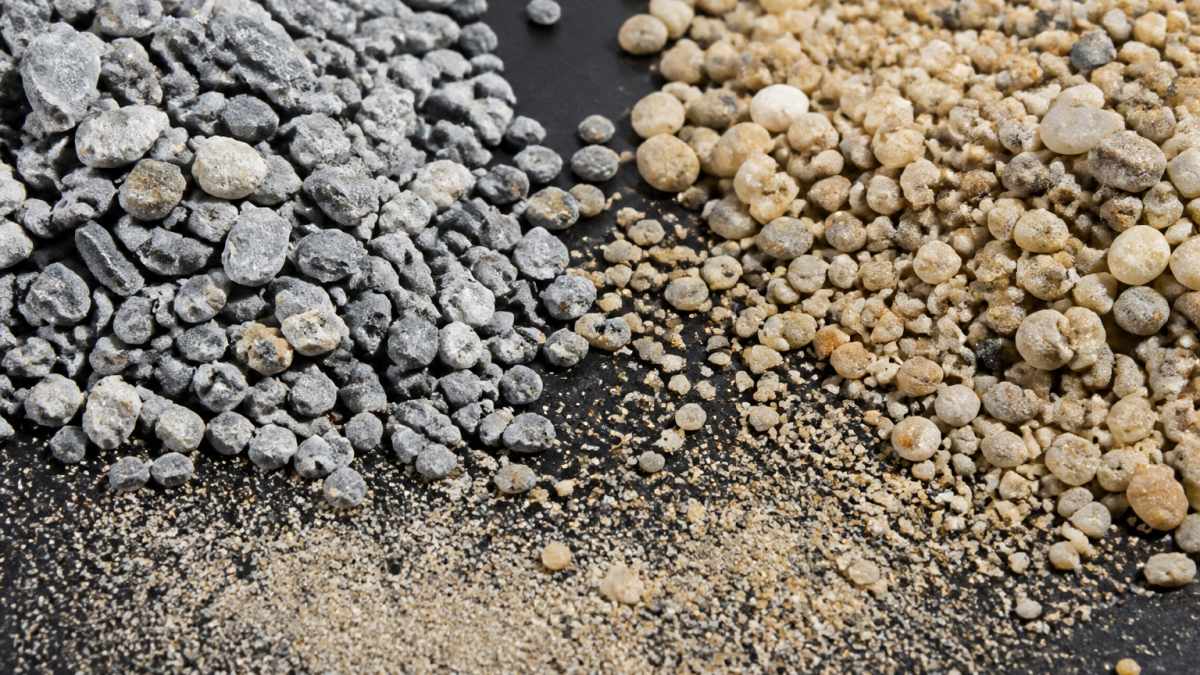
Particle shape matters too. Angular, rough particles lock together and boost bond, but they need more water to achieve a given slump. Rounded river sand flows easily but can reduce interlock.
Excess fine particles, meaning material passing the finest sieves, inflate surface area and water demand. A moderate amount of rock dust can help grading. Too much acts like silt and hurts strength development.
Concrete sand quality tests fall into two groups: quick field checks you can run on site and lab tests that give you defensible numbers.
Lab tests give you the numbers spec sheets demand: sieve analysis for grading, a wash test for material finer than the finest sieve, and an organic impurities test using a color standard.
If you want to see what properly washed material looks like as a product, you can view the washed concrete sand we supply.
Acceptance limits for concrete sand come from two places: the project specification and the applicable ASTM standards for fine aggregate. The most commonly cited are ASTM C33 (Standard Specification for Concrete Aggregates), which sets grading bands and limits on deleterious substances, and ASTM C128 and C136 for density and sieve analysis. Your spec sheet should state the maximum allowable clay and silt content, the required grading band, and any chloride or organic limits.
| Situation | Corrective Action | What to Watch |
|---|---|---|
| Slightly high fines (wash loss just over spec) | Blend with clean, coarse sand and re-test the blend | Re-run sieve and wash test on the blended stock |
| Heavy clay or silt | Reject the load; wash with attrition scrubbing or re-source | Do not add water to compensate for stiffness |
| Organic staining | Request ASTM C40 test; if it fails, run ASTM C87 mortar strength test | Set retardation and low early strength |
| Grading gap | Blend two sources to fill the C33 band | Confirm the combined sieve curve, not just each source |
| Chloride concern (sea or dune sand) | Reject and verify source; washing is not a reliable fix | Rebar corrosion risk in reinforced concrete |
| Clay lumps or friable particles | Screen or crush, then re-test | Popouts and surface defects |
Washing removes silt, clay, and excess rock dust by classification, and it is the most effective single fix for fine-particle contamination. It does not remove organic matter locked inside particles, it does not correct a fundamentally gap-graded deposit, and it will not rescue sand with chloride contamination from sea or dune sources. For those cases the corrective action is rejection or re-sourcing, not treatment.
If you are exploring fines and grading options, rock dust as a fine aggregate is worth reviewing for how particle size affects the mix.
We process our materials to exceed industry standards.
You can learn more about who we are and our decades of family-owned operation. If you are local, check our service options for Corona. Not sure we reach you? Review the areas we serve before you call.
Best for: Contractors, developers, and public works teams that need tested, consistent concrete sand.
Skip if: You need a one-time small pickup with no spec requirements.
Clay and silt coat aggregate particles and block the bond between sand and cement paste, and they absorb mixing water that would otherwise drive cement hydration. The result is a mix that needs more water for the same slump, which raises the water-cement ratio and lowers compressive strength.
The main culprits are clay and silt fines, organic matter such as roots and humus, chlorides from sea sand, sulfates, mica, and soft or porous rock particles. Each acts differently: fines raise water demand, organics interfere with cement hydration, and chlorides drive steel corrosion. Sand impurities also include excess rock dust and poorly graded fine particles that leave voids in the mix. Testing for each type is the only reliable way to know what you are buying.
Start with a visual check for staining, roots, or excessive dust, then run field tests: a jar test to estimate silt and clay, and the colorimetric or bottle test for organic impurities. Confirm with lab work covering sieve analysis, fineness modulus, and the sand equivalent test. Compare results against the acceptance limits in ASTM C33.
Washing sand for concrete removes clay, silt, and excess rock dust, which lowers water demand and restores the bond between aggregate and paste. It does not remove chloride ions absorbed into the sand grains, and it will not fix a badly graded material or organic contamination that has stained the particles. Washing is most effective when the problem is loose fines. Ask your supplier for washed sand with current test data showing silt content within ASTM C33 limits.
Your next pour deserves sand that meets spec the first time, not the third. FST Sand delivers precision-processed concrete sand, competitive pricing, and a reliable supply chain built over six decades. Get started with FST Sand and request a quote for tested concrete sand today.
Silt vs clay in sand decides drainage, compaction and stability. Compare particle size, plasticity and field tests to judge your aggregate before pouring.

Learn how to fix sinking patio pavers step by step, from diagnosing the low spot to resetting stones and refilling joints with polymeric sand.
Calculate riprap material quantity with a step-by-step workflow from cubic yards to tons, then order the right amount with confidence.