
Silt vs Clay in Sand: Key Differences Explained
Silt vs clay in sand decides drainage, compaction and stability. Compare particle size, plasticity and field tests to judge your aggregate before pouring.
Quick Summary
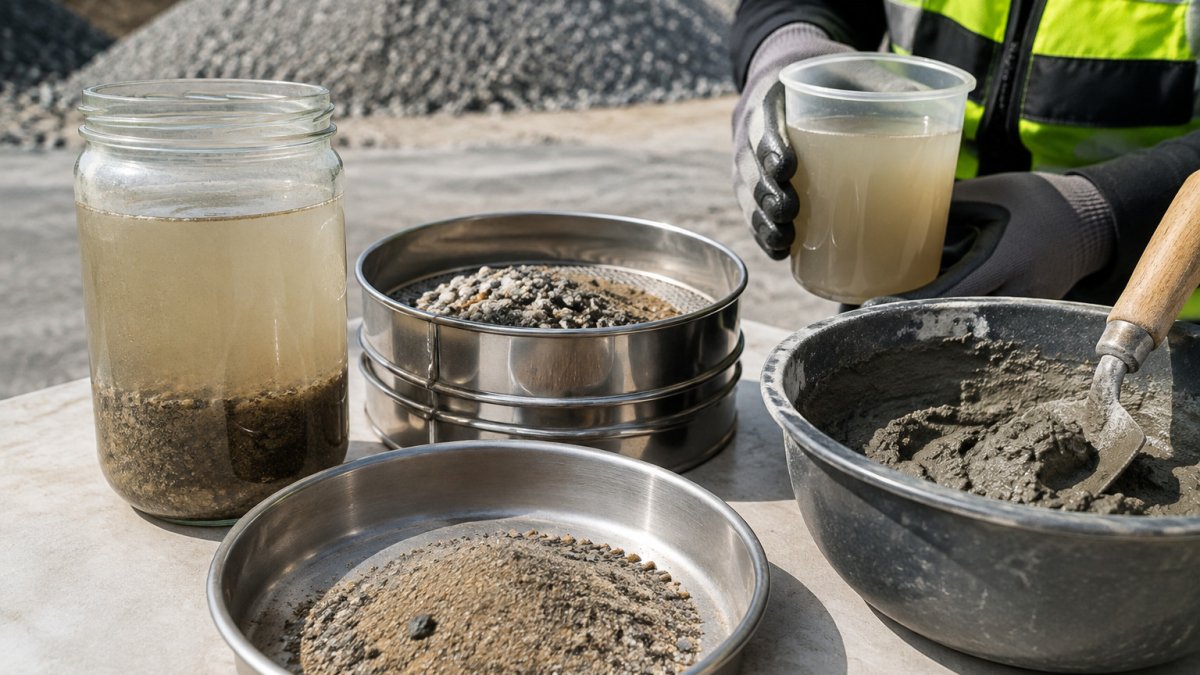
Silt content weakens mortar because fine particles coat the sand grains and block the cement paste from bonding to them. Even small amounts can lower strength, so keeping silt low gives a stronger, more consistent mortar. Masonry sand is typically capped at 5% fines under ASTM C144.
Silt in fine aggregate weakens mortar because the fine particles coat the sand grains and block the cement paste from bonding to them. Even a small amount can lower strength. Keeping silt low is one of the simplest ways to get a stronger, more consistent mortar.
Silt and clay are the fine material that washes out of natural sand. They are smaller than the sand grains themselves. Once mixed, they sit on the surface of each grain instead of letting the cement grab it directly.
Here is what that looks like in practice:
The bond between cement paste and sand is what gives mortar its strength. Silt gets in the way. A thin film of fine particles acts like a barrier, so the paste cannot fully wrap around each grain. The result is a weaker interface, and cracks tend to start at these weak points.
Most of the research describes this effect in concrete, but the same mechanism applies to mortar. Because mortar uses a higher share of fine aggregate, the effect of silt is often easier to see.
Silt does not only lower compressive strength. Tensile and flexural strength also tend to drop as silt content rises. These measures matter for masonry walls and joints that bend, shift, or carry load sideways. A mortar that looks strong under compression can still crack early if its bond is weak.
Most specifications cap the fine material that passes the No. 200 (75 µm) sieve in sand used for mortar and concrete, but the number is not universal. The limit depends on the standard, the test method, and the intended use, so the controlling figure is the one named in your project specification.
In the United States, two ASTM standards dominate:
The difference matters: a sand that passes C33 at 4% fines may still fail C144’s 5% cap once clay lumps are counted, and a masonry sand that passes C144 at 6% would fail C33 for concrete. Using poorly graded sand that ignores these strict threshold requirements often leads to premature structural degradation, necessitating the application of specialized masonry repair techniques to restore the integrity of the wall against moisture intrusion.
Two test methods produce the number you compare against the limit:
A field jar test (covered in the next section) is a screening tool, not a substitute for C117. If the jar test suggests a problem, send a sample to a lab for C117 and C142 before you place the sand in a mortar mix.
Watch out: do not assume a supplier’s “washed sand” meets C144 just because it looks clean. Ask for the C117 wash loss and C142 clay-lump result on the actual stockpile, and confirm the values fall under the limit your specification cites.
The article compares the fines limits set by the two main ASTM standards for sand.
| Standard | Use | Fines limit (No. 200 sieve) |
|---|---|---|
| ASTM C33 | Concrete aggregate | 3% (up to 5% if approved) |
| ASTM C144 | Masonry mortar aggregate | 5% (up to 7% for blended fines) |
Before you accept a delivery, check more than silt. Verify these items:
Ask the supplier for test reports, and confirm they match the sand you receive.
A jar test gives you a quick, low-cost estimate of silt and clay in a sand sample before you commit a load to a mortar mix.
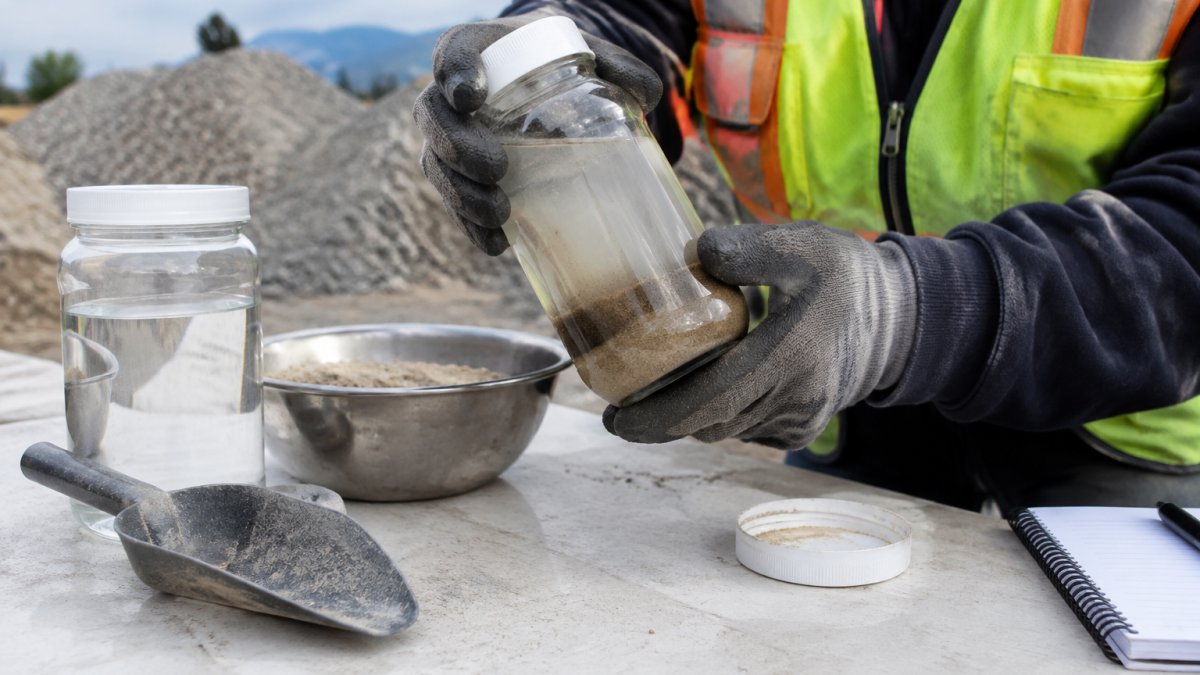
What you need: a clear straight-sided jar (a quart mason jar works well), a ruler or tape measure, clean water, a few drops of liquid dish soap or a dispersing agent, and a representative sand sample.
Step-by-step procedure:
Reading the result:
These thresholds are rules of thumb, not code limits. The actual acceptance limit comes from the specification your project cites, such as the C144 masonry limit or the C33 concrete limit.
Watch out: a jar test on a single scoop can miss variability across a stockpile. Sample from several locations and depths, and if two samples disagree by more than a couple of percentage points, treat the pile as suspect and get a lab test.
Silt does more than weaken the bond. It also changes how the mix behaves while you work it.
Fine particles absorb and hold water, so the mix tends to need more water to stay workable. More water raises the water-cement ratio, and a higher ratio usually means lower strength and more porosity.
Slump is a common field check for workability. As silt content rises, slump often changes, and the mix can feel stiffer or harder to place. Adding water to fix the feel can make the strength problem worse.
Watch out: do not add water on site to fix a stiff mix caused by fine material. Adjust the mix design or the sand source instead.
Sand bulking is another factor that changes your mix. When sand holds some moisture, its particles push apart and the volume increases. A measure of damp sand can contain noticeably less actual sand than the same measure of dry sand.
If you batch by volume, this can throw off your proportions. Batch by weight when you can, or measure the moisture content and adjust the water in your mix to match.
The practical takeaway: a sand that looks fine can still give you a weak mortar if the moisture and fines are not controlled together.
Getting the right sand is the simplest way to avoid silt problems. FST Sand has served Southern California since 1964, and our family-owned team processes materials to exceed industry standards. Browse the Arena Plaster Lavada offering for washed plaster sand with controlled fines.
When you request a quote, ask for the silt and grading test results for the sand you plan to use. Pricing depends on quantity, delivery date, and location, so the best next step is to request a quote directly.
Limits depend on the governing specification, so verify the requirement for your project before ordering. Under ASTM C144, masonry sand is limited to a small percentage of material passing the 75-micrometer (No. 200) sieve. Ask your supplier for test results on the specific lot you will receive, and confirm that the sand meets the project specification your engineer or inspector references. FST Sand can provide product information and a quote on request, and pricing depends on quantity, delivery date, and location.
The simplest field check is a settling or jar test: place a sample of sand in a clear jar, fill it with water, shake vigorously, and let it settle for about an hour. The fine silt and clay form a distinct layer on top of the sand, and you can compare that layer’s height to the height of the sand to estimate the percentage. A laboratory wash test under ASTM C117 gives a more accurate result. Repeat the test on several samples from different parts of the stockpile, since silt content can vary.
Yes. Silt and clay coat sand particles and interfere with the bond between cement paste and aggregate, which reduces strength. Excess fines also raise water demand, so a mix made with silty sand either needs more water, which lowers strength, or stays stiff and hard to place. Clean, well-graded sand from a controlled source reduces these risks.
Silt increases the surface area that must be wetted, so the mix typically needs more water to reach the same workability. The added water raises the water-cement ratio, which lowers compressive strength and can increase permeability. Adjusting water to compensate for silty sand is a common mistake on job sites, and it usually costs more strength than the workability it gains.
Ready to order sand that fits your mortar specification? Request a quote from FST Sand today and get tested, silt-controlled material delivered on your schedule.
Silt vs clay in sand decides drainage, compaction and stability. Compare particle size, plasticity and field tests to judge your aggregate before pouring.
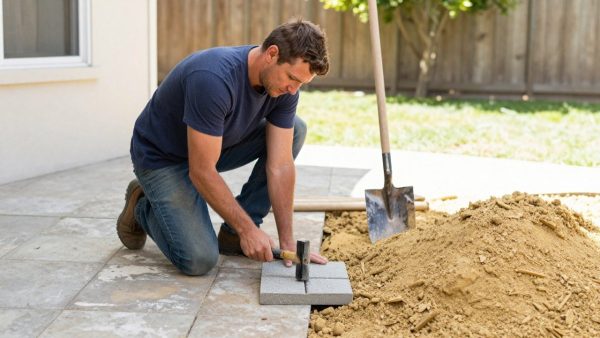
Learn how to fix sinking patio pavers step by step, from diagnosing the low spot to resetting stones and refilling joints with polymeric sand.
Calculate riprap material quantity with a step-by-step workflow from cubic yards to tons, then order the right amount with confidence.