Silt vs Clay in Sand: Key Differences Explained
Silt vs clay in sand decides drainage, compaction and stability. Compare particle size, plasticity and field tests to judge your aggregate before pouring.
Last Updated: September 9, 2026
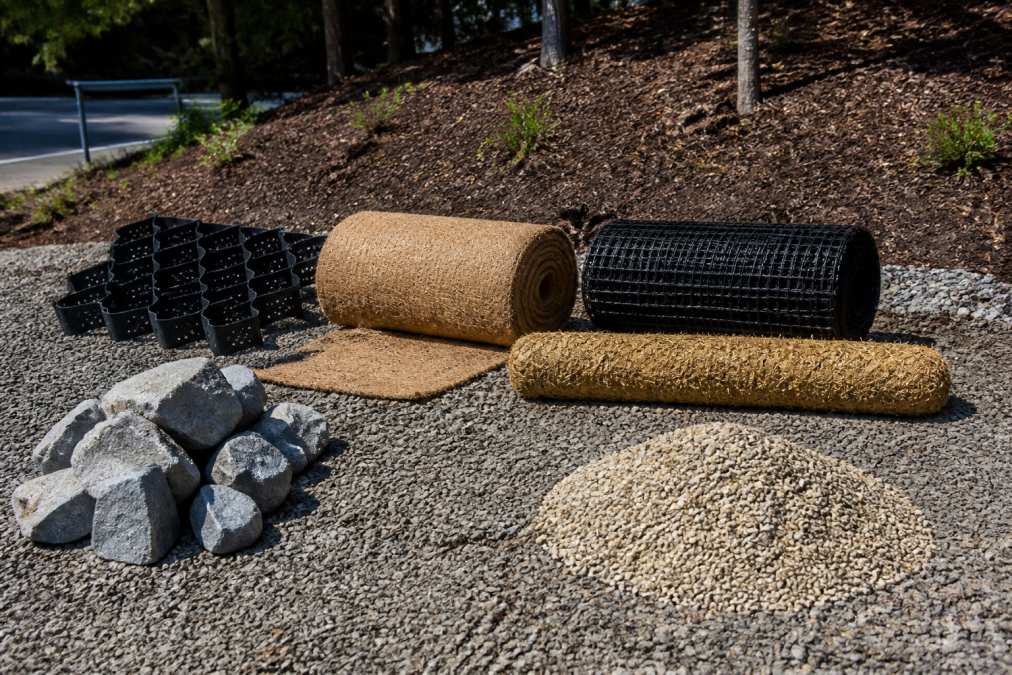
Choosing the right material for slope erosion control often feels like a gamble between cost, effort, and whether the solution will survive the next heavy rain. No single product fixes every hillside, and the most popular choice is frequently the wrong one for your specific grade and soil type. At FST Sand, we have supplied aggregates for hillside projects across Southern California. This guide breaks down the five best materials for slope erosion control, ranked by application, so you can match the right tool to the actual conditions on your property.
Quick Picks:
The five strategies we cover range from simple mulch applications you can complete in a weekend to engineered systems that require equipment and planning. Slope erosion control is the practice of using physical barriers, vegetative cover, or structural reinforcement to prevent soil loss on inclined ground. The material that works on a gentle backyard hill will fail completely on a steep drainage channel, so understanding your slope grade before buying anything will save you time and money.
The selection process starts with measuring your slope grade, not browsing products. A slope steeper than 3:1 (roughly 18 degrees) typically requires structural materials like riprap or geocells, while gentler grades respond well to blankets, mulch, and vegetation. You also need to assess water flow: concentrated runoff demands heavier reinforcement than sheet flow across an open hillside.
Soil type matters just as much. Loose, sandy soil erodes faster than compacted clay, so it needs immediate mechanical protection. Consider the timeline for your project, too. If you need permanent stability, deep-rooted vegetation is the end goal. If you need to stop erosion this season while plants establish, temporary blankets or mulch are the bridge.
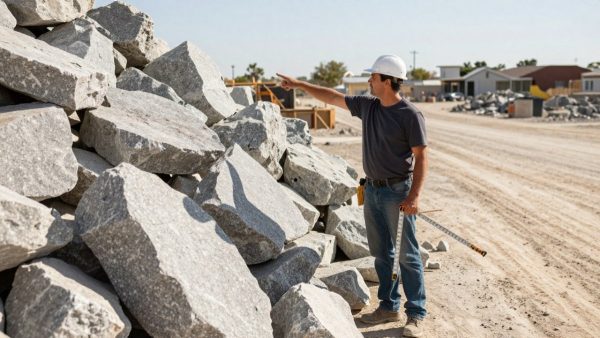
Riprap stone is the most durable slope erosion control material available, consisting of loose, angular rock typically ranging from 4 to 12 inches in diameter. Its weight and interlocking nature allow it to absorb the energy of flowing water and resist movement on steep inclines. This makes riprap the default choice for drainage outlets, channel banks, and slopes where vegetation cannot establish due to shade or constant moisture.
The key to effective riprap installation is the underlying filter layer. Placing stone directly on bare soil allows fine particles to wash out between the rocks over time. A layer of landscape fabric or aggregate base beneath the riprap prevents this subsurface erosion and extends the life of the installation significantly. Riprap also requires a stable toe at the base of the slope; without it, the entire rock blanket can creep downhill under gravity and water pressure.
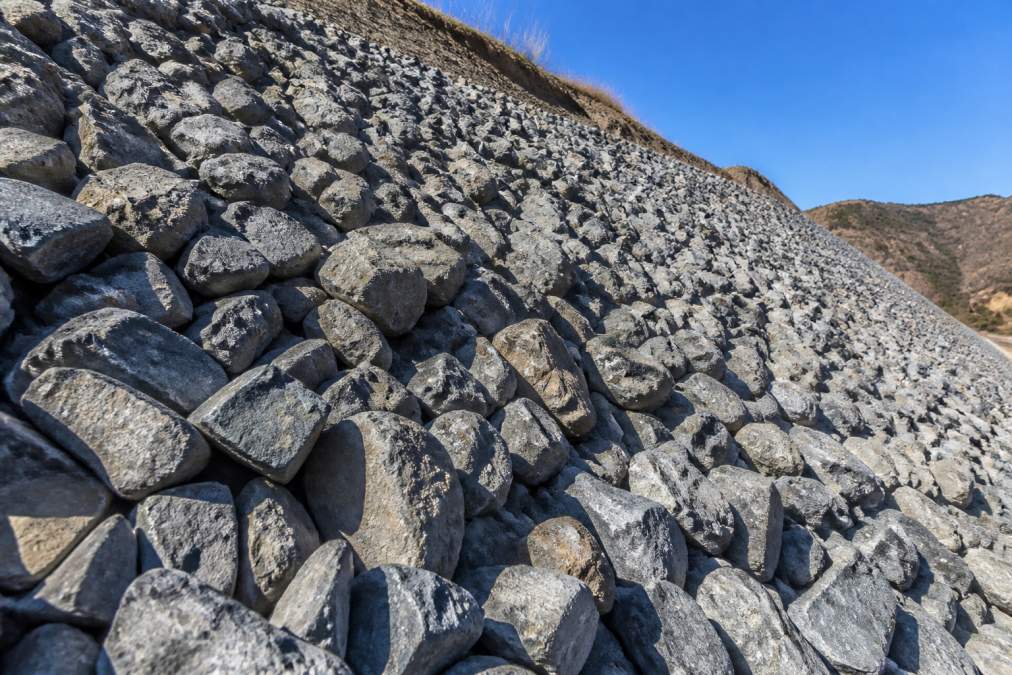
Riprap stone pricing varies more than any other erosion control material because it is sold by weight and delivery distance. Factors that move the price include the stone size you need, the quantity required to reach your specified depth, and how far the material travels from the quarry to your site. A common installation depth is 12 to 18 inches, which translates to roughly 1.5 tons of stone per 10 square feet of slope surface.
Because riprap is heavy, delivery logistics often cost as much as the material itself. Access for a dump truck matters, and projects requiring hand placement on steep or remote slopes add significant labor. For current riprap stone pricing based on your quantity and delivery location, check the FST Sand website or request a quote; we supply washed and screened riprap sized for erosion control projects throughout the region.
Most guides list riprap as a durable option but stop there. The real question homeowners face is whether the upfront cost justifies the long-term payoff. Here is how riprap compares on a cost-per-square-foot basis over a 10-year horizon, including installation and maintenance.
| Material | Upfront Cost (Installed) | 10-Year Maintenance Cost | Total 10-Year Cost | Lifespan |
|---|---|---|---|---|
| Riprap stone | $8-$15 per sq ft | $0-$1 per sq ft (occasional rock replacement) | $8-$16 per sq ft | Permanent |
| Erosion control blankets | $1-$3 per sq ft | $2-$6 per sq ft (reapplication for permanent cover) | $3-$9 per sq ft | 6 months to 4 years |
| Geocells | $5-$10 per sq ft | $1-$2 per sq ft (infill settlement checks) | $6-$12 per sq ft | 10+ years |
| Deep-rooted vegetation (hydroseed) | $0.50-$2 per sq ft | $1-$3 per sq ft (irrigation, replanting, weeding) | $1.50-$5 per sq ft | Permanent |
| Mulch and fabric | $0.50-$1.50 per sq ft | $3-$6 per sq ft (annual replenishment) | $3.50-$7.50 per sq ft | 1 to 2 years |
Note: Costs are national averages for residential projects in the United States as of 2025. Labor rates vary by region; urban areas and steep, hard-to-access slopes will push costs toward the higher end.
The break-even point matters. Riprap costs roughly 5-10 times more upfront than mulch or hydroseeding. However, on a slope steeper than 2:1 where mulch washes out every season, the annual replacement cost of $0.30-$0.60 per sq ft (materials alone) adds up quickly. By year three, you have spent nearly as much as a riprap installation, and you still have an unstable slope. Riprap becomes the cost-effective choice on steep grades within 3-5 years.
Hidden costs to budget for:
When riprap is NOT the cost-effective choice: For slopes gentler than 3:1 with sheet flow (not concentrated runoff), hydroseeding or erosion control blankets deliver permanent stabilization at a fraction of the cost. Riprap on a gentle slope is over-engineering, you pay for durability you do not need. A common pattern is homeowners installing riprap on a 4:1 slope, then discovering that native grasses would have held just as well for 90% less money.
The resale value angle: Real estate appraisers in landslide-prone regions (e.g., parts of California, Washington, and Colorado) often factor slope stabilization into property value. A properly engineered riprap installation with a filter layer and toe wall can add $5,000-$15,000 to a home’s resale value on a problematic hillside, effectively offsetting the material cost. This is a point most erosion control articles miss entirely.
For current riprap stone pricing based on your quantity and delivery location, check the FST Sand website or request a quote; we supply washed and screened riprap sized for erosion control projects throughout the region.
Erosion control blankets for slopes are rolled sheets of biodegradable fiber, typically coconut coir, straw, or jute, held together with netting. They provide immediate surface protection by shielding soil from raindrop impact and slowing surface runoff, giving grass seed or native plants time to germinate and root. These blankets are the standard choice for newly graded slopes, highway embankments, and construction sites where bare soil must be stabilized quickly.
The distinction between blanket types comes down to lifespan and strength. Coconut coir blankets last two to four years, making them suitable for slow-establishing native grasses and deeper-rooted plants (extension.org). Straw blankets break down within six to twelve months, which works well for fast-growing annual grasses used as a temporary nurse crop. Installation requires stapling the blanket securely along the top of the slope first, then unrolling downhill and stapling the edges and seams.
Geocells are a three-dimensional, honeycomb-like grid of connected cells made from high-density polyethylene, which you fill with soil, gravel, or sand. Once filled and compacted, the cells confine the fill material and distribute loads across the slope, preventing the lateral movement that causes erosion. This makes geocells a slope stabilization technique suited for loose soils, steep grades, and areas subject to heavy surface runoff.
The main advantage of geocells over riprap is versatility. The cellular structure allows you to grow vegetation within the cells, combining structural reinforcement with the aesthetic and ecological benefits of plant cover. Geocells also handle differential settlement better than rigid structures, making them useful on slopes with unstable or variable subgrade conditions.
Installation is more involved than blankets or mulch. The geocell panels arrive collapsed and must be stretched out and pinned to the slope, then filled from the top down. This requires a crew and typically a front-end loader or similar equipment for larger areas. For DIY homeowners, geocells are usually practical only on small, accessible slopes.
For permanent slope erosion control, nothing matches the performance of deep-rooted vegetation. Plants with tap roots and fibrous root systems physically bind soil particles, while their foliage intercepts rainfall and slows surface runoff. Native grasses, shrubs, and ground covers adapted to your local climate establish deeper root systems and require less irrigation than non-native species, making them the sustainable choice for long-term bank stabilization.
Hydroseeding is the most efficient way to establish vegetation on large or steep slopes. The process sprays a slurry of seed, mulch, fertilizer, and a tackifier that binds the mixture to the soil surface. It covers ground far faster than hand seeding and the mulch layer provides immediate erosion protection while seeds germinate. Hydroseeding works best on slopes up to 2:1; steeper grades typically need blankets or geocells to hold the seed in place.
For gentle slopes and small residential areas, mulch and landscape fabric offer a fast, low-cost solution. Shredded hardwood mulch, applied at a depth of at least 3 inches, absorbs raindrop impact and slows surface runoff while allowing water to infiltrate. The shredded form interlocks better than bark nuggets, which can wash away on even modest grades, so choose shredded material over chunky alternatives.
Landscape fabric beneath the mulch adds another layer of protection by preventing soil from splashing and sealing the surface. The fabric also suppresses weeds that would compete with your desired ground cover. This combination works well on slopes up to roughly 3:1 where water flows evenly across the surface rather than concentrating in channels.
The critical limitation of mulch is its lifespan. Organic mulch decomposes and needs replenishment every one to two years, and it provides no structural strength against concentrated water flow. Use it where vegetation is establishing or where the slope is mild enough that runoff is not a serious threat.
Matching the material to your slope grade is the single most important decision in the process. The table below summarizes how the five options compare across key factors, including installation difficulty and expected maintenance.
| Material | Best Slope Grade | Installation Difficulty | Lifespan | Maintenance |
|---|---|---|---|---|
| Riprap stone | Steeper than 2:1 | Moderate to hard, needs equipment | Permanent | Minimal, occasional rock replacement |
| Erosion control blankets | Up to 2:1 | Easy, DIY-friendly | 6 months to 4 years | None, biodegradable |
| Geocells | Steeper than 2:1 | Hard, needs crew and equipment | 10+ years | Low, check infill settlement |
| Deep-rooted vegetation | Up to 2:1 | Moderate, needs time to establish | Permanent | High initially, then low |
| Mulch and fabric | Up to 3:1 | Easy, DIY-friendly | 1 to 2 years | High, annual replenishment |
Beyond the simple labels above, here is a practical difficulty rating for a typical homeowner tackling a 500 sq ft residential slope. These scores reflect the tools, physical labor, and technical knowledge required, not just the number of steps.
| Material | Difficulty Score (1-10) | Time for 500 sq ft | Required Tools/Skills |
|---|---|---|---|
| Mulch and fabric | 2/10 | 1-2 days | Shovel, utility knife, landscape staples |
| Erosion control blankets | 4/10 | 2-3 days | Staple gun, hammer, measuring tape; need to understand overlap and seam staggering |
| Hydroseeding (DIY rental) | 5/10 | 1 day (plus prep) | Hydroseeder rental, knowledge of seed mix and tackifier ratios |
| Deep-rooted vegetation (hand planting) | 6/10 | 3-5 days (plus months of care) | Auger or shovel, irrigation setup, knowledge of native species |
| Riprap stone | 7/10 | 3-5 days with equipment rental | Dump truck access, plate compactor, physical stamina for hand placement |
| Geocells | 9/10 | 5-7 days with crew | Excavator or front-end loader, anchoring system, infill logistics |
A practical rule of thumb: If you are a solo homeowner with basic hand tools, stick to materials rated 5 or below. Geocells and large riprap installations on steep slopes are not DIY projects, the cost of fixing a failed installation far exceeds the labor savings. A common pattern is a homeowner attempting a geocell install on a 1.5:1 slope, only to have the cells pull loose from their anchors during the first heavy rain because the anchoring pattern was incorrect.
The maintenance burden is where most materials surprise homeowners. Here is what you actually commit to after installation:
Most erosion control guides are written for a generic temperate climate, but the United States spans arid deserts, heavy-rainfall zones, and freeze-thaw regions. The right material in one climate fails in another. Here is how to adjust your selection:
Arid and semi-arid climates (e.g., Southern California, Arizona, Nevada, inland Pacific Northwest):
Wet and high-rainfall climates (e.g., Pacific Northwest west of the Cascades, Gulf Coast, Southeast):
Seasonal and transitional climates (e.g., Mid-Atlantic, Ohio Valley, parts of Texas):
Climate plays a larger role than most homeowners expect. In arid Southern California regions, establishing vegetation requires irrigation or careful timing with seasonal rains, making temporary blankets or mulch a necessary first step. In wetter climates, the priority shifts to handling consistent moisture and preventing saturation, which favors riprap or geocells on steeper ground. Consider your local rainfall patterns and soil drainage before committing to a material, and consult resources like the USDA Natural Resources Conservation Service guidance on erosion control for region-specific recommendations. For engineered slopes and drainage structures, Caltrans erosion control standards provide specifications that meet state requirements for infrastructure projects.
The cost-benefit analysis is straightforward once you know your slope. Mulch and fabric are the cheapest upfront but require continuous reinvestment. Riprap costs more initially but eliminates recurring maintenance. Geocells sit between the two, offering structural performance with the option of a vegetated finish. For a permanent solution on a difficult slope, spending more on riprap or geocells upfront almost always beats replacing washed-out mulch or blankets every season. For reliable materials and delivery across Southern California, FST Sand supplies riprap, crushed stone, and aggregate base sized for erosion control projects, backed by a family-owned operation that has served the Southern California region since 1964.
For steep slopes with grades over 3:1, riprap stone is often the most durable choice. Its weight and interlocking nature resist the force of heavy runoff. Geocells are also effective on steep slopes when filled with gravel or topsoil, as they confine the material and prevent it from washing away. For less severe slopes, erosion control blankets offer a cost-effective solution while vegetation becomes established.
Consider the slope grade, soil type, and budget. Riprap stone is a permanent, heavy-duty solution for steep slopes and areas with high water flow, but it costs more and is difficult to install by hand. Erosion control blankets are temporary, biodegradable, and ideal for moderate slopes where you plan to establish vegetation. They are more affordable and easier to install for DIY projects.
Yes, mulch is an effective short-term solution for slope erosion control on gentle grades. Shredded hardwood bark interlocks well and resists washing away better than finer materials. Apply a layer at least 3 inches deep. However, mulch breaks down over time and needs replenishing. For permanent protection, combine mulch with deep-rooted ground cover plants or use it under erosion control blankets for immediate protection.
Riprap stone pricing depends on the stone size, quantity needed, delivery distance, and your location. Larger riprap classes cost more per ton due to quarrying and handling requirements. Delivery is a significant cost factor, so sourcing from a local supplier like FST Sand can reduce transportation expenses. Request a quote based on your specific slope dimensions to get an accurate price.
Silt vs clay in sand decides drainage, compaction and stability. Compare particle size, plasticity and field tests to judge your aggregate before pouring.
Learn how to fix sinking patio pavers step by step, from diagnosing the low spot to resetting stones and refilling joints with polymeric sand.
Calculate riprap material quantity with a step-by-step workflow from cubic yards to tons, then order the right amount with confidence.