
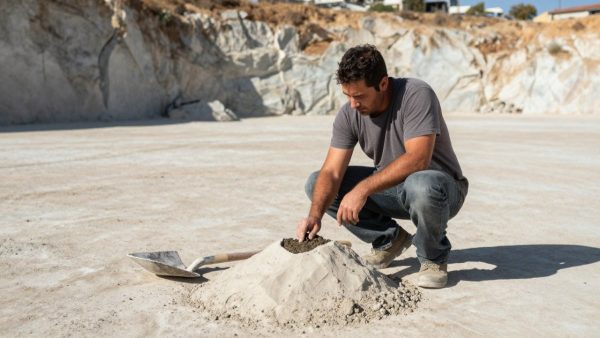
Silt vs Clay in Sand: Key Differences Explained
Silt vs clay in sand decides drainage, compaction and stability. Compare particle size, plasticity and field tests to judge your aggregate before pouring.
Last Updated: October 26, 2026
Quick Summary
Recycled aggregate is safe for residential garden beds only when the material is clean, single-source, and matched to how you use it. Keep it below the root zone and a clean cap in edible beds, or limit mixed and unknown loads to ornamental use. If you cannot verify the feedstock, do not use recycled aggregate in an edible bed.
Recycled aggregate is crushed stone, gravel, or concrete reclaimed from demolition sites and re-processed for new use.
“Recycled aggregate” is a broad label: it can mean clean crushed concrete or mixed rubble with brick, asphalt, and unknown debris.
Common sources include:
Clean, single-source material is easier to verify. Mixed loads need more scrutiny. Ask where the material came from before it reaches your yard.
Contaminants are the real concern with recycled aggregate, not the stone itself.
Watch for these:
A common mistake is assuming “recycled” means “clean.” Screening and source control do that work.
The EPA’s guidance on construction and demolition materials treats source separation as the key to keeping recycled material clean.
Ask your supplier how the material is screened and whether it comes from a single source.
Recycled concrete can raise soil pH: fresh crushed concrete releases lime over time, pushing pH upward. Most vegetables and many ornamentals prefer slightly acidic to neutral soil.
This doesn’t rule out recycled concrete; it means matching the material to the plant.
Plants that tolerate higher pH:
Plants that struggle in alkaline soil:
The pH effect fades as the concrete ages; aged material is milder than fresh crush. Readers concerned about pH can also consider rock dust as a mineral amendment.
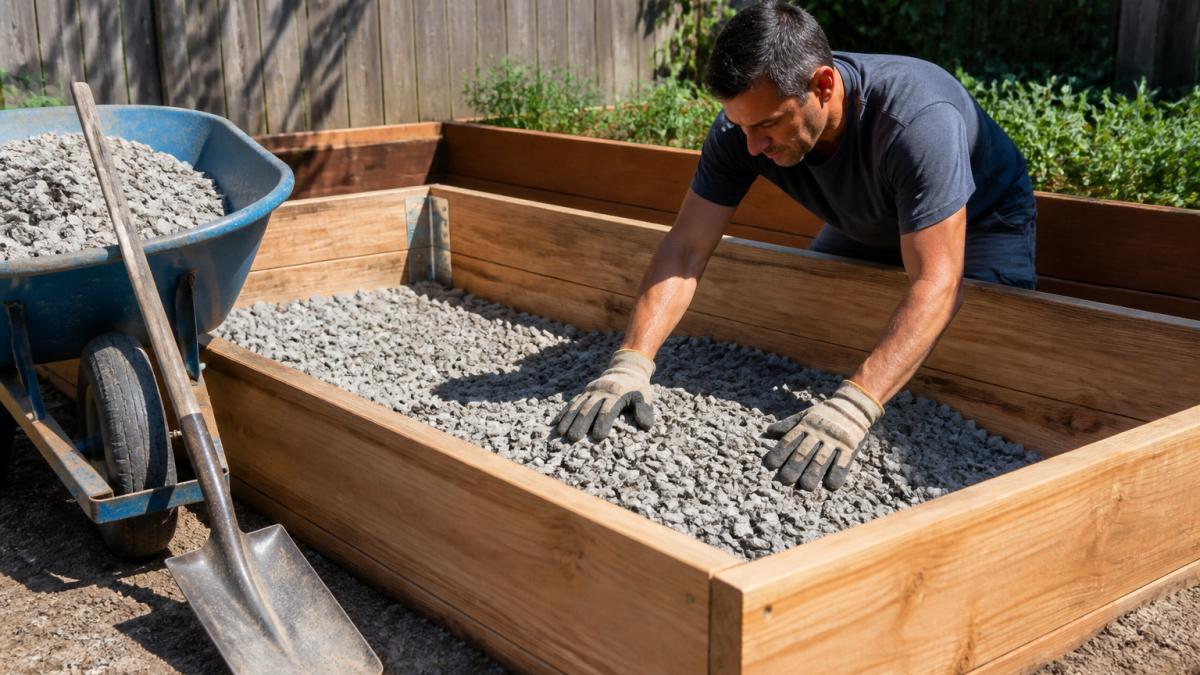
The edible-versus-ornamental question deserves more than a blanket yes or no. Recycled aggregate is a category, not a single product: safety depends on what it’s made of, where it sits relative to roots and food, and what you plan to grow. Use this framework before you order. Evaluating the composition of your hardscape allows you to integrate sustainable materials into your landscape design while minimizing the potential for chemical leaching into your soil.
Start with provenance; it drives every later decision.
If the supplier can’t tell you which category the load falls into, treat it as mixed and unknown.
Exposure changes with placement, a distinction most guides skip.
| Bed type | Typical use | Key concerns | Practical guidance |
|---|---|---|---|
| Ornamental beds and borders | Drainage, fill, edging | Alkaline dust, fines, debris | Good fit when material is screened and single-source |
| Native and drought-tolerant plantings | Base layer, drainage | pH shift | Generally tolerant of higher pH; verify source |
| Mixed beds | Below root zone | Contaminant mobility, pH | Keep below the topsoil and cap with clean media |
| Edible beds, root and leafy crops | Base layer only | Metals, salts, alkalinity, dust | Use only verified, single-source material below a fabric separator and clean cap |
| Edible beds, direct incorporation | Not recommended | Direct root contact with fines and residue | Avoid unless you have laboratory data on the specific stockpile |
| Containers | Not recommended | Small volume, no buffer | Use clean, tested growing media |
Before you commit, answer these four questions honestly.
If you answer no to the first question, stop. For edible beds, you can also compare a soil media alternative to recycled aggregate. If you answer no to the second or third, limit the material to ornamental use. If you answer no to the fourth, keep the material out of food-production beds. You can also look at clean fill dirt as a comparison for filling beds.
The rule we would give a friend: ornamental beds, go ahead with verified material. Edible beds, keep it separated, capped, and tested.
What to test:
Wet the pile lightly before moving it
Wear a dust mask when shoveling
Keep piles away from windows and doors
Cover stockpiles between work days
Wear gloves when handling mixed material
Keep the material below the topsoil in edible beds
Wash hands after handling
Keep children and pets off fresh piles
The OSHA guidance on respirable crystalline silica explains why dust control matters on any site where concrete is cut or crushed. The same habits apply in a backyard.
Ordering verified recycled aggregate protects everything else. The material is only as good as the supplier’s screening and source control, so turn a vague assurance into a documented product with this checklist.
“Recycled aggregate” on an invoice tells you almost nothing. Ask the supplier to describe the feedstock specifically.
At FST Sand, we process our materials with precision. We have served contractors, landscapers, and homeowners since 1964.
Ready to plan your bed? Request a quote.
It depends on the source and the use.
Freshly crushed recycled concrete can raise pH because residual cement is alkaline. The effect is strongest in the first months and fades as the material weathers and carbonates. If you use recycled concrete and soil pH matters for your crop, test the growing media after installation rather than assuming. Keep the aggregate below a filter fabric layer so water passing through it does not carry alkalinity directly into your root zone.
Ask about the demolition source first. Look for gypsum drywall, asphalt, brick, glass, and any painted or coated material in the pile, since these behave differently from clean concrete. Request screening specifications and any third-party test certifications the supplier holds. For edible beds, avoid aggregate from unknown mixed construction and demolition waste and specify clean, single-source material instead.
Yes, as a drainage layer it is one of the better uses for recycled concrete. Crushed concrete drains freely, resists compaction, and keeps the bed base stable. Spread a 2 to 4 inch layer, cover it with filter fabric, then add your growing media on top. This keeps the aggregate out of direct contact with roots and prevents fine particles from migrating upward into the soil.
Recycled aggregate can work well in residential garden beds, as long as you match the material to the use and verify the source. Ornamental beds and drainage layers are a natural fit. Edible beds need more care. FST Sand supplies screened, single-source recycled materials with the documentation you need to build with confidence. Get started with FST Sand and put verified material under your next garden bed.
Silt vs clay in sand decides drainage, compaction and stability. Compare particle size, plasticity and field tests to judge your aggregate before pouring.
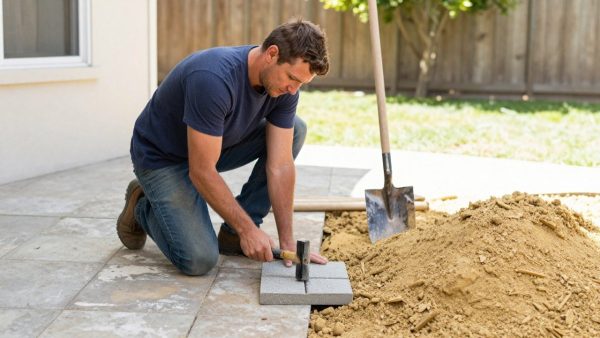
Learn how to fix sinking patio pavers step by step, from diagnosing the low spot to resetting stones and refilling joints with polymeric sand.
Calculate riprap material quantity with a step-by-step workflow from cubic yards to tons, then order the right amount with confidence.