
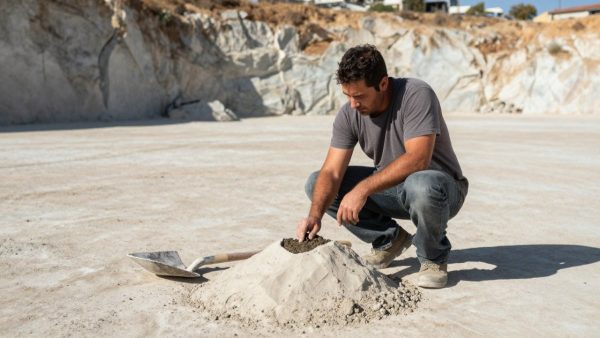
Silt vs Clay in Sand: Key Differences Explained
Silt vs clay in sand decides drainage, compaction and stability. Compare particle size, plasticity and field tests to judge your aggregate before pouring.
Last Updated: November 4, 2026
Quick Summary
Chemical soil stabilization is the process of mixing a binding agent such as cement, lime or fly ash into native soil so it becomes stronger, less sensitive to water and better able to carry loads. For construction projects, it reduces the need to haul in new material and creates a more stable base for pavements and foundations.
Chemical soil stabilization is the process of adding a binding agent to native soil so it becomes stronger, less sensitive to water and better able to carry loads.
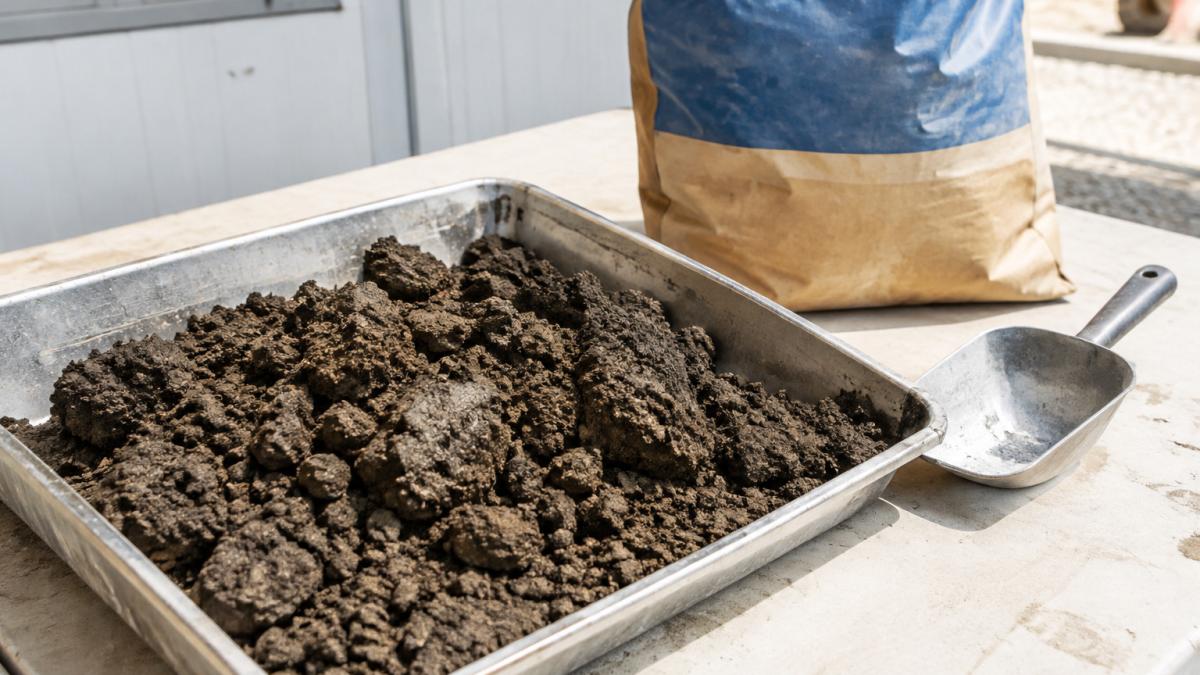
Unlike hauling in new material, chemical stabilization changes the soil already on site.
The process generally follows a few steps: testing the soil, selecting an agent and dosage, mixing it in place, compacting the layer and curing it before the next construction phase.
Most strength gain comes from two chemical processes. Hydration occurs when cement reacts with water to form compounds that bind soil particles together. Pozzolanic reactions happen when lime or fly ash reacts with the clay’s silica and alumina in the presence of moisture, producing cementitious compounds over time.
These reactions take time. Early strength gain may be modest, and the full benefit often shows only after days or weeks of curing, so plan your schedule around that window.
Mechanical stabilization blends soils of different gradations, typically by adding crushed rock or aggregate, and then compacts the mix.
Mechanical stabilization works well when the existing soil is close to a usable gradation and only needs more density and interlock.
Adding a chemical agent to untested soil can lead to an incorrect moisture content, so testing before treatment is important.
The main reason to stabilize soil is to create a base that can carry the loads placed on it. A stabilized layer distributes weight over a wider area than untreated soil, reducing rutting under heavy trucks and extending the life of the pavement or foundation above it. Load spreading is one of the main benefits of a stabilized layer.
Untreated fine-grained soil derives its strength from interparticle friction and apparent cohesion, and both drop sharply when the soil wets up. A chemical binder changes that: cement hydration forms calcium silicate hydrate gels that bind particles into a cemented matrix, while lime and fly ash drive pozzolanic reactions that produce similar compounds over a longer curing window.
A stabilized base can be designed using pavement design methods applicable to bound layers, and its structural performance differs from untreated granular base.
Three engineering properties matter most, and each is measured differently:
Stabilization can affect all three properties, and the degree depends on the agent, dosage and soil type. Laboratory testing on treated samples is the only reliable way to confirm the design will perform, and most specifications require it before construction begins.
Moisture control is the second major benefit. At the particle level, lime and cement reduce the soil’s affinity for water and its plasticity, so the treated layer is less sensitive to seasonal moisture changes.
Expansive clays swell when wet and shrink when dry, and that movement cracks slabs and pavements. Chemical stabilization reduces this shrink-swell behavior, and the benefit compounds: a layer that does not move does not open cracks, and a layer that does not open cracks does not admit water that would cause further movement.
Third, stabilization can reduce the need to haul in imported fill. Actual hauling savings depend on haul distance, soil condition and local disposal rates, so a site-specific estimate is recommended.
A properly designed and placed stabilized layer is intended to maintain its strength over the design life of the pavement when protected from excessive moisture. Wet-dry and freeze-thaw durability testing (ASTM D559 and D560 for soil-cement) exists precisely because durability, not just strength, determines whether the layer performs for 10, 20 or 30 years.
Curing time is part of the specification, and opening a stabilized layer to traffic before it reaches design strength can reduce its performance.
Cement is the most common binder for granular and sandy soils, producing high early strength where a firm base is needed quickly. Lime is typically used for clay soils, where it reduces plasticity and drives pozzolanic reactions.
Polymer stabilizers are an alternative option that work differently from lime or cement. Performance data varies widely between products, so ask for independent test results before specifying one.
For a quick reference, the table below summarizes how these materials are typically matched to soil types and project goals:
| Agent | Typical Soil Type | Main Strength | Main Limitation |
|---|---|---|---|
| Cement | Granular, sandy soils | Fast early strength | Less effective in high-clay soils |
| Lime | Plastic clay soils | Reduces plasticity | Needs time for pozzolanic reaction |
| Fly ash | Mixed or clay soils | Improves durability | Quality varies by source |
| Polymers | Varied, project-specific | Low dust, easy handling | Performance varies by product |
Chemical stabilization works on many soils, but the right agent depends on what is in the ground. Sandy and gravelly soils respond well to cement. Silty soils often need a combination of cement and lime.
Organic soils are the hardest to stabilize. High organic content can interfere with chemical reactions, so these soils usually need removal or a specialized treatment plan.
Road construction is one of the most common uses for chemical stabilization. For background on how crushed rock performs in these projects, read Entendiendo el Papel de la Roca Triturada en la Construcción y el Paisajismo.
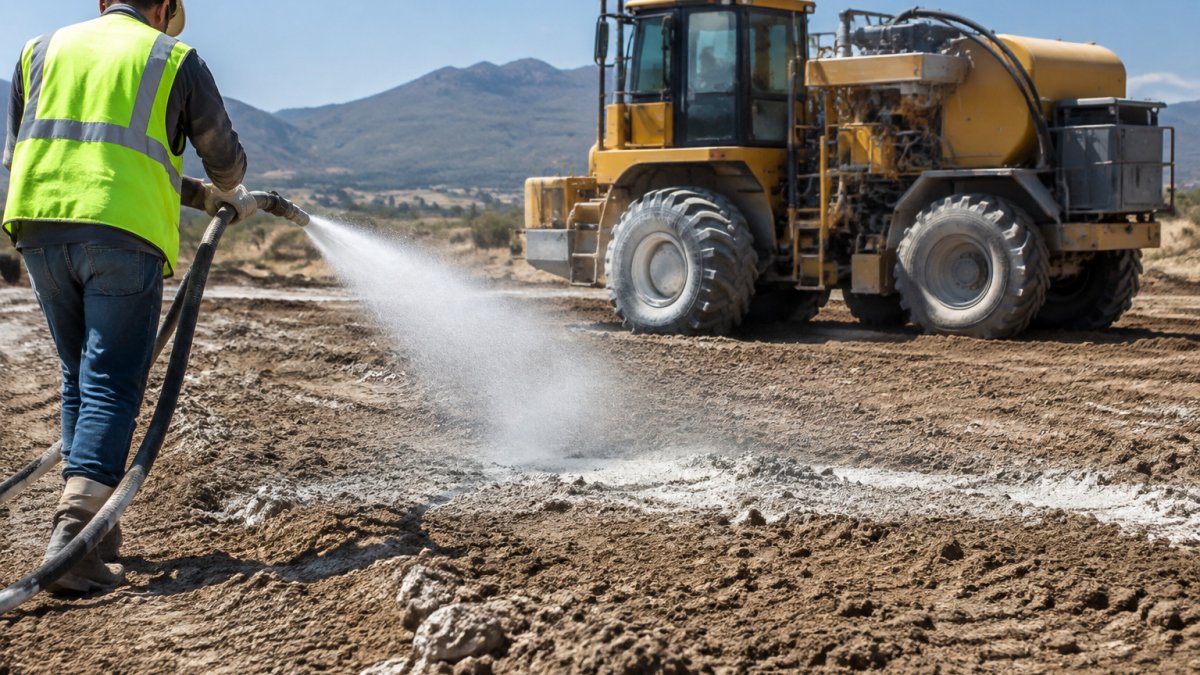
A common method is in-situ mixing, in which the existing soil is loosened, the agent is spread on top, and a mixer blends it to the design depth.
Stabilized base layers are also used for rail beds, parking areas and embankments. In each case, the goal is the same: a uniform layer that carries load and resists moisture.
Many agencies publish specifications for stabilized base materials, and those specifications often set minimum strength and testing requirements.
Stabilization is an investment in the project’s long-term performance, not just its construction budget. A pavement built on a treated layer may require less maintenance than one built on untreated expansive clay, because the layer beneath moves less with wet-dry cycles.
A useful way to frame the comparison is to price three things side by side over a 10- to 20-year horizon: initial construction, routine maintenance, and the cost of premature failure. Initial construction includes the binder, mixing, water, compaction and quality-control testing. Routine maintenance for a stabilized base is usually limited to joint and crack sealing and periodic surface treatments. Premature failure, an untreated expansive subgrade cracking the slab or rutting the asphalt within a few seasons, is the expensive one, because repair often means removing and replacing the failed layer.
Lifecycle costs depend on site conditions, and the stabilized option’s initial and long-term costs should be compared for the specific project. The exact crossover point depends on the soil’s shrink-swell potential, traffic loading and local material prices, so you need a site-specific lifecycle comparison rather than a rule of thumb.
Maintenance intervals matter as much as maintenance cost. A stabilized layer mixed and compacted to specification generally holds its design strength for the life of the pavement structure, provided drainage is maintained.
Cement, lime and fly ash are alkaline materials, and lime in particular is caustic. Portland cement is a known skin sensitizer, and repeated exposure can cause cement dermatitis. The practical controls are straightforward but non-negotiable on a stabilization crew:
Watch out: lime reacts exothermically with water, and a confined-space or freshly mixed pile can generate enough heat to burn skin or ignite combustible material. Keep the mixing area clear of debris and never allow workers to stand in freshly treated soil during the initial reaction.
Stabilized layers are typically specified and accepted against published standards, and knowing which ones apply keeps a project from failing at the testing stage. The most commonly referenced are:
State departments of transportation typically publish their own supplemental specifications for stabilized base and subgrade materials, often setting minimum unconfined compressive strength, minimum cement or lime content, curing requirements and acceptance testing frequency.
Environmental compliance is a separate track. Fly ash quality and classification (Class C versus Class F under ASTM C618) affect both performance and handling requirements, and some jurisdictions impose additional restrictions on coal combustion residuals.
Sustainability is increasingly part of the decision, and the comparison that matters is against excavation and replacement, not against doing nothing. Reusing on-site soil eliminates the trucking associated with hauling out unsuitable material and hauling in imported fill, two of the largest carbon contributors in a traditional subgrade rebuild. The binder itself carries embodied carbon, and cement is the most energy-intensive of the common agents, so a mix design that meets strength requirements with the lowest practical cement content is usually the lower-carbon choice.
Chemical stabilization often works best alongside good aggregate. A stabilized layer paired with properly graded base material gives you a more consistent platform for paving and foundations.
If you are planning a project, start with a soil test and a clear picture of your load and moisture requirements. Then talk with your supplier about material options that fit the design.
Chemical soil stabilization is the process of mixing additives such as cement, lime, fly ash or polymers into weak or unstable soil to change its physical properties. The additives react with clay minerals and water through hydration and pozzolanic reactions, forming a harder, more cohesive material. Engineers use it to increase load-bearing capacity, reduce plasticity and limit shrink-swell movement. Results depend on soil type, additive dosage and curing time, so a laboratory mix design is typically run before field work begins.
The most common agents are portland cement, hydrated lime and fly ash, with polymer and enzyme products used in specialized cases. Cement works well in granular soils, while lime is typically preferred for high-plasticity clays. Fly ash, a pozzolanic byproduct, is often combined with lime or cement. Project specifications and local agency standards, such as those used by California transportation departments, usually dictate which additive and dosage are acceptable.
Stabilizing agents bind soil particles together, increasing cohesion and compressive strength so the layer resists deformation under traffic or structural loads. Treated subgrades typically allow thinner base courses or a longer pavement life for the same design load. Improved moisture resistance also keeps the material from softening after rain. Exact strength gains should be confirmed with laboratory unconfined compressive strength tests on samples from the project soil.
FST Sand supplies crushed stone, gravel, concrete sand and aggregate base course products that are commonly used alongside stabilized subgrades on infrastructure and landscaping projects. Material selection depends on the project specification, gradation and delivery schedule. For current availability and pricing, which varies by quantity, dates and delivery, request a quote through the FST Sand website.
Silt vs clay in sand decides drainage, compaction and stability. Compare particle size, plasticity and field tests to judge your aggregate before pouring.
Learn how to fix sinking patio pavers step by step, from diagnosing the low spot to resetting stones and refilling joints with polymeric sand.
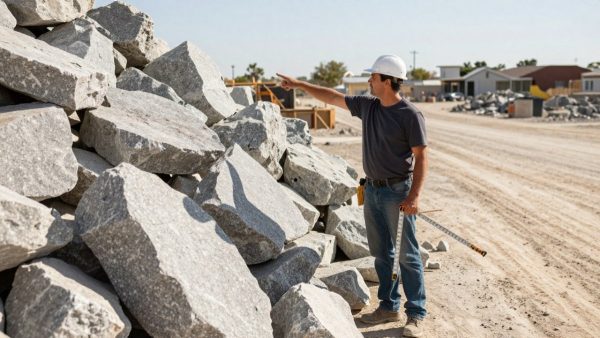
Calculate riprap material quantity with a step-by-step workflow from cubic yards to tons, then order the right amount with confidence.