
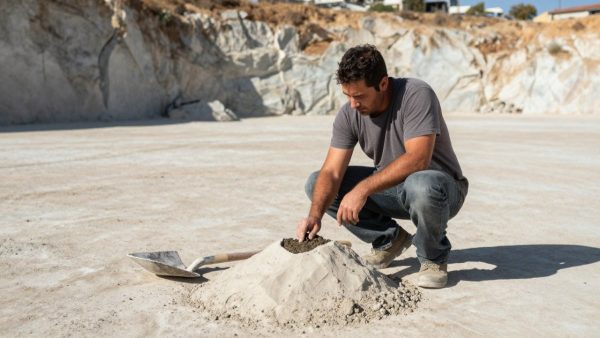
Silt vs Clay in Sand: Key Differences Explained
Silt vs clay in sand decides drainage, compaction and stability. Compare particle size, plasticity and field tests to judge your aggregate before pouring.
Last Updated: November 2, 2026
Quick Summary
Comparing aggregate quality means testing the properties that drive performance: grading, fineness modulus, silt and clay content, water absorption and particle shape. Natural aggregate offers rounded grains and easier finishing but varies by deposit, while manufactured aggregate is tunable in processing and more consistent. Request dated test reports citing ASTM methods from every supplier before you buy.
Aggregate quality is the set of measurable properties, including grading, particle shape, cleanliness and strength, that determine how a sand or stone performs in concrete, base course and backfill. Comparing natural vs manufactured aggregate quality starts with one hard truth: the cheapest load is rarely the least expensive material. Inconsistent grading shows up later as extra cement, rework or failed compaction tests.
Projects that fail inspection often do so because the material was not verified before it went into the mix.
Here is the throughline for this guide: natural and manufactured aggregates are not rivals with a single winner. They are two supply chains with different failure modes, and your job is to test for the failure mode you can least afford.
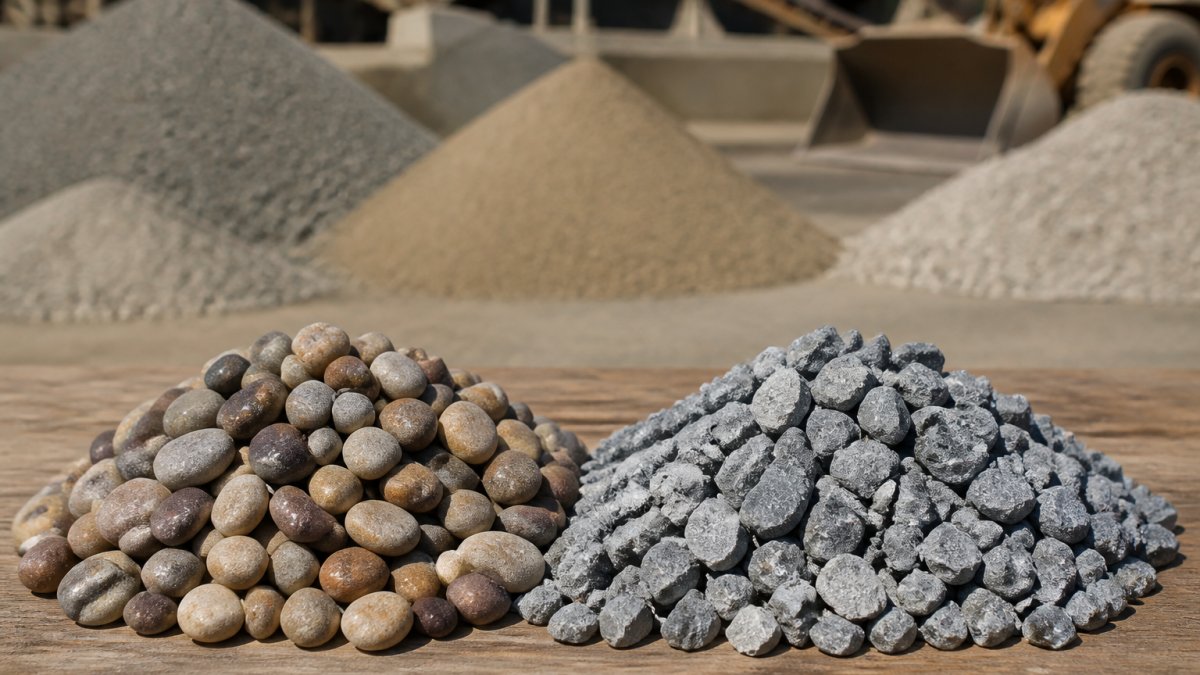
Manufactured sand is fine aggregate produced by mechanical crushing of rock, with screening and washing to control grading. Natural sand is dug from sedimentary deposits such as river sand and pit deposits, then washed and screened. The difference in origin drives nearly every performance gap that follows.
Processing shapes the particle. Impact crushing and cone crushing produce angular grains with rough surface texture; natural deposits tend to yield rounded, smoother grains. Angular particles interlock and improve adhesion in a mix, but they also demand more water. Rounded particles flow easily but can reduce internal friction.
A common mistake is treating “manufactured” as a synonym for lower quality. In practice, a crushed product with tight process control can be more consistent than a pit run that varies by the week.
Fine aggregate quality comes down to a short list of properties: particle size distribution, fineness modulus, silt and clay content, water absorption, void ratio and particle shape. Each one changes how the material behaves in cement mortar and concrete mix design. The difference between a useful spec sheet and a marketing sheet is whether each property is tied to a named test method and a numeric range.
Map the properties to the ASTM methods your supplier’s reports should cite. Grading and fineness modulus come from ASTM C136 (sieve analysis) and ASTM C33, which sets the standard grading limits for fine aggregate in concrete. Silt and clay content is measured by ASTM C117 (materials finer than the No. 200 sieve) and, for clay lumps and friable particles, ASTM C142. Water absorption and bulk specific gravity come from ASTM C128. Particle shape and angularity are addressed through ASTM C125 terminology and, for flat and elongated particles in coarse aggregate, ASTM D4791.
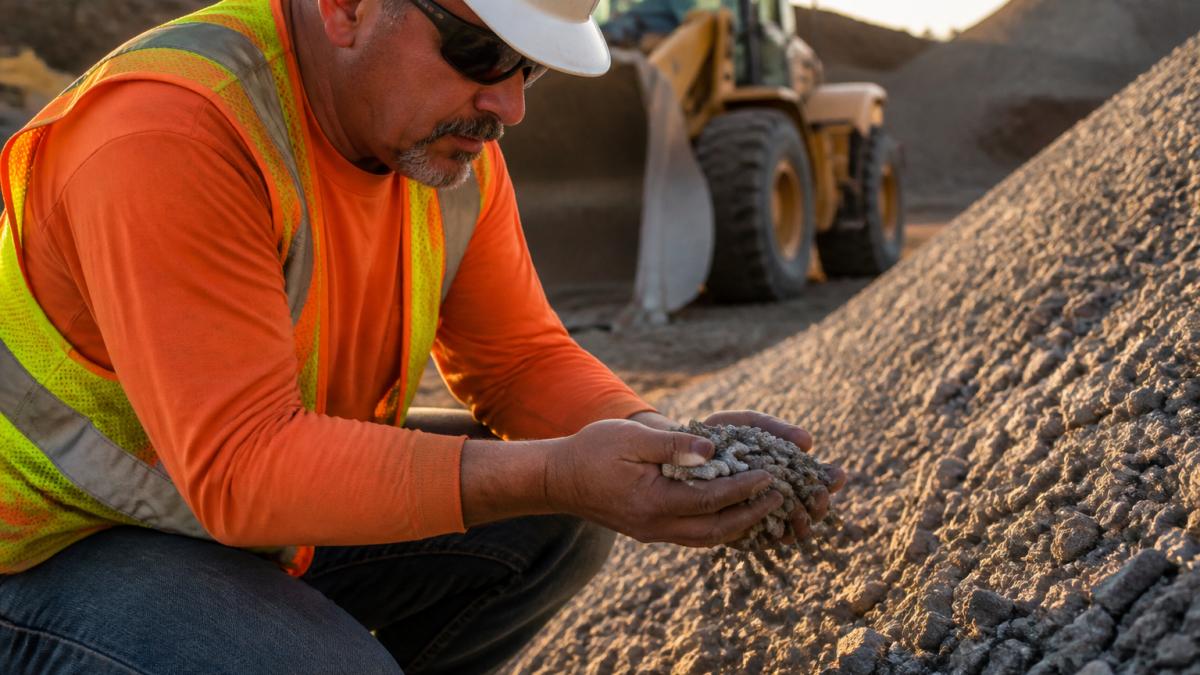
Silt content deserves special attention. Excess fines coat particles and weaken the bond between aggregate and cement paste, which reduces compressive strength and durability. A simple field settling test gives a rough read, but a washed sieve analysis per ASTM C117 is what you want on record. Because rain-driven fines can alter how well aggregate bonds with cement, the same attention to gradation and cleanliness matters when evaluating paving material durability.
Water absorption tells you how much mix water the aggregate will pull away from the paste. High absorption means you must adjust batch water, or your effective water-cement ratio drifts and strength suffers. The practical fix is to base batch water on saturated-surface-dry (SSD) condition per ASTM C128 rather than oven-dry weight, and to recheck absorption whenever the source changes.
Fineness modulus is the single number that catches batch-to-batch drift fastest. ASTM C33 allows fine aggregate with a fineness modulus between 2.3 and 3.1, and a variation of more than 0.20 from the submitted value is a red flag that the source or blend has shifted. Track it load to load, not once per project.
Watch out: a report that shows only a single sieve analysis with no fineness modulus range, no absorption value and no method citations is not a quality record, it is a snapshot, and it will not protect you when a cylinder breaks low.
ASTM International standards for aggregate testing
Grading is where natural and manufactured aggregate quality diverge most in daily practice. Grading describes the distribution of particle sizes across the sieve stack, and particle size distribution is the single best predictor of consistent concrete behavior.
A well-graded blend fills voids efficiently, lowering void ratio and reducing the cement needed to coat every particle. Gap-graded or poorly controlled material leaves voids that paste must fill, which raises cost and increases shrinkage risk. The fineness modulus gives you a single number to track batch-to-batch drift.
Manufactured aggregate can be tuned during crushing and screening to hit a target grading. Natural deposits vary across the pit, so consistency depends on how well the producer blends and stockpiles.
Ask for test data before the first load ships, not after a failed cylinder break. A reputable supplier should provide a current sieve analysis, fineness modulus, silt content results and absorption data, and should be willing to discuss third-party verification.
Use this checklist when vetting any supplier, including us:
Watch out: a supplier who cannot produce a dated sieve analysis is asking you to accept grading risk on their behalf. That risk lands on your inspection, not theirs.
Natural aggregate wins where workability and finish matter most: decorative concrete, mortar, and placements where rounded grains and low absorption reduce water demand. It also tends to win on local availability where sedimentary deposits are close to the site, which keeps haul distance and delivered cost down.
Manufactured aggregate wins on consistency and structural integrity. Tight process control means predictable grading, predictable angularity, and a product you can specify by number rather than hope. For high-strength concrete, base course and heavy-load foundations, that predictability is worth more than the smoother finish.
Generally, manufactured fine aggregate can increase water demand and make finishing less forgiving, while natural sand can carry variable quality from pit to pit. Neither is universally better.
The angle most comparisons miss is what happens at the batch plant when you switch sources. Manufactured sand typically has higher angularity and higher fines content, so the mix usually needs a water-reducing admixture, a small bump in paste volume, or both to hold slump without raising the water-cement ratio. A common pattern is to trial the switch at a 10 to 15 percent replacement rate first, check slump and compressive strength at 7 and 28 days, then step up. Natural sand switches are usually easier on workability but demand closer monitoring of silt content after rain. For a deeper look at how material choice drives outcomes, read our article on how soil and sand materials influence project success.
The second missed angle is life-cycle cost. Manufactured aggregate often carries a higher processing energy footprint per ton, while natural aggregate can carry a higher transport footprint when the pit is far from the site. The two can cancel out, so the honest comparison is delivered cost plus haul distance plus documented test consistency, not the stockpile price alone. Ask each supplier for source location and haul distance, and weigh that against the test-data package you reviewed.
| Factor | Natural Aggregate | Manufactured Aggregate |
|---|---|---|
| Particle shape | Rounded to sub-rounded | Angular, rough texture |
| Grading consistency | Varies by deposit | Tunable in processing |
| Workability | Easier finishing | Needs more paste/water or admixture |
| Strength contribution | Good, deposit-dependent | Predictable, high |
| Best for | Mortar, decorative, finish work | Structural concrete, base, backfill |
| Main risk | Variable quality, silt after rain | Higher water demand, finishing |
| Mix adjustment on switch | Monitor silt and absorption | Trial 10-15% replacement, adjust admixture |
A good quote request does more than ask for a price. It asks for the evidence that protects your schedule and your inspection record. Send the same request to every supplier so you compare like for like.
Include these in your request:
Pricing depends on quantity, dates, and delivery, so request a current quote from FST Sand’s website. If you are pricing a specific aggregate, our pea gravel product page lets you request current pricing and supporting test information directly.
Sustainability questions deserve a straight answer too. Ask whether sourcing documentation exists and review it before accepting any sourcing claim. The U.S. Environmental Protection Agency’s guidance on industrial materials is a useful reference for what responsible sourcing conversations should cover, and the ASTM International standards for aggregate testing define the test methods your supplier’s reports should follow. For specification language, the Federal Highway Administration aggregate resources publishes guidance used across public works projects.
Comparing aggregate quality is really a test of your supplier’s documentation, not just their stockpile. FST Sand has served the Southern California region since 1964 and supplies crushed stone, gravel, concrete sand and riprap. Our family-owned team works to deliver consistent, precision-processed materials. Get started with FST Sand and request a quote with the test data you need to compare materials properly.
Neither wins outright. Natural aggregate offers rounded particles and established performance, but its quality varies by deposit. Manufactured aggregate delivers consistent grading and controllable silt content because it is processed to spec. For structural concrete, what matters is whether the material passes aggregate quality testing for gradation, silt content, and soundness. Ask for third-party test data on the specific stockpile you will receive, not a generic product sheet.
Yes, in most concrete mixes, provided the manufactured sand is properly graded and its fines content is controlled. Manufactured sand often has more angular particles, which can improve interlocking strength but may require a small adjustment to water or admixture dosage to keep workability on target. Run a trial mix and confirm the fineness modulus and silt content before committing a full pour to a new source.
The core tests are sieve analysis for aggregate grading and particle size, fineness modulus for fine aggregate, silt and clay content, water absorption, specific gravity, and soundness. For durability, ask about abrasion resistance and freeze-thaw performance where relevant. A supplier should be able to share current test reports tied to the material you are buying, not a report from a different quarry or an earlier production run.
Grading controls how tightly the particles pack, which drives workability, void ratio, and compressive strength. A well-graded blend fills voids with smaller particles, reducing the cement paste needed to bind the mix. Poor grading, or inconsistent grading between loads, forces you to compensate with extra water or cement, which weakens the finished concrete. That is why consistent quality through precision processing matters as much as the raw material itself.
Silt vs clay in sand decides drainage, compaction and stability. Compare particle size, plasticity and field tests to judge your aggregate before pouring.

Learn how to fix sinking patio pavers step by step, from diagnosing the low spot to resetting stones and refilling joints with polymeric sand.
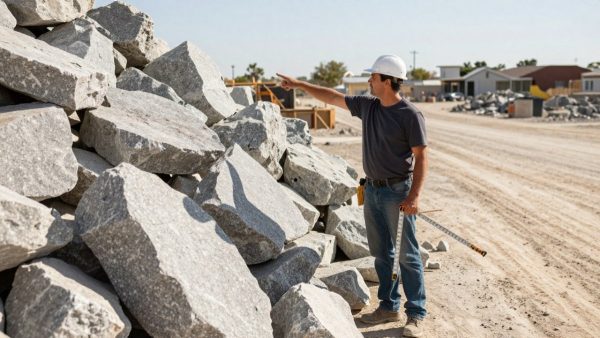
Calculate riprap material quantity with a step-by-step workflow from cubic yards to tons, then order the right amount with confidence.