
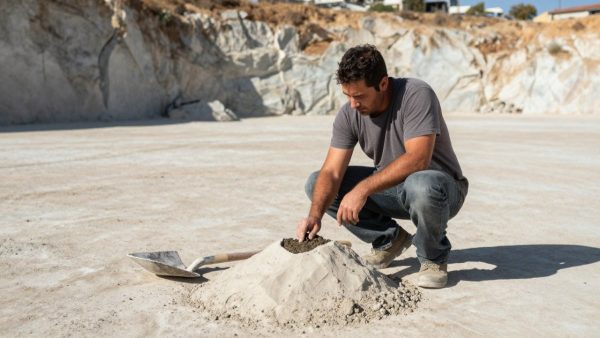
Silt vs Clay in Sand: Key Differences Explained
Silt vs clay in sand decides drainage, compaction and stability. Compare particle size, plasticity and field tests to judge your aggregate before pouring.
Quick Summary
Sand mining for construction harms the environment mainly by lowering river beds, which causes bank erosion, channel shifts, and falling groundwater that can allow saltwater intrusion. It also destroys aquatic habitat and disrupts sediment flow for kilometers downstream. Buyers can reduce these impacts by requesting permits, extraction-site traceability, and monitoring data from suppliers.
Sand mining for construction is one of the largest extractive activities on Earth. Concrete, mortar, asphalt, and road base all depend on sand and aggregate, and the volumes required by urban growth in Southern California keep climbing. Understanding the environmental impact of sand mining for construction starts with understanding why the demand never really goes away. Read how soil and sand materials influence project success for a closer look at how material choice shapes construction outcomes.
Infrastructure projects, residential subdivisions, and commercial builds each draw large quantities of material. That hidden cost is what this article unpacks, one impact at a time.
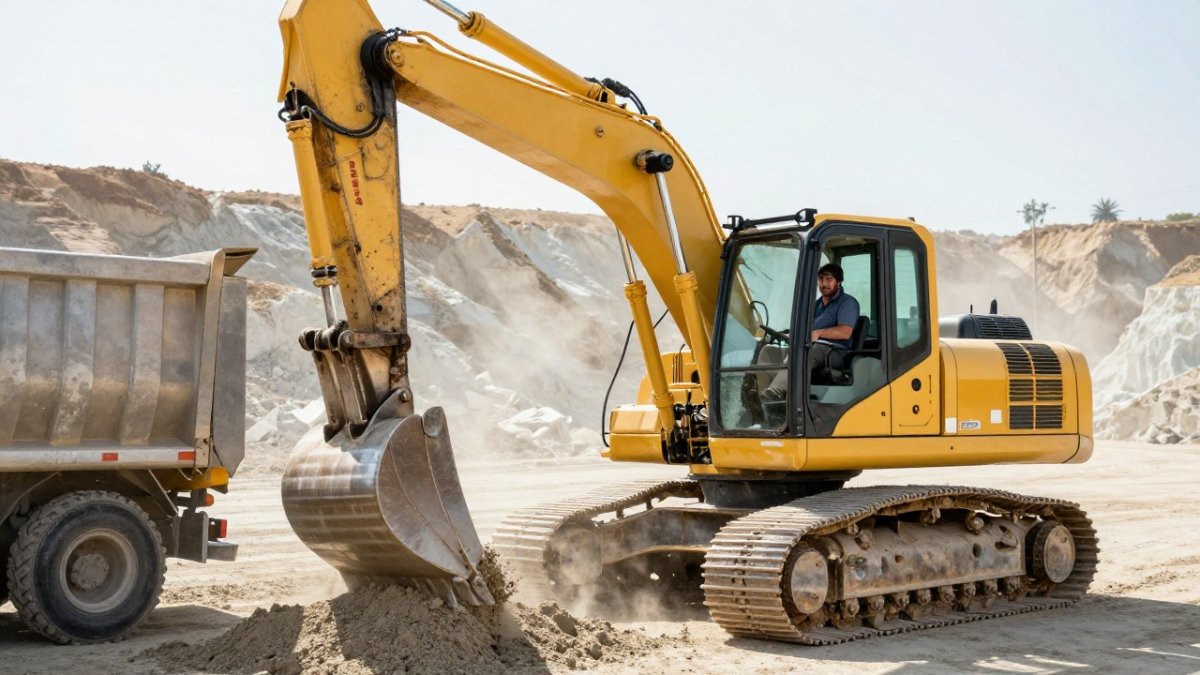
Sand is removed from riverbeds, floodplains, coastal zones, and inland pits. Dredging, excavation with heavy equipment, and in-stream pumping are the most common methods. Each method disturbs the ground or water body differently, and the scale of disturbance depends heavily on how much material is removed and how often.
Extraction usually concentrates where sand accumulates naturally, which is often in active river systems. That is precisely where the effects on the surrounding environment are most pronounced.
Removing sand from a river changes its shape (Channel change and bed-material transport in the Lower Chetco River, Oregon). When the channel bed is lowered, water velocity increases, and the banks begin to erode. Over time, the river can cut deeper, widen unpredictably, and shift its course. These changes affect bridges, roads, farmland, and homes located near the channel.
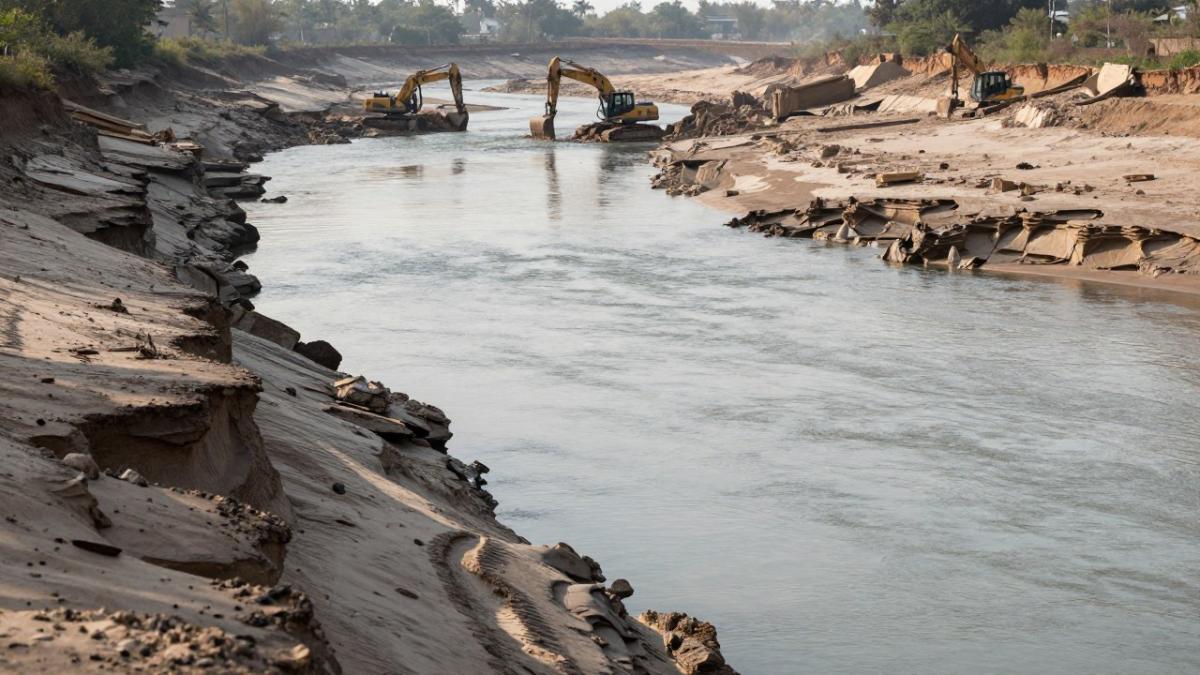
A common mistake is to assume that extraction only affects the spot being mined. In practice, sediment transport downstream can be disrupted for kilometers, which is why channel change is often discovered far from the original pit.
Lowering a riverbed can lower the water table in the adjacent aquifer (Water table fluctuations near an incised stream, Walnut Creek, Iowa). As groundwater levels fall, wells become harder to operate and water quality can decline. In coastal areas, reduced groundwater pressure can allow saltwater to move inland, contaminating freshwater supplies. Monitoring well levels and salinity near extraction sites is one of the most direct ways to measure this impact.
The article traces how removing sand from a river reshapes the channel and the surrounding land, and how these effects can reach far beyond the mining site.
| Impact | Cause | Consequence |
|---|---|---|
| Channel bed lowering | Sand removed from riverbed | Water velocity increases |
| Bank erosion | Faster water flow | Banks begin to erode |
| Channel shift | Deeper, wider cutting over time | Course changes unpredictably |
| Downstream sediment disruption | Extraction interrupts sediment transport | Effects felt for kilometers |
| Groundwater decline | Lowered riverbed reduces water table | Wells harder to operate |
| Saltwater intrusion | Reduced groundwater pressure in coastal areas | Freshwater supplies contaminated |
Sand extraction affects biodiversity through several distinct mechanisms, and each one damages a different part of the aquatic or riparian system. Understanding which mechanism is operating at a given site helps explain why impacts can persist long after mining stops.
Sand bars, riffles, and point bars are the physical structures that many aquatic species depend on. Riffles provide oxygenated gravel for insect larvae and spawning substrate for fish, while sandbars and point bars create shallow margins where juvenile fish and amphibians feed. When dredging or excavation removes these features, the organisms that depended on them lose their habitat in the same footprint. Recovery depends on whether the channel rebuilds similar features through natural sediment transport, which in a heavily lowered channel may not happen for years.
Mining generates suspended sediment that stays in the water column longer than natural flood pulses would. Fine particles settle onto gravel beds, filling the interstitial spaces that fish eggs and invertebrates need for oxygen exchange. Suspended sediment also reduces light penetration, which limits the growth of benthic algae and submerged plants at the base of the food web. The effect is often most severe during low-flow periods, when dilution is weakest.
Riparian vegetation stabilizes banks and provides leaf litter, shade, and terrestrial insects that feed fish. Where mining removes bank material or lowers the water table, riparian plants can die back, and non-native or pioneer species may replace them. Changes in vegetation alter shading and temperature, which in turn affects species with narrow thermal tolerances.
Channel incision can disconnect a river from its floodplain, so that seasonal flooding no longer reaches wetlands and oxbow lakes where many amphibians and waterfowl breed. Migratory fish may also be blocked where mining creates pools or drops in the bed that they cannot pass, particularly at low flows.
Researchers and monitoring programs typically track changes through a combination of methods. Benthic macroinvertebrate sampling provides a sensitive index of water quality and habitat condition, because many invertebrate taxa are intolerant of sediment and low oxygen. Fish surveys record species richness and abundance at fixed reaches, and comparing upstream and downstream sites isolates the mining effect. Vegetation transects document changes in riparian cover over time. Reduced species richness often appears in these records well before any single species is listed as locally extinct, which is why richness and community composition are more useful early indicators than individual species counts. Mitigating the broader ecological footprint of construction requires minimizing site disturbance and material waste, a strategy supported by the application of Protectapeel to safeguard surfaces during development.
A common pattern is that the first detectable change is a shift in community structure, with sediment-tolerant species becoming dominant, rather than an obvious loss of a conspicuous species. Monitoring programs that rely only on rare or charismatic species may miss this early warning.
Desert sand is rounded by wind rather than water, and its grains are typically too uniform in size to bind well in concrete. Its smooth surface reduces the mechanical bond with cement paste. This is why construction operations rely on river, pit, or manufactured sand instead, even when desert deposits are abundant nearby.
Reducing the environmental impact of sand mining for construction depends on two things: knowing what to measure, and being able to check whether a supplier is actually measuring it. This section offers a practical framework for what evidence to request.
A useful monitoring program tracks indicators at three scales: the extraction site, the channel or aquifer it draws from, and the downstream area. At the site level, the most direct records are annual extraction volume compared against the permitted volume, and the depth and location of excavation relative to the approved plan. At the channel level, repeated cross-section surveys show whether the bed is lowering or the banks are moving. Satellite imagery can supplement surveys by revealing changes in channel width and sandbar area over multi-year periods, which is useful when field access is limited. Downstream, turbidity and suspended sediment sampling indicate whether mining is smothering habitat or altering water quality, and groundwater well levels show whether the adjacent aquifer is responding.
The key distinction is between a source that is being monitored and one whose monitoring results are disclosed. A supplier can record every measurement internally and still provide a buyer with nothing to evaluate. Requesting the underlying data, not a summary statement, is what makes the information useful.
For procurement teams, a short sequence of checks makes sourcing decisions more defensible: consider a manufactured option such as crusher fines when the application allows it.
Watch out: a permit on file does not by itself mean the operation is compliant on the ground, so request recent monitoring reports rather than relying on the existence of the permit alone.
FST Sand has supplied crushed stone, gravel, concrete sand, and riprap since 1964 from a family-owned operation. Buyers evaluating any supplier, including this one, should apply the same checklist: ask for the permit, the extraction site, the monitoring data, and the restoration plan in writing before placing a bulk order. Pricing varies with quantity, delivery schedule, and material type, so request a quote through the FST Sand website to see current options for a specific project.
For project managers, procurement officers, and developers in Southern California, the practical question is which supplier to trust. FST Sand has supplied crushed stone, gravel, concrete sand, and riprap since 1964 as a family-owned operation. Buyers should ask any supplier for documentation of extraction sites, monitoring practices, and restoration commitments before placing a bulk order. Local buyers can find this Riverside-area stone supplier to request sand and gravel directly. Pricing depends on quantity, delivery schedule, and material type, so request a quote through the FST Sand website to see current options for your project. Buyers in the Anaheim area can find this local supplier for sand and aggregate sourcing.
Consistent, responsibly processed aggregate supports strong foundations on every job. Request a quote from FST Sand to discuss material options for your next build.
Sand mining removes sediment that holds riverbanks and beaches in place, which leads to erosion, shifting channels and loss of shoreline. It also lowers riverbeds, can drop local water tables, allows saltwater to move into coastal aquifers, and destroys habitat for fish, birds and bottom-dwelling species. The effects often extend well beyond the extraction site, reaching downstream communities and ecosystems that depend on stable sediment flow.
Desert sand is typically wind-worn into fine, round, uniform grains that do not interlock well and do not bind firmly with cement. This makes it weaker for concrete and mortar than angular, well-graded sand from rivers or crushed rock. Its fine grain size also makes it unsuitable for many construction specifications, which is why builders rely on sharper, more varied aggregates.
Buyers can reduce impact by asking suppliers where material comes from, whether extraction is permitted and monitored, and whether processed or manufactured sand is available as an alternative. Specifying crushed stone fines or recycled concrete aggregate where performance allows, and favoring producers that document restoration and environmental monitoring, all help. Requesting this documentation during procurement is often the most practical first step.
Silt vs clay in sand decides drainage, compaction and stability. Compare particle size, plasticity and field tests to judge your aggregate before pouring.
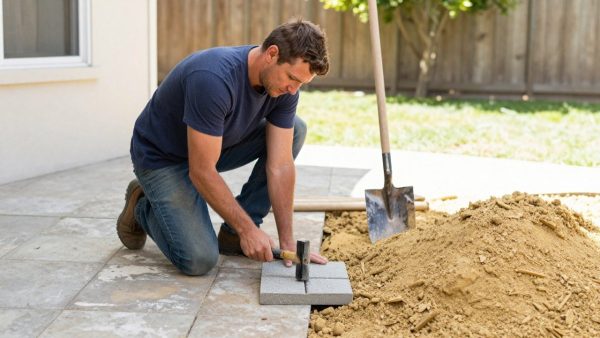
Learn how to fix sinking patio pavers step by step, from diagnosing the low spot to resetting stones and refilling joints with polymeric sand.
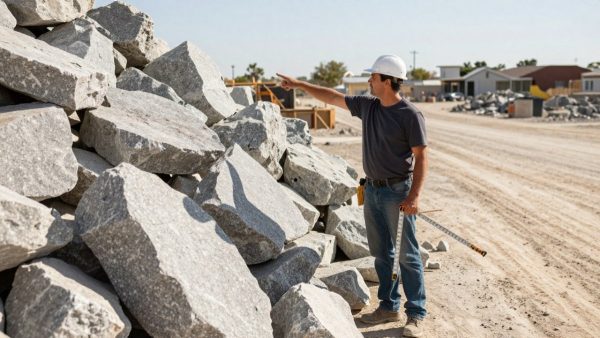
Calculate riprap material quantity with a step-by-step workflow from cubic yards to tons, then order the right amount with confidence.