
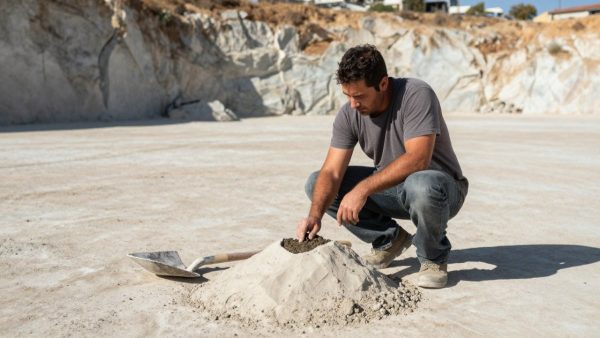
Silt vs Clay in Sand: Key Differences Explained
Silt vs clay in sand decides drainage, compaction and stability. Compare particle size, plasticity and field tests to judge your aggregate before pouring.
Last Updated: November 12, 2026
Quick Summary
An automated sieve shaker reproduces the same shaking motion for the same duration every run, removing the operator variability that makes manual sieving unrepeatable. Choose mechanical units for bulk sand QC, electromagnetic units for fine particle sizing, and wet sieve shakers when fines content matters.
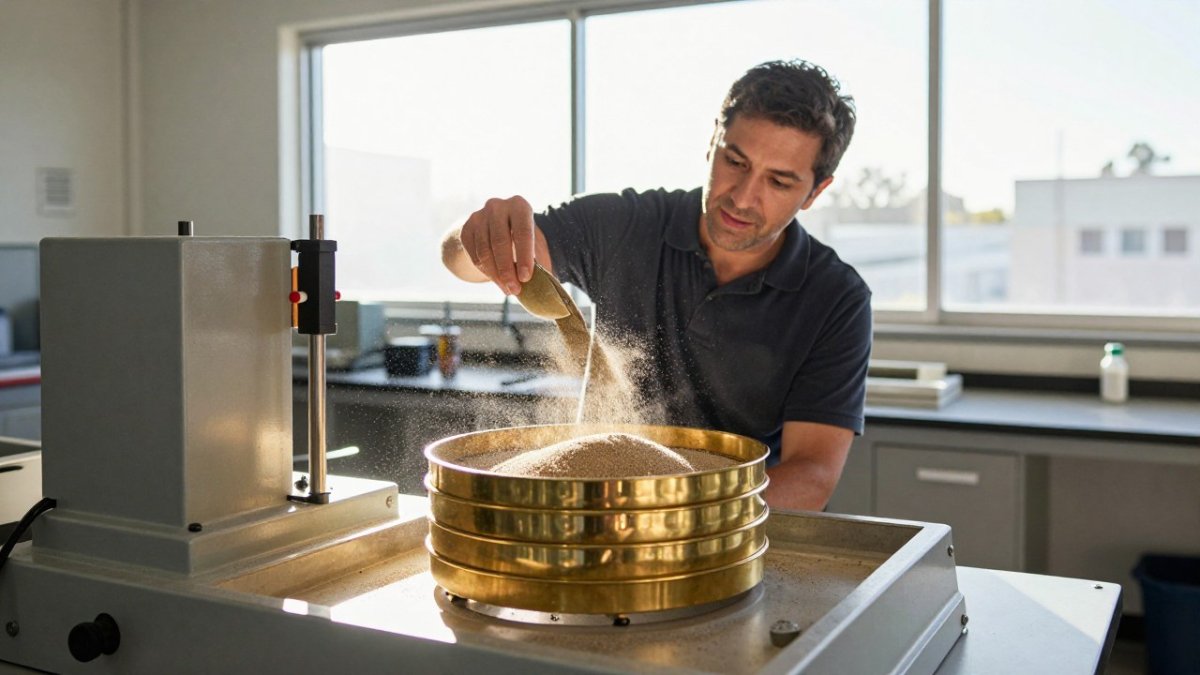
An automated sieve shaker is a machine that reproduces the same shaking motion, for the same duration, every single time a sand sample runs through a sieve stack. That consistency is the whole point.
FST Sand has supplied construction aggregates since 1964. When a mix fails, the first question is always the same: was the sand actually out of spec, or was the test itself sloppy? Manual sieving makes that question almost impossible to answer.
Repeatability is the degree to which repeated sieve analyses of the same sample produce the same particle-size distribution. It is the single most important number in sand testing, and manual sieving is where it quietly falls apart.
Hand shaking varies in stroke, angle, rhythm, and operator fatigue, so the same sand tested twice can report two different gradations.
Mechanical sieving removes that variable: the machine sets agitation, duration, and stop time, so two technicians get the same curve. A failed mix can then be traced to material or mix design instead of a shrug and “let’s retest it.”
Sand labs generally choose among three types of sieve shaker, and the right pick depends on your sample volume, your sieve sizes, and how much fines characterization you do.
Mechanical sieve shakers use a motor-driven eccentric weight or cam for tapping and/or vibrating action.
Electromagnetic sieve shakers drive the stack with vertical vibration at adjustable amplitude and frequency.
Wet sieve shakers combine agitation with a water spray or wash cycle to separate fines that would otherwise blind the screens.
| Type | Best For | Typical Sieve Sizes | Watch Out For |
|---|---|---|---|
| Mechanical | Production QC, bulk sand, aggregate testing | 8-inch and 12-inch, full or half height | Noise and stack clamping |
| Electromagnetic | Fine particle sizing, small samples | 8-inch half-height, 200 mm | Lower capacity |
| Wet sieve | Fines determination, washed gradation | 8-inch, stainless steel screens | Water handling and drying time |
The sand sieve analysis procedure determines particle-size distribution by passing a dried, weighed sample through a nested sieve stack and recording what lands on each screen. Get the prep wrong and every number after it is fiction.
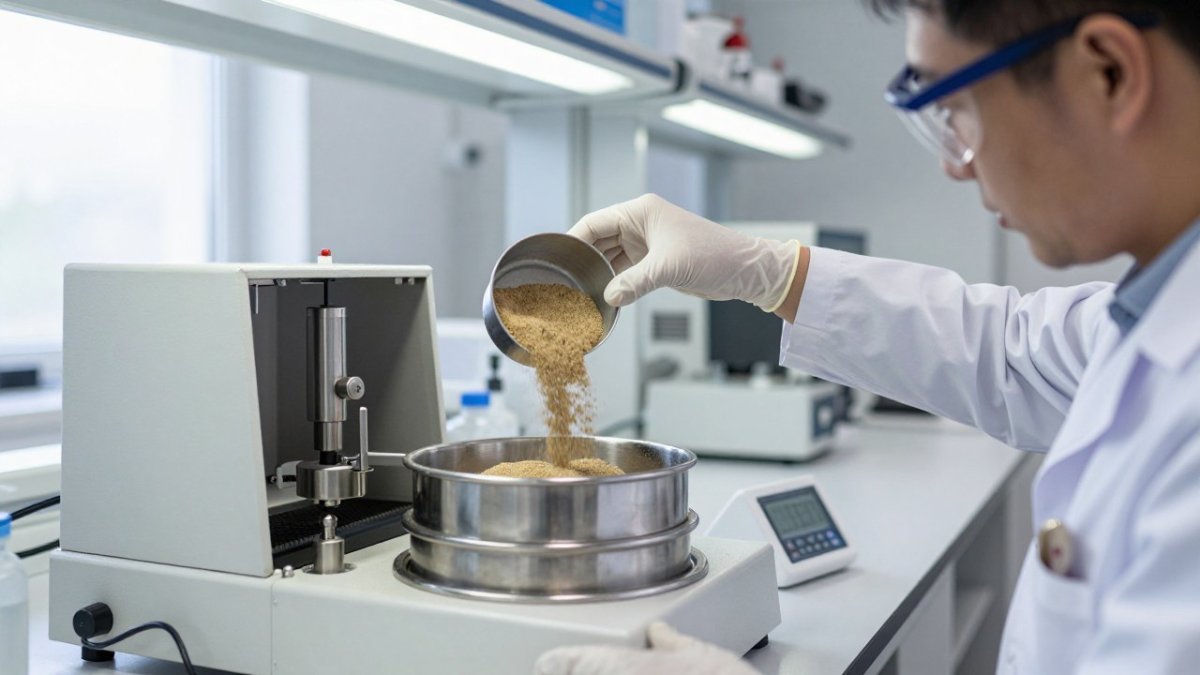
Sample preparation is where most labs cut corners. Split the field sample to a representative test portion with a riffle splitter, dry it to constant mass, and record the mass to the method’s required precision.
A drifting mass balance can signal a damaged screen or an unclamped stack, so check it before you report the curve.
The arithmetic is simple, but the order of operations is where reporting errors creep in. For each sieve:
Report percent passing at each specified sieve opening, not just the interesting ones; a specification naming a percent passing cannot be checked against a curve that omits that sieve.
Watch out: if total retained masses plus the pan differ from the starting mass beyond the method’s allowance, do not average the discrepancy away. Investigate the stack, screens, and transfer step before reporting.
A wet sieve shaker is used when a specification hinges on fines content, because dry sieving alone can leave clay and silt bound to the coarser particles.
For concrete and manufactured sands, the washed gradation can be part of acceptance criteria, since a sand that looks fine on a dry curve may still fail a washed fines check.
Watch out: if the wash water is not captured and the fines are not dried and weighed, you lose the very fraction you were testing for.
Equipment cost depends on drive type, sieve capacity, automation features, and build quality. Budget for the shaker as part of a system that also includes sieves, a balance, a splitter, and drying capacity.
Factors that affect equipment cost include:
Spec the unit against your actual workload and request a quote from FST Sand’s website for current pricing.
Match the shaker to the work you actually do, then let the budget follow the specification rather than the reverse. A workable decision sequence:
Spec the frame and clamping for your realistic peak stack, and keep controls as simple as your methods allow.
Sieve compatibility is the specification buyers regret ignoring. Confirm the shaker accepts your existing sieve diameter, height, and stack size before you commit, or you will be buying a new sieve set along with the machine.
The practical checklist:
Reliable results come from a documented routine, not the machine alone. Standards compliance means your procedure, sieves, and records all line up with the method your specification cites.
Build a maintenance and verification schedule around these tasks:
The standards themselves matter here. The ASTM International standards for sieve analysis define the test methods most U.S. specifications reference, and the AASHTO materials testing standards govern much highway and public works acceptance testing. Read the method your project cites before you set your procedure, and follow it exactly.
The testing equipment tells you what your sand is; the supplier determines what it can be.
At FST Sand, we have processed aggregates for contractors, developers, and public works teams since 1964, and we know that consistent sand grading starts at the source.
If you are ready to price materials for your next project, request a quote with your approximate tonnage for each material.
Stop losing days to retests and disputed gradations.
An automated sieve shaker mechanically agitates a stack of testing sieves to separate sand particles by size. It replaces manual shaking, which introduces operator variability and inconsistent agitation. In sand testing, the shaker produces the particle-size distribution needed for gradation analysis, quality control, and compliance with project specifications. Automated models use a built-in timer and consistent shaking action so each test runs the same way, improving repeatability and freeing lab staff for other tasks.
The exact testing time depends on the sieve shaker model, sample size, and whether the sand is dry or wet. Check the method your project specifies. A good practice is to run the shaker until the amount of material passing each sieve changes by less than a small percentage between consecutive intervals. Many automated sieve shakers include a built-in timer so labs can set a fixed test duration and document it in their procedure for reproducible testing.
Yes, but not every model is suitable. A wet sieve shaker is designed to handle water and slurry during particle separation, which helps break down agglomerated fines and gives a clearer picture of silt and clay content. For sand testing that includes washed gradation or fines determination, a wet sieve shaker is the right choice. Check that the sieve frames, stainless steel screens, and bottom pan are compatible with wet operation, and follow the manufacturer’s guidance on drying samples before final weighing.
Sand gradation testing uses a stack of testing sieves plus a bottom pan and sieve cover. The exact sieve series depends on the specification you are testing against, so confirm the required sizes before buying a sieve stack.
Silt vs clay in sand decides drainage, compaction and stability. Compare particle size, plasticity and field tests to judge your aggregate before pouring.
Learn how to fix sinking patio pavers step by step, from diagnosing the low spot to resetting stones and refilling joints with polymeric sand.
Calculate riprap material quantity with a step-by-step workflow from cubic yards to tons, then order the right amount with confidence.