
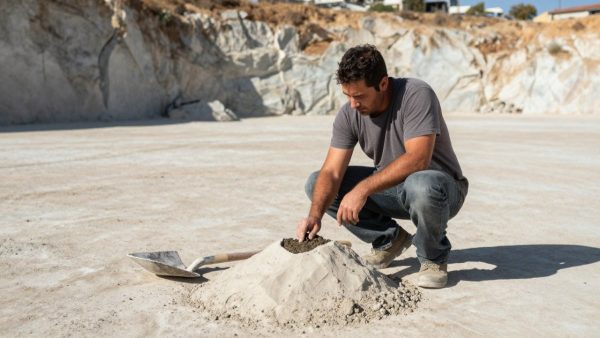
Silt vs Clay in Sand: Key Differences Explained
Silt vs clay in sand decides drainage, compaction and stability. Compare particle size, plasticity and field tests to judge your aggregate before pouring.
Last Updated: November 8, 2026
Quick Summary
Crushed concrete drainage works by moving water through a bed of angular recycled aggregate instead of letting it pool on the surface. It is porous, heavy, and often costs less than quarried stone, but fines can clog the gaps over time, so washed material and filter fabric matter.
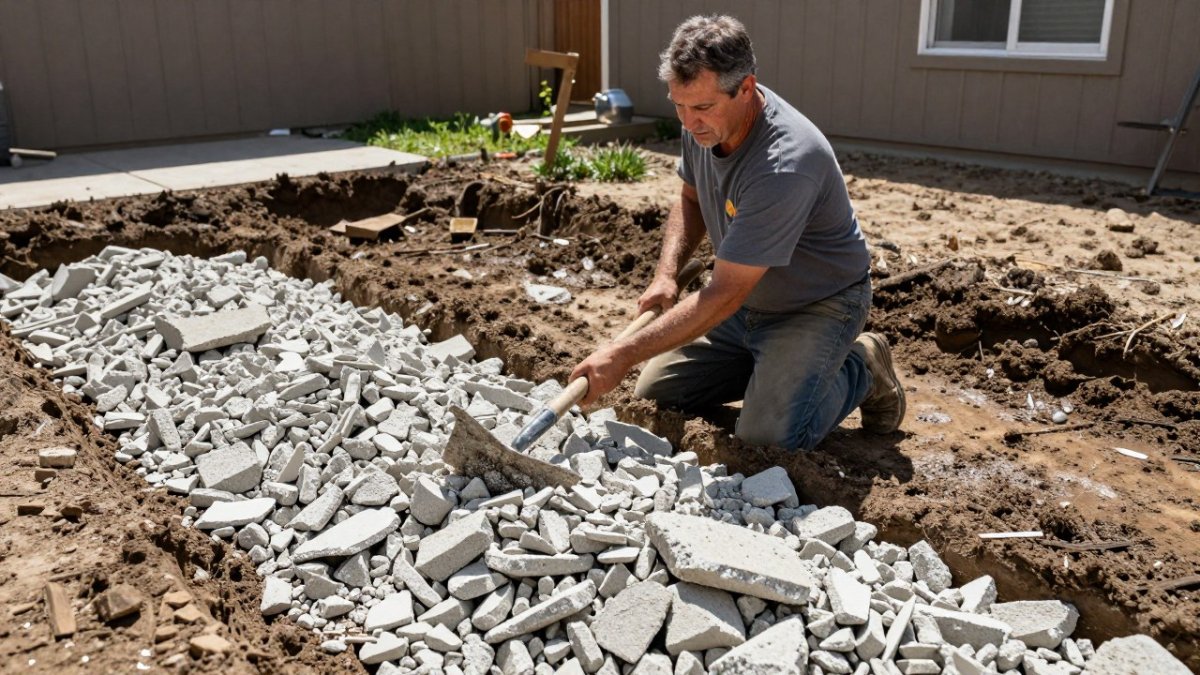
Crushed concrete drainage works by moving water through a bed of angular recycled aggregate instead of letting it pool on the surface. Crushed concrete is old concrete, broken up and screened to size, porous, heavy, and generally less costly than quarried stone, making it a candidate for backyard drainage solutions when site and material specs line up.
Recycled concrete aggregate, usually shortened to RCA, is crushed concrete sorted into graded sizes. The pieces are angular, not round. Water flows through the gaps between them rather than sitting on top.
Two things control how well it drains:
A clean, washed gradation drains far better than a dusty one. That single detail decides whether your trench keeps working or turns into a mud strip.
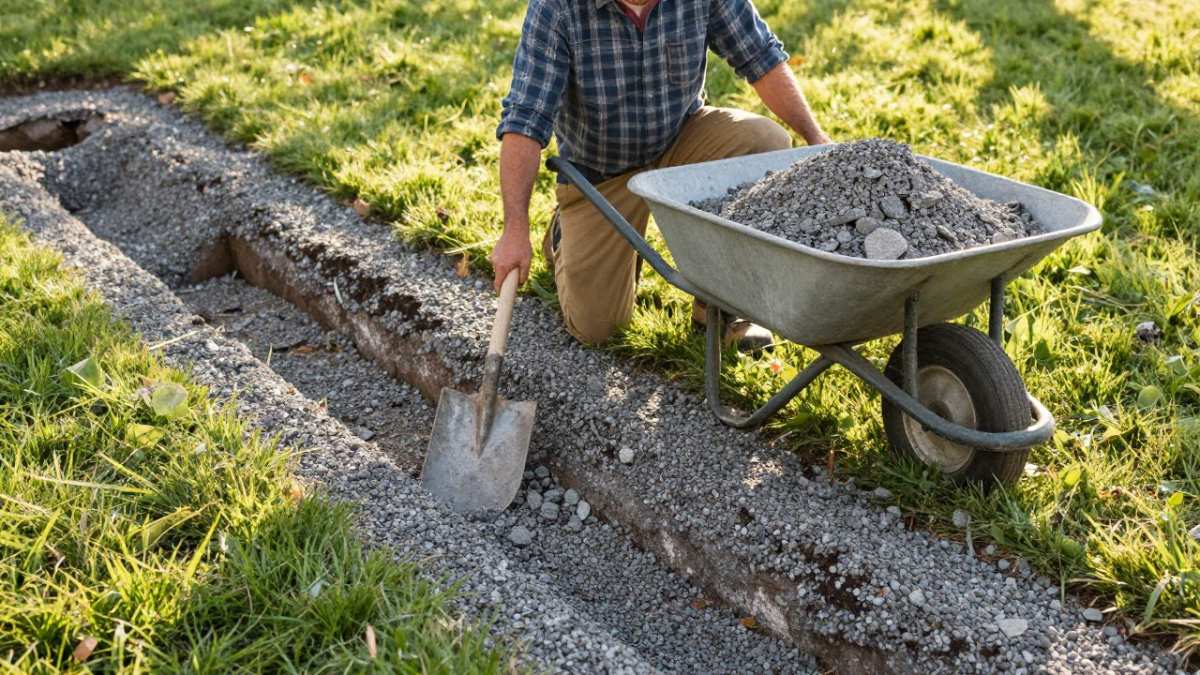
Crushed concrete for drainage pros and cons come down to cost and performance against weight and clogging risk.
Pros:
Cons:
Best for: budget-minded homeowners fixing a wet patch, and base layers under paths and patios.
Skip if: your soil is heavy clay or your yard floods from off-site water. Fix the source first.
Crushed concrete drainage cost depends on quantity, delivery distance, and how clean the material is. Pricing varies by job, so here’s what generally moves the number.
Pricing depends on quantity, delivery distance, and material grade. For current pricing, check FST Sand’s website or request a quote with your measurements.
Crushed concrete vs gravel for drainage is the comparison most homeowners ask about first. Both drain. The difference is in cost, weight, and how each one behaves over years.
| Factor | Crushed Concrete | Natural Gravel |
|---|---|---|
| Cost | Lower | Higher |
| Weight | Heavier | Lighter |
| Shape | Angular, locks together | Rounded or angular |
| Fines | Higher, needs washing | Lower when washed |
| Best use | Base layers, trenches | Drainage beds, French drains |
Crushed concrete tends to favor price and stability; gravel tends to favor clean flow and predictable quality.
You can also weigh pea gravel against recycled concrete if you want a smoother, more decorative surface for a drainage area.
French drain aggregate should be clean, washed stone sized between ¾ inch and 1½ inches, with minimal fines. That size range lets water flow freely while keeping soil out of the pipe.
Here is what to check before you buy:
For drainage work, ¾-inch crushed rock can fit the spec well.
Particle size and fines content decide how fast water moves through your drain. Too many fines and the voids fill up. Too large and the material shifts underfoot.
Ask your supplier three questions:
A supplier who can answer those clearly is one worth trusting with a drainage order.
Installing a backyard crushed concrete drainage trench can take a weekend for many yards, but the details decide whether it keeps working over the years. Once the trench is laid, check that its outlet can carry water away without creating a new wet spot, and consider how M7 LLC approaches other backyard drainage problems when the source or route is less clear.
Expected result: with continuous slope and a working outlet, standing water should drain more quickly after rain.
For deeper fill and heavier loads, 1-inch crushed rock is one option for trench backfill.
The biggest mistake is skipping filter fabric. Without it, soil washes into the aggregate and the drain clogs within a season or two.
Other common errors:
Watch out: discharging water onto a neighbor’s property can create a legal problem. Check your local drainage rules and keep discharge on your own land.
Crushed concrete may be the wrong choice when the real problem is water coming from somewhere else, or when the material’s own properties work against drainage. Diagnose your yard before you buy a single load.
Before choosing a material, identify what kind of water problem you have. The fix differs for each.
Even when a trench is the right fix, crushed concrete can be the wrong aggregate. Watch for these mechanisms.
Skip crushed concrete and use washed stone, a swale, a dry well, or regrading when:
For erosion control on slopes, riprap is the better tool. Our guide on how to install riprap for drainage walks through that process step by step.
Watch out: if your yard floods from off-site water, fixing the source is the only durable solution. A trench that collects water with no legal outlet can make the problem worse and create disputes with neighbors.
Ready to fix the wet spot for good? The right material makes the job last. FST Sand has served Southern California since 1964.
When you request a quote, send us:
Contact FST Sand to confirm availability and pricing. For recycled base material under paths and driveways, crushed miscellaneous base is one option to consider.
A wet backyard is a fixable problem, but only with the right material and the right plan.
Yes, when it is clean and properly graded. Crushed concrete drainage works because the angular particles leave voids that let water pass through and collect in a trench or French drain. The catch is fines: recycled concrete contains dust and small particles that can clog fabric and reduce permeability. Ask your supplier for washed or screened material with limited fines, and confirm the gradation meets your project specs before you buy.
Usually, yes. Crushed concrete drainage cost tends to run lower than comparable clean washed stone because it is a recycled product with lower processing and transport overhead. Actual pricing depends on quantity, delivery distance, and how clean or graded the material is. Request a quote with the specific gradation you need so you can compare apples to apples rather than a headline per-ton number.
For French drain aggregate and drainage trenches, a washed 3/4-inch to 1.5-inch crushed concrete with minimal fines is the common choice. Larger stone leaves bigger voids for faster water flow, while too much fine material slows drainage and clogs filter fabric. Match the size to your pipe slot openings and fabric, and keep the material clean and free of soil before backfilling.
It can lose performance if fines migrate and compact. Crushed concrete does not set like poured concrete, but the dust and small particles can fill voids, especially under vehicle traffic or where soil washes in. Wrapping the trench in filter fabric, using washed material, and keeping surface runoff from carrying sediment into the drain all help it stay permeable. Inspect and clean the system periodically to catch clogging early.
Silt vs clay in sand decides drainage, compaction and stability. Compare particle size, plasticity and field tests to judge your aggregate before pouring.
Learn how to fix sinking patio pavers step by step, from diagnosing the low spot to resetting stones and refilling joints with polymeric sand.
Calculate riprap material quantity with a step-by-step workflow from cubic yards to tons, then order the right amount with confidence.