

Silt vs Clay in Sand: Key Differences Explained
Silt vs clay in sand decides drainage, compaction and stability. Compare particle size, plasticity and field tests to judge your aggregate before pouring.

Last Updated: November 7, 2026
Quick Summary
Seasonal construction material purchasing strategies match material orders to the real rhythm of your project schedule, using a four-window buying calendar: winter to lock contracts and buy base and fill sand, spring for specialty stone, summer for long-lead materials, and fall to top off base course before rain. Order against committed work only, phase bulk buys, and price storage costs before buying early.
Seasonal construction material purchasing strategies are the timing decisions that determine whether a project stays on budget or bleeds money for six months. Buy aggregates at the wrong point in the year and you either pay peak prices or watch a stockpile wash into a storm drain. Southern California contractors win and lose bids on this single variable every year.
Here’s the core tension most guides ignore: material cost is only half the equation. The other half is availability. Crushed base that’s easy to source in February can be back-ordered in September when every paving crew in the region is finishing out the fiscal year.
Below, we’ll show you exactly how to build a purchasing calendar, forecast demand by season, and protect your margins without overstocking.
Demand planning is the practice of matching your material orders to the real rhythm of your project schedule, not to the calendar on your wall. Get it right and your yard stays lean. Get it wrong and you’re either short on base course or sitting on a pile you can’t use until spring.
A takeoff is only as good as the assumptions behind it. Most estimating errors don’t come from bad math. They come from skipped steps.
A common mistake is ordering the full takeoff in one purchase. Phase it instead. You’ll free up cash and reduce storage exposure.
Regional demand swings hard. Inland projects bake in summer and pour in fall. Coastal work moves to a different clock entirely. If you’re sourcing aggregates for projects across the region, start with the stone, sand and gravel supplier service area to confirm delivery coverage before you build a forecast around it.
Forecast in three layers:
Order against layer one. Plan capacity for layer two. Never buy for layer three.
A seasonal purchasing calendar can split the year into four buying windows, each with a different job.
| Season | Primary Buying Move | Watch For |
|---|---|---|
| Winter | Lock contracts, buy base and fill sand | Rain delays, saturated sites |
| Spring | Stock decorative and specialty stone | Grading season rush |
| Summer | Secure long-lead materials early | Heat limits on pours |
| Fall | Top off base course before rain | Year-end budget flush |
Winter is your negotiation window. Crews are slower, yards have room, and suppliers want committed volume. Spring is when everyone wakes up at once. Summer rewards the contractor who ordered in April. Fall is a race against the first real storm.
Bulk purchasing saves money only when the material gets used. Matching order quantities to actual use keeps storage and re-handling costs from eroding savings, a discipline that also supports improving construction margins.
For crushed base and fill sand specifically, check current availability and order volumes on the crushed aggregate base product page before you commit to a bulk quantity.
Volume pricing depends on quantity, dates, and delivery, so confirm terms directly with FST Sand. Read the escalation clause before you sign. A contract that lets the supplier raise prices mid-project can erase the discount entirely.
Three protections worth asking for:
Price hedging on aggregates is less formal than in commodities, but the principle holds: lock what you can, stay flexible on the rest, and confirm current pricing with FST Sand.
Supplier comparison should score reliability and material quality first, price second. A cheap supplier who misses a delivery costs more than a fair-priced one who doesn’t. But for seasonal purchasing, the comparison has to go one step further: you need to know how each supplier performs in the season you’ll actually be buying.
When you’re comparing options, pull the full materials archive so you can score each supplier against your actual takeoff specs, then run the comparison through a seasonal filter.
Build a simple scorecard you can reuse each quarter. Score each supplier 1-5 on the five criteria above, then multiply by a seasonal weight.
Some contractors keep two suppliers qualified per critical material, a primary for volume and a secondary for peak-season overflow.
Be skeptical of marketing language and of a single low quote, and ask any supplier for test paperwork and their lead times by month.
Delivery planning is the discipline of sequencing material arrivals so the site never sits idle and never gets buried. It’s where most schedules quietly fall apart.
Start with lead times. Long-lead materials get ordered first, full stop. Then build a delivery schedule that matches your crew’s actual production rate, not your hoped-for rate.
Weather and holidays are the two biggest disruptors of delivery scheduling. Rain shuts down placement. Holiday weeks thin out driver availability.
Build a blackout calendar at the start of the project. Mark the rainy season, the major holidays, and any local events that snarl traffic.
As the Federal Highway Administration’s construction guidance notes, weather-related schedule risk is best managed through early planning rather than mid-project recovery.
Storage damage is the silent budget killer. For riprap and erosion-control stone, the stakes are higher still, which is why rip rap’s role in erosion control is worth understanding before you stockpile it.
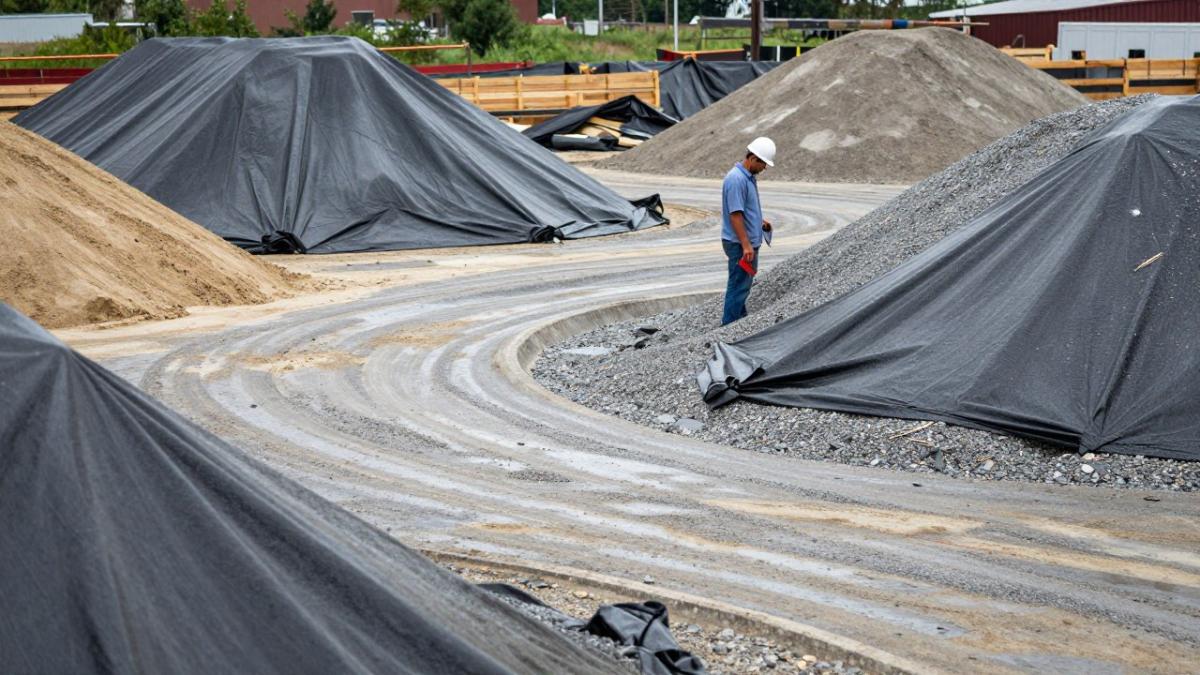
Most seasonal buying guides treat storage as one topic. It isn’t. Each material fails differently, and the fix is different for each. Here’s how to protect the savings you just negotiated.
Every week a material sits in your yard, it costs you space, handling, and risk. Before you buy early to beat a price increase, price the storage. If the carrying cost plus damage risk exceeds the expected price savings, you’re not saving, you’re speculating.
Watch out: a stockpile that looks fine on top can be saturated at the base, so check moisture at depth before you feed it into a mix design.
A good quote request gets you a faster, more accurate answer.
At FST Sand, we’ve supplied aggregates since 1964, and we’ve learned what makes a quote useful.
Before you request pricing, confirm the material on our fill sand product page so your quote matches the right spec.
Timing your material buys is the difference between a project that finishes clean and one that drags through a second season.
Buy aggregate and bulk materials before peak construction season, when demand and lead times are lower. For most projects that means locking in sand, gravel, and crushed stone in late winter or early spring, ahead of the summer rush. Materials with long lead times should be ordered even earlier. Seasonal purchasing works best when it is tied to your quantity takeoff and delivery schedule rather than to price alone, because a missed delivery window costs more than a small price difference.
Buying in larger volumes often earns volume discounts and lowers per-unit delivery costs, since one full truckload costs less to move than several partial loads. Bulk construction material purchasing also reduces the number of purchase orders and the admin time behind them. The catch is storage: order only what your site can hold without damage from rain, wind, or contamination. Match order size to your consumption rate and available laydown space, and confirm whether pricing tiers apply at specific tonnage or truckload thresholds.
Score suppliers on more than price per ton. Compare material quality and test certifications, fill rates, on-time delivery history, lead times for long-lead materials, and how each handles a missed delivery. Ask suppliers for test reports on silt content and gradation before committing to a bulk order, and confirm they can document sustainable sourcing if your spec requires it. A construction supplier comparison that weighs total cost of ownership, including rework risk and schedule impact, will usually favor reliability over the cheapest quote.
Place orders early and confirm delivery dates in writing before peak season starts. Diversify across more than one supplier for critical materials, and keep a buffer stock of fast-moving items like concrete sand and base course. Track lead times monthly, since they stretch when regional demand spikes. If your project schedule is fixed, add escalation and delivery-performance clauses to the purchase order so both sides know what happens if a load arrives late or short.
Silt vs clay in sand decides drainage, compaction and stability. Compare particle size, plasticity and field tests to judge your aggregate before pouring.

Learn how to fix sinking patio pavers step by step, from diagnosing the low spot to resetting stones and refilling joints with polymeric sand.

Calculate riprap material quantity with a step-by-step workflow from cubic yards to tons, then order the right amount with confidence.