
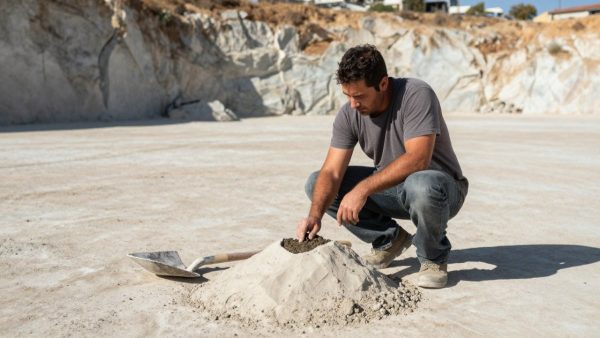
Silt vs Clay in Sand: Key Differences Explained
Silt vs clay in sand decides drainage, compaction and stability. Compare particle size, plasticity and field tests to judge your aggregate before pouring.
Last Updated: October 29, 2026
Quick Summary
The recycled aggregate cost comparison versus traditional gravel rarely comes down to the sticker price per ton, because delivered cost is what actually decides the math. A recycled source close to an urban demolition corridor often beats a distant quarry on delivered cost, even when the quarry’s material price is lower.
The recycled aggregate cost comparison versus traditional gravel rarely comes down to the sticker price per ton.
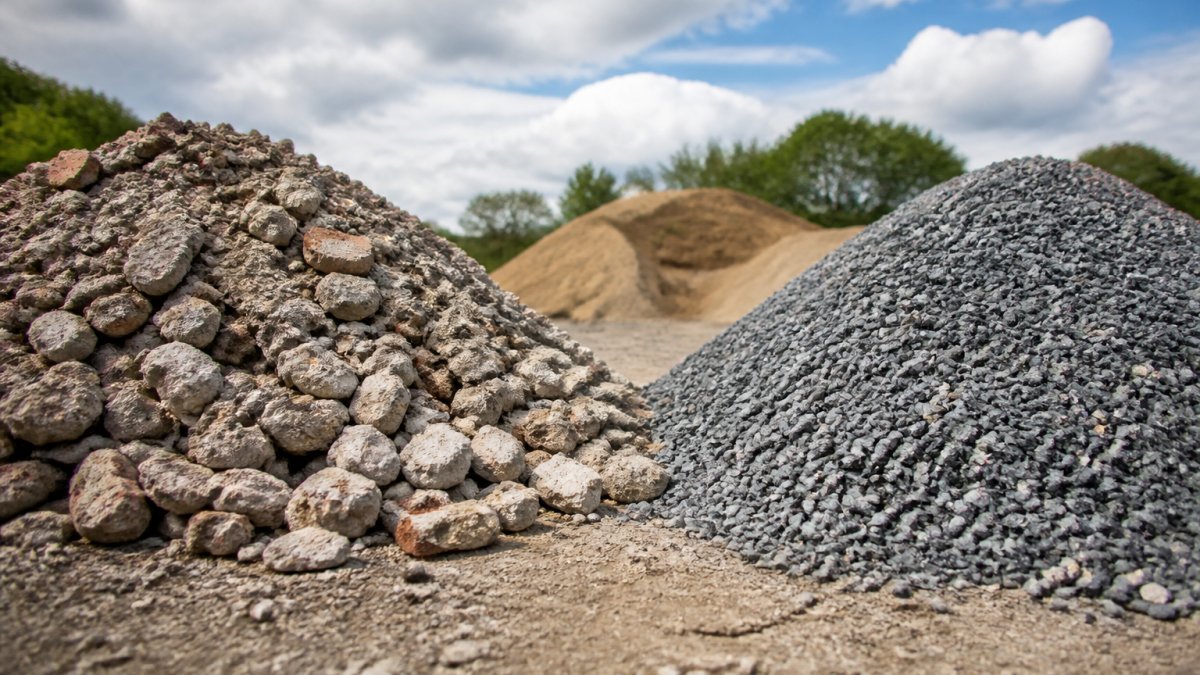
Recycled aggregate is crushed construction and demolition debris, most often concrete, processed into a usable base or fill material. Traditional gravel is virgin aggregate mined from a natural deposit and crushed to spec.
Both can meet the same structural job. What separates them is where they come from, how far they travel, and how tightly the gradation is controlled.
| Cost Factor | Recycled Aggregate | Traditional Gravel |
|---|---|---|
| Material source | Construction and demolition waste | Natural deposit |
| Typical material cost | Lower | Higher |
| Hauling distance | Often shorter, urban sources | Longer, quarry-dependent |
| Gradation consistency | Varies by processor | Consistent when spec’d |
| Drainage performance | Good in open-graded blends | Good to excellent |
| Lifecycle maintenance | Comparable when compacted right | Comparable when compacted right |
Recycled concrete aggregate cost per ton is driven largely by processing. A processor has to accept the demolition debris, sort out rebar and trash, crush it, and screen it to a target gradation. Each of those steps adds cost, and each one is where a cheap quote usually hides a compromise.
Crushing is the single largest line item. Processing to a tight spec requires real spending on fuel, wear parts, and labor. A processor selling a coarse, loosely graded product spends less. That gap shows up in your per-ton price, and it shows up again in how the material performs under a plate compactor.
Gradation is where the price conversation gets honest. A base course spec that calls for a tight particle size distribution costs more to produce than a general fill product. If your project requires a specific gradation for a roadway structure or pavement layer, ask the processor for the sieve analysis before you compare quotes. A cheaper product that fails gradation is not cheaper.
Gravel cost per ton reflects the cost of winning the material from the ground. Virgin aggregate has to be drilled, blasted, loaded, hauled to a plant, crushed, and screened. Every one of those steps carries a cost that a recycled product skips.
Three factors move the natural aggregate number most:
For current pricing on crushed aggregate base, visit the FST Sand pricing page or request a quote.
Aggregate delivery cost is the line item that flips the recycled-versus-gravel math more often than the material price itself. A product that costs less per ton but travels twice as far can land on your site costing more than the local alternative. The only honest way to compare is on a delivered basis, dollars per ton placed at your site, not the plant-gate number on the quote.
Delivered cost per ton = material price per ton + processing or loading fee + freight per ton + applicable sales tax + any minimum-load or short-haul surcharge.
A practical way to sanity-check a quote: ask the supplier for the haul distance in miles and the freight rate per ton-mile, then multiply. Freight is commonly quoted as a per-ton or per-load rate, and freight cost tends to track haul distance.
Haul distance drives transportation cost directly. Aggregate is heavy, so every mile adds fuel, driver time, and truck wear. A recycled source close to an urban demolition corridor often beats a distant quarry on delivered cost, even when the quarry’s material price is lower. The reverse is just as common: in a market with no active demolition and no nearby processor, recycled material has to be hauled in from another county, and the delivered price erases the plant-gate advantage entirely.
Regional price variation works the same way. In a market with active demolition and a nearby processor, recycled material is plentiful and cheap. In a market without one, the delivered price can erase the advantage entirely. Three local conditions decide which way it goes:
A delivered comparison only works when both products are priced on the same unit basis and the same scope. Use this checklist when you request quotes:
If you want to see what a spec-grade natural base looks like before you price it, view our crushed aggregate base product to compare gradation and request current delivered pricing.
For a residential driveway, crushed concrete usually wins on delivered cost when a processor is nearby. Traditional gravel wins when you need a consistent, tightly graded surface and the local quarry is close. The gap between the two is easiest to see when you price an actual driveway instead of a per-ton rate.
Take a common two-car driveway: 24 ft wide by 40 ft long, or 960 sq ft. At a 6-inch compacted base depth, that is 480 cubic feet, or about 17.8 cubic yards of base material.
At that quantity, the delivered cost difference between a local recycled base and a quarry base is usually driven by freight, not the plant-gate price.
Material is only part of the installed cost. A driveway build also includes site prep, grading, compaction, and edge restraint. Most contractors quote a driveway base as an installed square-foot or per-ton figure that bundles those steps, so ask for the installed number rather than the material number alone.
| Driveway Factor | Crushed Concrete | Traditional Gravel |
|---|---|---|
| Delivered cost | Often lower near a processor | Higher, quarry-dependent |
| Surface finish | Coarser, can be uneven | Smoother when graded |
| Compaction | Good with proper moisture | Good with proper moisture |
| Dust | Moderate | Lower with washed product |
| Best for | Budget-driven base layers | Finished, visible surfaces |
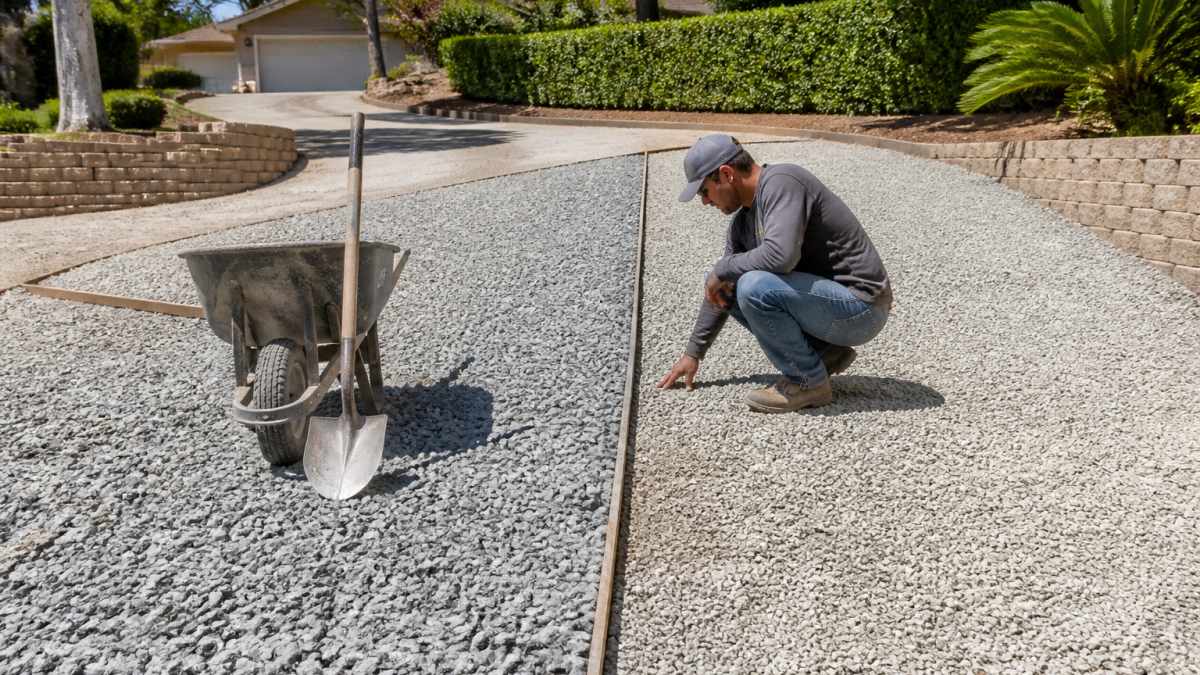
A common mistake is buying crushed concrete for the visible top layer and expecting a clean finish. It works as a base. For the finish, pair it with a graded product.
A third mistake is skipping compaction. If you’re weighing the recycled base against a natural alternative, check our recycled base product and compare our 3-inch minus crushed rock side by side before you commit.
A cheaper aggregate costs more later only when it fails spec.
Watch out: buying recycled material from a processor who doesn’t test gradation is the fastest way to redo a base.
Durability generally comes down to gradation control, water absorption, and compaction. Recycled concrete tends to absorb more water than virgin rock, so it benefits from careful moisture management during placement.
The optimal replacement percentage for recycled aggregate in a base or concrete mixture is typically a partial substitution, not a full swap. Many projects find that blending recycled and virgin material balances cost savings against performance and spec compliance.
A practical approach:
Recycled aggregate cost savings can scale with recycled content, and testing needs typically increase alongside it. For fine aggregate options to pair with recycled content in blends and base layers, see our crusher fines.
A quote that reflects true aggregate cost lists material, delivery, and spec compliance separately. Ask for the delivered price per ton, the haul distance, the sieve analysis, and the compaction characteristics. Compare on that basis, not on the plant-gate number.
FST Sand has supplied construction aggregates since 1964. Request a quote from FST Sand to discuss delivered pricing for your project.
Recycled aggregate cost is often lower at the material level because it comes from crushed construction and demolition waste rather than newly quarried stone. The gap narrows once you add processing, gradation requirements, and haul distance. For base course and driveway applications, recycled concrete aggregate frequently delivers savings, but for structural concrete or exposed decorative work, natural gravel may be the only spec-compliant option. Compare delivered cost, not just the per-ton quote.
Aggregate delivery cost depends on haul distance, truck size, order volume, site access, and fuel surcharges. A short haul from a local supplier keeps freight low, while long distances can erase material savings. Order size matters too: full truckloads spread freight across more tons. Scheduling also plays a role, since tight delivery windows may add charges. Ask for a delivered price per ton that itemizes material, freight, and any access fees so you can compare suppliers fairly.
Crushed concrete vs gravel for driveway performance depends on gradation, compaction, and drainage. Recycled concrete aggregate compacts well and forms a stable base, and its angular shape locks together under traffic. Natural gravel offers consistent durability and predictable drainage. Recycled material can carry slightly higher water absorption and may include fines that affect drainage if not graded properly. For most residential driveways, properly graded recycled concrete performs well when compacted in layers.
Multiply the area by the depth to get volume, then convert to tons using the material’s density. For a driveway 12 feet wide, 40 feet long, and 6 inches deep, you need about 240 cubic feet, or roughly 8.9 cubic yards. At about 1.4 tons per cubic yard for compacted crushed stone, that is roughly 12.5 tons. Add 5 to 10 percent for compaction and waste. Confirm density with your supplier, since recycled and natural aggregates differ.
Comparing aggregate suppliers on sticker price alone is how projects blow their materials budget. The fix is to demand delivered cost, gradation data, and compaction guidance up front. FST Sand provides precision-processed aggregates, competitive pricing, and reliable supply for projects of all sizes, backed by more than six decades of experience. Get started with FST Sand and price your next base course with confidence.
Silt vs clay in sand decides drainage, compaction and stability. Compare particle size, plasticity and field tests to judge your aggregate before pouring.
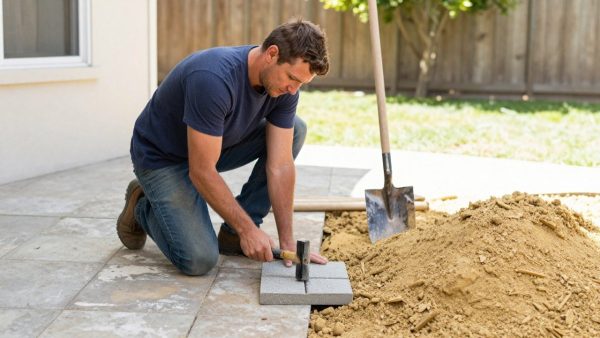
Learn how to fix sinking patio pavers step by step, from diagnosing the low spot to resetting stones and refilling joints with polymeric sand.
Calculate riprap material quantity with a step-by-step workflow from cubic yards to tons, then order the right amount with confidence.