

Silt vs Clay in Sand: Key Differences Explained
Silt vs clay in sand decides drainage, compaction and stability. Compare particle size, plasticity and field tests to judge your aggregate before pouring.
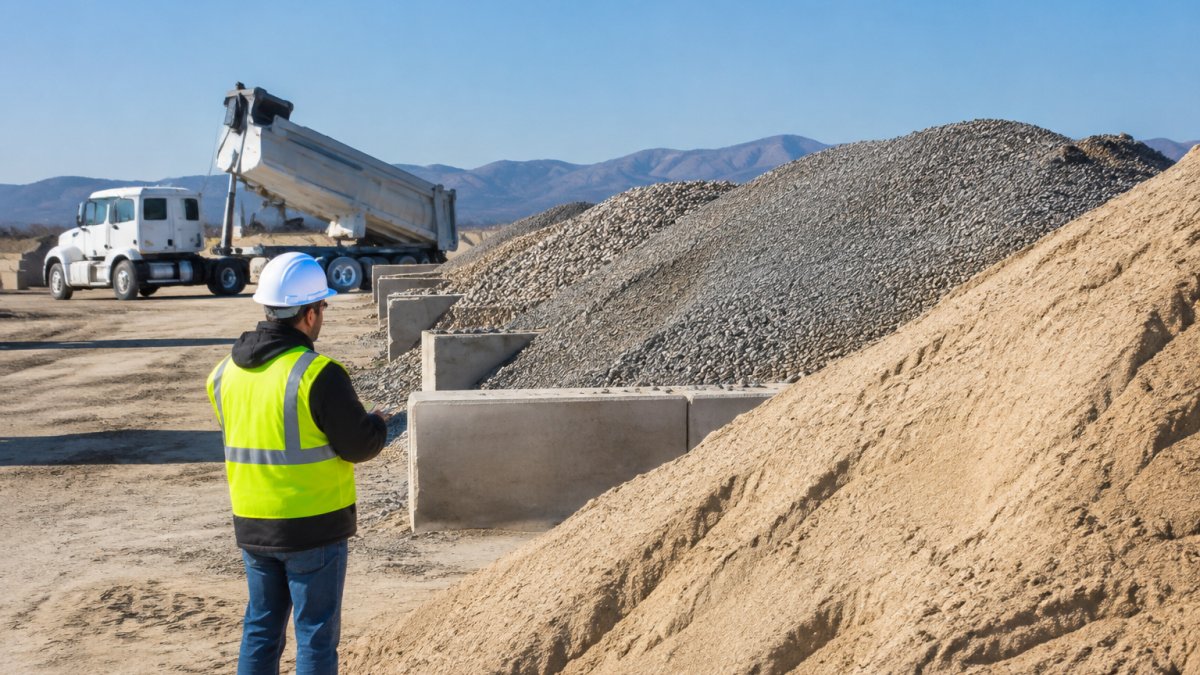
Last Updated: November 5, 2026
Quick Summary
Selecting a bulk sand supplier starts with defining your project requirements: intended use, governing specification, order quantity, and delivery constraints. Then score candidates on specification compliance, product consistency, delivery reliability, normalized delivered cost, availability, and credentials, disqualifying any supplier that fails on specification compliance.
Most buyers open a browser and start collecting quotes from a bulk sand supplier before they’ve written down what the sand actually has to do.
Bulk sand is aggregate sold by the truckload or ton, graded to a defined particle-size range for a specific construction or landscaping use.
Before you call anyone, write four things down:
Get those four on paper before the conversation starts. Skip them and you’ll be comparing prices on materials that aren’t the same thing.
Sand grades for construction fall into broad families, and each one solves a different problem. Fine sand packs and finishes; coarse sand drains and locks together under load.
Here’s the practical split:
For utility and pipeline crews, a dedicated graded product removes guesswork. If that’s your application, you can review the gas sand specification to see whether the grading fits the work before you build a quote around it.
Watch out: the most expensive mistake in this whole process is ordering “sand” without a grade name. Two suppliers can both deliver something called sand that behaves nothing alike in a mix.
ASTM C33 is the standard specification for concrete aggregates, and it’s the reference most concrete sand gets held to. You don’t need to memorize it. You need to know which clauses your project spec invokes, then ask for documentation that addresses them, and know how to read that documentation well enough to catch a mismatch before the first truck arrives.
A gradation report is a sieve analysis: a stack of screens with progressively smaller openings, a sample shaken through them, and the percentage of material retained on each sieve recorded. The result is a particle-size distribution curve. ASTM C33 sets permissible ranges for concrete sand across a defined set of sieves, and the report should show your material falling inside those ranges at every sieve, not just on average.
When you read the report, check three things:
Gradation gets the attention, but ASTM C33 also addresses the properties that decide whether the sand performs in a mix:
Ask which of these your project specification actually invokes. A residential slab and a municipal structural pour do not carry the same documentation burden, and paying for tests your spec doesn’t require is wasted effort.
A test report is only useful if you can tie it to the material you’ll receive. Confirm four things on the document itself:
Ask for a material sample and a current test report together. The ASTM C33 standard specification for concrete aggregates is the place to confirm exactly what your spec is referencing.
Watch out: a supplier who sends a report without the source and date attached is giving you a document, not a verification, ask for the missing fields before you accept it.
Bulk sand is sold by weight, by volume, or by the load, and mixing those units across quotes is where budgets quietly break.
Three measurement habits keep you honest:
Order quantity and load size also drive delivery capacity. A supplier who can only send smaller loads may need more trips, more site disruption, and a longer delivery schedule. Work backward from your pour dates, not forward from the supplier’s truck fleet.
Bulk sand pricing is only comparable after you’ve normalized it. The number on the quote is rarely the number you pay.
Build a delivered-cost figure for each quote that includes:
Then divide by the usable quantity, not the ordered quantity. Once normalized costs expose how minimums and order size shape the real comparison, alternatives to high MOQ can help frame the same tradeoff when evaluating other sourcing decisions.
Pricing depends on quantity, grade, and delivery location. For current prices or a quote, visit the FST Sand pricing page or request a quote directly.
Score every candidate on the same criteria, weighted to your project, and the decision stops being a gut call. Here’s a scorecard structure we’d use, with weights you can adjust:
| Criterion | What You’re Checking | Weight |
|---|---|---|
| Specification compliance | Test reports match your spec | 25% |
| Product consistency | Gradation holds load to load | 20% |
| Reliability and delivery capacity | Can they hit your schedule | 20% |
| Delivered cost | Normalized total, not sticker price | 15% |
| Inventory and availability | Stock on hand for your volume | 10% |
| Supplier credentials | Track record, licensing, documentation | 10% |
Score each criterion from 1 to 5, multiply by the weight, and total. Anything below a 3 on specification compliance is disqualifying regardless of total score. Material quality isn’t a trade-off you make for price.
Supplier research matters here. A supplier who has operated in the region for decades has a verifiable track record; one you’ve never heard of may be fine, but you should confirm the history rather than assume it. You can learn about our background and history as one input into that check.
Delivery logistics decide whether a good quote becomes a good project. A truck that can’t get in is a truck that turns around, and a turned-around load costs somebody money.
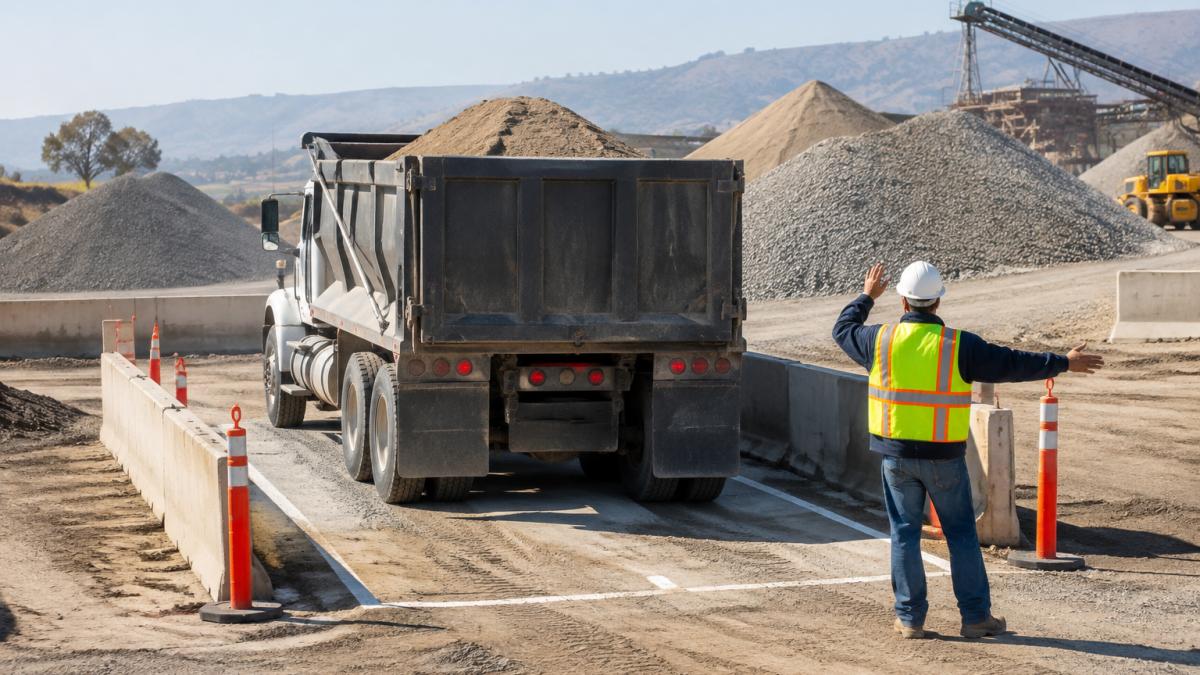
Walk the site and record the constraints that actually affect a loaded dump truck:
Then work backward from your pour or install dates. A supplier who can only send smaller loads may need more trips, more site disruption, and a longer delivery schedule. Confirm your supplier serves your area before you get deep into planning. You can check the service area coverage to verify delivery to your county or city.
Order accuracy is a process, not a hope. Agree in writing before the first delivery on who inspects each load, what they check, and what happens if it fails.
A practical arrival check covers:
A rejected load handled without a documented process becomes a dispute. Handled with one, it’s a Tuesday. Put these terms in the purchase agreement or quote acceptance:
Watch out: a supplier who won’t put rejection and replacement terms in writing is telling you how the first problem will go, get the terms documented before you commit to a schedule.
The criteria above only pay off when you apply them to real quotes. Take your four project requirements, your specification, your quantity, and your delivery constraints, and put them in front of suppliers who can answer all four.
FST Sand has served Southern California since 1964 as a family-owned company, supplying crushed stone, gravel, concrete sand, and riprap. If you’re ready to test the criteria against a real number, request a quote for your project and we’ll build a delivered-cost breakdown you can compare line by line.
Weigh seven factors: whether the supplier stocks the sand grade your project needs, documented ASTM C33 compliance and test reports, consistent gradation across loads, delivered cost per ton rather than sticker price, inventory depth for your order quantity, delivery capacity and scheduling, and a track record you can verify. Give each criterion a weight based on your project risk, then score every candidate on the same scale. A supplier that wins on price but fails on gradation consistency will cost more in rework than it saves on material.
Bulk sand is sold by weight in tons or by volume in cubic yards, and the two are not interchangeable because moisture changes the weight of a given volume. Ask whether the quote is per ton or per cubic yard, whether the truck scale is certified, and whether you receive a weigh ticket for each load. Delivery charges, minimum order thresholds, and fuel or distance surcharges should appear as separate line items so you can compare total delivered cost, not just the material rate.
Request a material sample and current test reports before the first full load. For concrete sand, check that gradation and fines content fall within ASTM C33 limits and that silt and clay content is documented. Ask whether testing is done in-house or by a third party, how often gradation is retested, and whether you can review certificates before delivery. On receipt, compare the load against the approved sample and the weigh ticket, and reject material that visibly segregates or carries excess fines.
Ask five questions: which sand grades and ASTM C33 products they stock, how much inventory they hold and how quickly they can scale to your order quantity, what delivery capacity and lead times look like for your site, how pricing is structured per ton versus per cubic yard including all surcharges, and what happens if a load fails inspection or arrives late. Also request sustainability or sourcing documentation if your project specs require it, and confirm whether they serve smaller jobs as well as large commercial accounts.
The real test of a supplier isn’t the first quote, it’s the fifth load. Get the specification, the measurement, and the delivery terms settled before you commit, and the material on site will match the material you planned around. Get started with FST Sand and put your next bulk order on a scorecard instead of a hunch.
Silt vs clay in sand decides drainage, compaction and stability. Compare particle size, plasticity and field tests to judge your aggregate before pouring.

Learn how to fix sinking patio pavers step by step, from diagnosing the low spot to resetting stones and refilling joints with polymeric sand.

Calculate riprap material quantity with a step-by-step workflow from cubic yards to tons, then order the right amount with confidence.